


Listen to the article
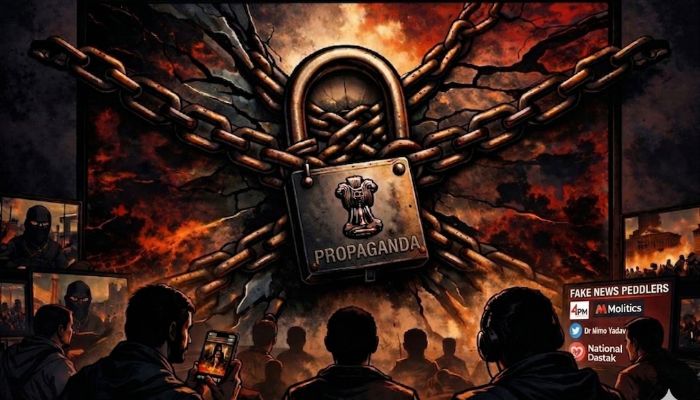
In an unprecedented digital crackdown that has sparked intense debate across India, several social media accounts and content platforms including 4PM, Molitics, and National Dastak have been recently withheld in the country. The move has immediately triggered accusations from left-leaning groups that the government is stifling dissent and attacking free speech.
However, a deeper analysis of these platforms’ content reveals a more complex picture that raises questions about their editorial standards and information practices. Far from simply offering alternative viewpoints, these outlets appear to follow a consistent pattern of sensationalism, selective fact presentation, and unverified claims packaged as definitive reporting.
The affected platforms typically position themselves as bold, independent voices challenging mainstream narratives. Their content strategy, however, often prioritizes high-impact presentation over substantiated reporting – featuring dramatic thumbnails, inflammatory headlines, and emotionally charged framing that reduces complex issues to simplified narratives.
One notable example involved National Dastak referring to accused individuals using partial identifiers like “Rajput” and “Rana,” seemingly suggesting Hindu perpetrators. Community notes later flagged the post as misleading, revealing the full names were “Azeem Rana” and “Azad Rajput” – both Muslim individuals. The selective identification appeared designed to create a false impression that aligned with a particular narrative.
In another widely circulated claim, these platforms asserted that gold reserves worth over ₹1 lakh crore had “gone missing” from the Reserve Bank of India – presented in alarmist language suggesting institutional corruption or financial impropriety. The Press Information Bureau later officially fact-checked this claim, clarifying that the figures had been misinterpreted and taken out of context. Despite this correction, the narrative continued circulating without reference to the clarification.
The visual storytelling approach of these platforms also raises concerns. Short video clips are frequently presented without full context, as seen in an instance where Nitish Kumar was shown holding an aarti plate with the caption claiming “Samrat Chaudhary snatched the aarti plate from Nitish Kumar’s hands.” Without the complete sequence of events, such isolated clips can create misleading impressions that reinforce predetermined narratives.
Sensationalism appears to be a deliberate content strategy across these platforms. Molitics consistently employs attention-grabbing language like “घपलेबाजी पकड़ी गई” (Scam exposed), “बड़ा खुलासा” (Big revelation), and “मोदी को बड़ा झटका” (Big blow to Modi) – presenting complex or contested issues as settled conclusions, often with a tone of certainty that exceeds the supporting evidence.
Some content has ventured into potentially defamatory territory. One account operated by Prateek Sharma implied connections between Union ministers’ offices and individuals allegedly involved in terrorist activities, framing serious accusations as questions despite citing no substantiating evidence. While technically phrased as inquiries, such content, when amplified to large audiences, can effectively function as unsubstantiated allegations.
Perhaps most concerning is content that targets specific communities with provocative language. A National Dashtak reporter was documented making inflammatory statements against Brahmins, saying they are “a disgrace” who should be “beaten with shoes and thrown out” – raising questions about whether free speech protections should extend to content that potentially incites hatred against specific groups.
Political predictions form another problematic pattern, particularly on YouTube channels like 4PM. Their content consistently projects imminent political upheaval with urgent language suggesting insider information about government collapse or leadership transitions. Over time, these predictions rarely materialize as suggested, yet new claims continuously replace old ones without acknowledgment of previous inaccuracies – creating a perception of perpetual crisis.
The restriction of these accounts has ignited a significant debate about the boundaries of free expression in India’s digital ecosystem. While freedom to question and criticize remains essential in any democracy, the scale and velocity of information spread introduces new challenges when content patterns consistently prioritize engagement over verification.
As the Delhi High Court considers submissions on this issue, authorities have cited concerns about misleading narratives, defamatory content, and potential implications for public order. Meanwhile, the affected platforms have questioned the proportionality and due process of the restrictions.
This case highlights the evolving tensions between digital free speech and information integrity in India’s rapidly growing online landscape. It suggests that when content consistently prioritizes impact over accuracy across multiple instances, regulatory scrutiny becomes inevitable – regardless of the political perspectives being expressed.
Fact Checker
Verify the accuracy of this article using The Disinformation Commission analysis and real-time sources.

20 Comments
While the crackdown may raise concerns about free speech, the report suggests these platforms were engaging in questionable practices. It’s a complex issue that deserves a careful, nuanced examination.
Agreed. There are valid concerns on both sides that require a measured, evidence-based approach.
This investigation highlights the need for greater transparency and accountability in the digital media landscape. Platforms should be held to rigorous fact-checking and content moderation practices.
Well said. Fact-based reporting and ethical editorial policies are essential for a healthy information ecosystem.
This investigation raises valid concerns about the editorial practices of these platforms. Responsible media outlets must strive to present information accurately and objectively, even if it challenges mainstream narratives.
Exactly. Fact-based reporting and a commitment to truth should be the foundation of a healthy media ecosystem.
Sensationalism and unverified claims masquerading as news is a concerning trend. It’s crucial that media outlets uphold high editorial standards and present information accurately, even if it challenges mainstream narratives.
I agree. Responsible journalism should prioritize truth and objectivity over attention-grabbing tactics.
The report suggests these platforms were engaged in questionable practices, such as sensationalism and selective fact presentation. While free speech is important, media outlets must uphold high journalistic standards.
I agree. Responsible journalism should prioritize accuracy, objectivity, and integrity over attention-grabbing tactics.
This crackdown on social media accounts is certainly a complex issue. While free speech is important, we need to carefully examine the content and practices of these platforms to ensure responsible journalism and fact-based reporting.
You raise a fair point. A nuanced approach is required to balance free expression and journalistic integrity.
This investigation underscores the importance of distinguishing between genuine dissent and the spread of misinformation. Responsible journalism must uphold high standards of accuracy and integrity.
Absolutely. The line between free expression and irresponsible reporting needs to be clearly defined and enforced.
The report highlights the need for greater scrutiny of digital media outlets and their content practices. While free expression is important, media platforms must also ensure they are upholding journalistic integrity.
Well said. Balancing these competing priorities is crucial for maintaining a robust and trustworthy information landscape.
This investigation highlights the need for greater transparency and accountability in the digital media landscape. Platforms should be held to rigorous fact-checking and content moderation practices.
Well said. Fact-based reporting and ethical editorial policies are essential for a healthy information ecosystem.
The report raises important questions about the editorial practices of these platforms. While free speech is vital, media outlets must also ensure they are providing truthful, well-researched information to the public.
Agreed. Balancing these competing priorities is a challenging but necessary task for responsible media institutions.