


Listen to the article
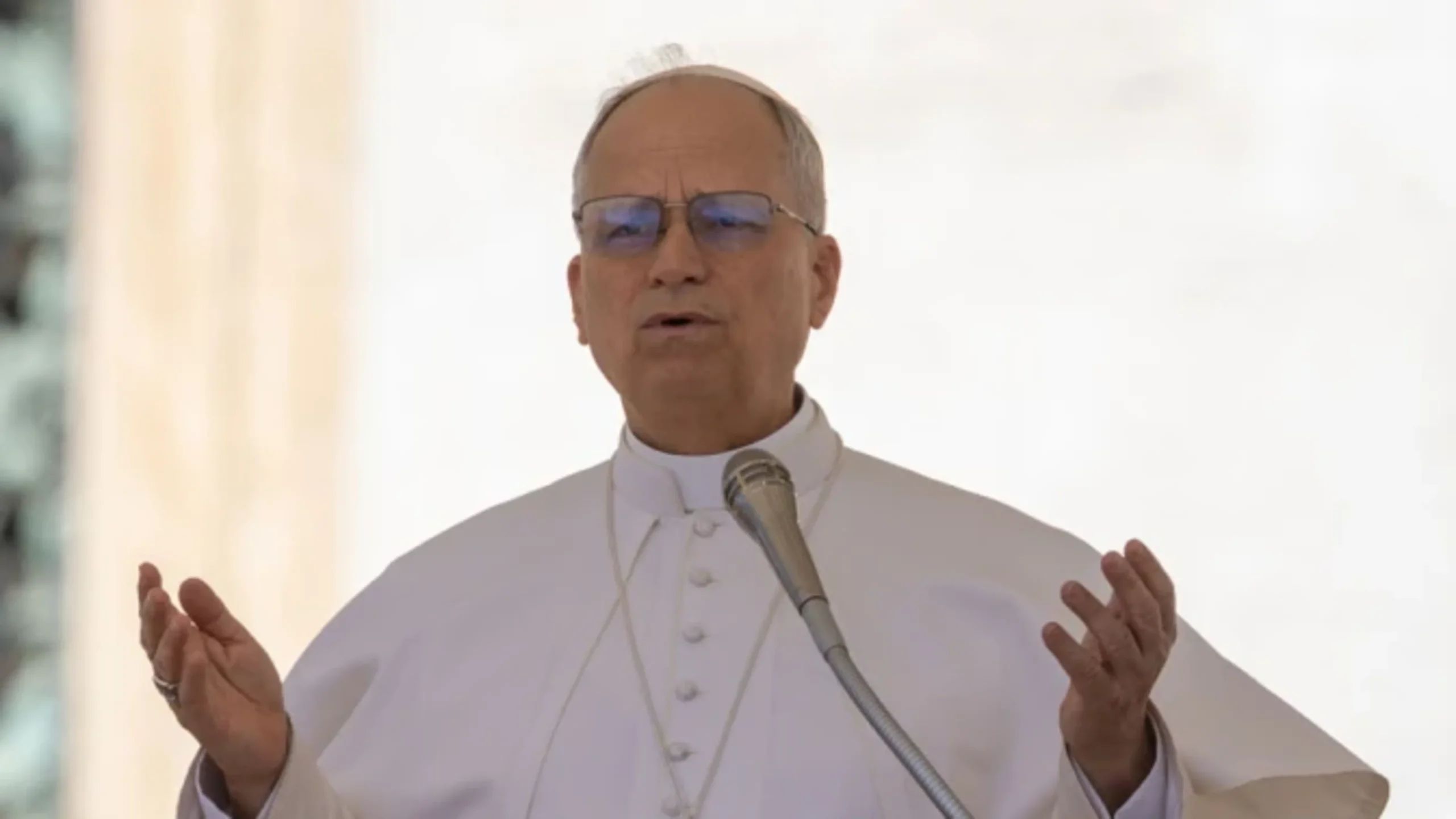
In a powerful address to Italian journalists at the Vatican, Pope Leo XIV called for responsible news reporting, particularly when covering armed conflicts, emphasizing that journalism “must guard against the risk of becoming propaganda.”
Speaking to members of the Italian broadcaster RAI and the editorial team of its TG2 news program during their 50th anniversary celebration on March 16, the pontiff delivered a timely message about journalistic integrity in an era of global conflict.
The Holy Father stressed the critical importance of fact-checking in today’s media landscape, urging reporters to verify information thoroughly “so as not to become a mouthpiece for those in power.” This responsibility, he noted, becomes “even more urgent and delicate — I would say essential” when reporting on war.
Pope Leo emphasized the human dimension of conflict reporting, calling on journalists to portray war “through the eyes of the victims, so as not to transform it into a video game.” He acknowledged the challenge of conveying such complex realities within the constraints of brief news segments but insisted that humanizing war coverage remains fundamental to ethical journalism.
“No technological innovation can replace creativity, critical discernment, and freedom of thought,” the Pope stated, reflecting on the evolution of television journalism from analog to digital systems. His comments come at a time when media organizations worldwide grapple with rapid technological changes that have transformed how news is gathered and distributed.
The pontiff specifically addressed artificial intelligence—what he termed “the challenge of our time”—calling for communication to be regulated “according to the human paradigm and not the technological one.” This distinction, he explained, requires “knowing how to distinguish between means and ends,” a principle that applies broadly across modern communication platforms.
In his address, Pope Leo XIV praised RAI for its commitment to laicity and pluralism, defining laicity as “a rejection of ideological preconceptions and as an open-minded view of reality.” He highlighted the difficulty but necessity of allowing oneself “to be surprised by facts, by encounters, by the gazes and voices of others,” rather than seeking only information that confirms existing beliefs.
“We all know how strong the temptation is to seek out, see, and listen only to what confirms our own opinions,” the Pope said. “But there can be no good communication, nor true freedom and healthy pluralism, without this openness.”
As global media environments become increasingly polarized, the Holy Father’s call for diversity of perspective takes on particular significance. He encouraged journalists to promote this diversity with “a spirit of friendship” to counter what he described as an age “dominated by polarization, ideological closed-mindedness, and slogans that prevent us from seeing and understanding the complexity of reality.”
The Vatican meeting coincided with growing concerns about misinformation in conflict reporting across multiple theaters of war, where propaganda often competes with factual reporting. Media ethics experts have increasingly warned about the challenges journalists face in maintaining objectivity while operating in information environments often manipulated by various actors.
Pope Leo XIV’s address continues a tradition of papal engagement with media professionals, recognizing the crucial role journalism plays in shaping public understanding of complex global events, particularly armed conflicts that produce profound human suffering.
The meeting with RAI journalists reflects the Vatican’s ongoing dialogue with media organizations about their ethical responsibilities in an increasingly complex information landscape.
Fact Checker
Verify the accuracy of this article using The Disinformation Commission analysis and real-time sources.

12 Comments
Reporting on war requires nuance and care to avoid glorifying violence or dehumanizing victims. The Pope’s speech highlights the ethical minefields journalists must navigate.
Agreed. Journalists must be vigilant to uphold the principles of ethical reporting, even in the face of intense pressure and misinformation.
The Pope’s message is a crucial reminder that war coverage must prioritize the human experience over sensationalism or political agendas. Journalists have a responsibility to the truth.
The Pope’s speech highlights the ethical challenges journalists face when covering armed conflicts. Upholding journalistic integrity and avoiding propaganda is paramount.
The Pope’s message is a timely reminder of the media’s duty to report on war objectively and ethically. Avoiding sensationalism and focusing on the human toll is the right approach.
Absolutely. Journalists must resist the temptation to turn war into entertainment and instead convey the true gravity of the situation.
Verifying information and avoiding propaganda is a constant challenge for reporters covering armed conflicts. The Pope’s call for responsible journalism is well-founded.
Journalists must be vigilant against propaganda when covering war. Fact-checking and humanizing the coverage are essential to avoid trivializing the horrors of conflict.
I agree, war is not a video game. Responsible reporting that centers the victims’ experience is crucial.
Fact-checking and avoiding propaganda are essential when reporting on war. The Pope’s call for responsible journalism that humanizes conflict is a vital standard to uphold.
I agree. Reporting that centers the victims’ experience is crucial to avoid trivializing the horrors of war.
Absolutely. Journalists must resist the temptation to turn war into entertainment and instead convey the true gravity of the situation.