


Listen to the article
In Gaza’s Shadow: A Memoir Without Context Stirs Controversy
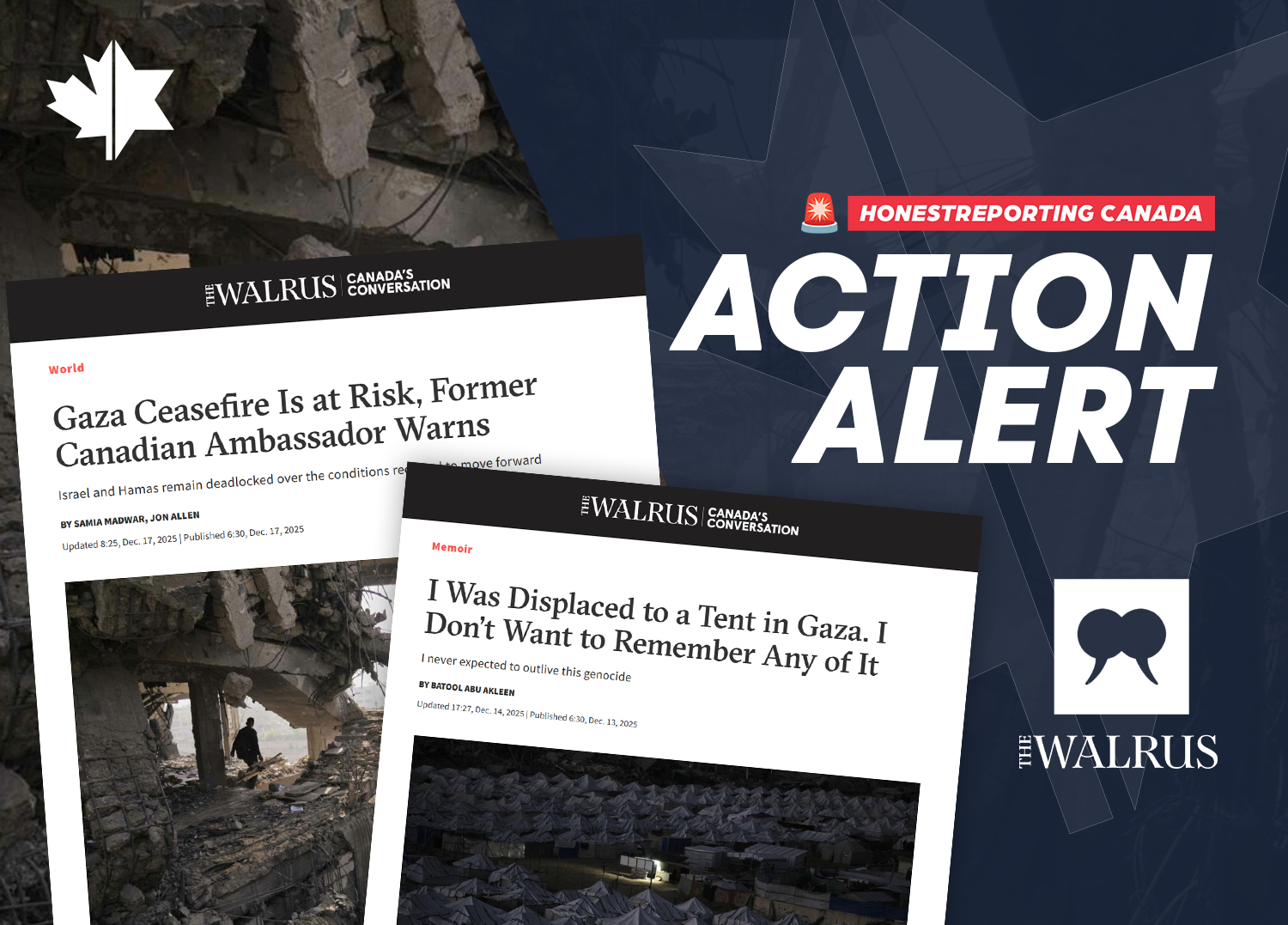
The publication of Batool Abu Akleen’s memoir excerpts in The Walrus magazine has sparked significant debate over the portrayal of the ongoing Israel-Gaza conflict. The December 14 article, titled “I Was Displaced to a Tent in Gaza. I Don’t Want to Remember Any of It,” presents a deeply personal account of displacement and suffering but has drawn criticism for its selective framing of events.
Abu Akleen’s narrative provides an intimate glimpse into life in Gaza’s displacement camps, detailing her family’s daily struggles, overwhelming anxiety, and attempts to maintain normalcy amid chaos. As a former student at the Islamic University, she recounts how her education was disrupted when the university was targeted by Israeli forces, and she mourns the death of her professor, Refaat Alareer, who was killed in a bombing that also claimed the lives of several family members.
However, critics point to significant contextual omissions throughout the memoir. Notably absent is any acknowledgment of the October 7, 2023 Hamas attack that precipitated the current conflict—an assault that resulted in approximately 1,200 Israeli deaths and the taking of 251 hostages, many of whom reportedly suffered abuse in captivity.
The memoir’s portrayal of the Islamic University as simply an educational institution has also raised questions. Security analysts note the university’s complicated history, having been established by Hamas founder Sheikh Ahmed Yassin. According to American scholar Cary Nelson’s book “Israel Denial,” the institution has historically served as “a Hamas recruitment center” and what journalist Thanassis Cambanis described as the “brain trust and engine room of Hamas.” Israeli military officials claimed the targeting of the facility was based on intelligence indicating it was being used for military purposes.
Similarly, Abu Akleen’s portrayal of Professor Alareer has been contested. While presented as a beloved educator in the memoir, critics point to Alareer’s controversial public statements, including reported comments to the BBC in October 2023 appearing to justify Hamas attacks on civilians and social media posts containing inflammatory rhetoric against Israelis.
Throughout her account, Abu Akleen characterizes Israel’s military response as “genocide,” a term that carries significant legal weight but remains contested by international legal experts. The casualty figures referenced derive primarily from the Gaza Health Ministry, which critics note is Hamas-controlled and uses methodologies that don’t clearly distinguish between civilian casualties and combatants.
The Walrus published another Gaza-focused article just three days later, featuring an interview with former Canadian ambassador to Israel Jon Allen. The piece has similarly drawn criticism for framing questions with apparent anti-Israel bias, including an opening question that attributed ceasefire violations exclusively to Israel, which even Allen, despite being generally critical of Israeli policies, felt compelled to correct.
Critics of both articles point to what they see as a pattern of one-sided coverage at The Walrus, which receives government funding support. They argue that while civilian suffering in Gaza is undeniable and deserves attention, the magazine’s approach lacks crucial context needed for readers to fully understand the complexity of the conflict.
Abu Akleen, who powerfully documented her experiences living in a Gaza displacement camp, is currently studying cinema at the Sorbonne in Paris, according to information not included in the magazine’s author description.
The controversy highlights the broader challenges of reporting on one of the world’s most contentious conflicts, where personal narratives of suffering intersect with complex geopolitical realities and competing historical claims.
Fact Checker
Verify the accuracy of this article using The Disinformation Commission analysis and real-time sources.

5 Comments
Curious to hear more about the criticism of the article’s framing. What specific contextual elements were omitted that readers felt were important for understanding the full picture? A thoughtful discussion of these concerns could enhance the overall reporting.
It’s good to see media outlets covering the human impact of the Israel-Gaza conflict, but the lack of context is concerning. Providing more historical and political background could help readers better contextualize the personal narratives and form more informed opinions on this complex issue.
Reporting on such a contentious topic requires great care and nuance. It’s understandable that the memoir would spark debate, given the selective framing. A more comprehensive analysis examining multiple perspectives may help readers gain a more balanced understanding of the situation.
While personal accounts can be powerful, it’s crucial that media outlets provide sufficient context when covering complex, multifaceted issues like the Israel-Gaza conflict. Thoughtful, nuanced reporting that explores diverse perspectives is needed to foster greater understanding.
This is a complex and sensitive issue. While the personal accounts provide important insights, it’s critical to consider the broader geopolitical context to understand the conflict fully. I hope both sides can find a peaceful resolution that respects the rights and dignity of all.