


Listen to the article
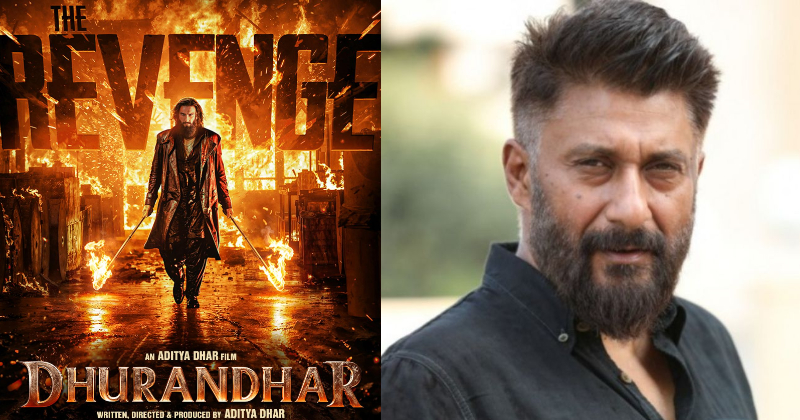
The controversy surrounding filmmaker Aditya Dhar’s blockbuster “Dhurandhar: The Revenge” escalated this week after social media users noticed what appeared to be filmmaker Vivek Agnihotri endorsing criticism of the film.
The action thriller, starring Ranveer Singh, has shattered box office records, amassing over Rs 300 crore worldwide within just two days of its release. While audiences have largely embraced the film, it has simultaneously faced criticism from some quarters who claim it serves as propaganda for India’s ruling government.
The controversy intensified when popular YouTuber Dhruv Rathee released a video condemning “Dhurandhar: The Revenge” as “even bigger propaganda” than its predecessor. What caught attention was an alleged screenshot showing filmmaker Vivek Agnihotri—known for his own politically charged films—liking Rathee’s critical video.
“Vivek Agnihotri liking a Dhruv Rathee video calling Dhurandhar 2 a propaganda film was not on my 2026 bingo card,” wrote the social media user who first shared the screenshot, which quickly went viral across platforms.
This apparent endorsement raised eyebrows throughout the film industry and on social media, particularly because Agnihotri himself has faced similar accusations regarding his own filmography, which includes “The Kashmir Files” and “The Bengal Files.” Many observers noted the irony of a filmmaker accused of creating propaganda seemingly agreeing with criticism of another director’s work in the same vein.
Social media reactions were swift and pointed. One user commented: “He is the master of propaganda films. How can someone steal it from him?” Another suggested Agnihotri’s actions stemmed from professional jealousy: “He is just jealous that none of his ‘Files’ worked after The Kashmir Files.”
Several commenters referenced the reportedly poor commercial performance of Agnihotri’s recent project, with one writing in Hindi that Agnihotri likely liked the critical video out of resentment after his own film underperformed at the box office.
Others pointed to potential conflicts of interest, noting Agnihotri’s position on the Central Board of Film Certification (CBFC), which reportedly demanded cuts to “Dhurandhar” before its release. “Vivek Agnihotri simply jumps ship as and when necessary. Don’t forget he is part of the CBFC that butchers films, including Dhurandhar. His own film comes out with minimal cuts. Just a jealous man,” a commenter observed.
The incident highlights the growing tensions within Indian cinema regarding politically charged content and the fine line between patriotic storytelling and propaganda. It also reflects the increasingly polarized discourse surrounding films that touch on national security, terrorism, and government policies.
According to reports, the like appears to have been removed shortly after the screenshot went viral, as Agnihotri’s name no longer appears in the list of users who liked Rathee’s video. This has made it difficult to verify the authenticity of the original screenshot.
Neither Agnihotri nor Dhar has officially commented on the controversy. Meanwhile, “Dhurandhar: The Revenge” continues its strong performance at the box office, seemingly unaffected by the social media debate surrounding its content and messaging.
The incident underscores how Indian cinema has become a battleground for competing ideological narratives, with filmmakers and critics alike scrutinizing each other’s work for potential political bias or governmental influence.
Fact Checker
Verify the accuracy of this article using The Disinformation Commission analysis and real-time sources.

9 Comments
The ongoing debate around ‘Dhurandhar 2’ highlights the complexities of navigating artistic expression and political messaging in the film industry. I’m interested to see how this conversation evolves, given the involvement of figures like Vivek Agnihotri and Dhruv Rathee.
This is an interesting debate around the controversial film ‘Dhurandhar 2’. I’m curious to see how the public reception plays out, especially with Vivek Agnihotri endorsing the criticism from Dhruv Rathee.
It’s always good to have diverse perspectives on films, especially those that touch on political themes. I’ll be following this story closely to see how it unfolds.
Propaganda in films is a tricky issue – it’s important to maintain artistic freedom while also being mindful of potential biases. I appreciate Dhruv Rathee’s analysis, and Vivek Agnihotri’s endorsement adds an intriguing layer to this discussion.
This debate highlights the need for critical engagement with media, regardless of political leanings. It will be interesting to see if the film’s box office success is impacted by these concerns.
While I’m not familiar with the specifics of this film, I appreciate the public dialogue around the potential for propaganda in popular media. Vivek Agnihotri’s endorsement of Dhruv Rathee’s critique adds an interesting dynamic to the discussion.
It’s crucial that we maintain a critical eye when it comes to the messaging in films, especially those with political undertones. This debate seems to be fostering important conversations on that front.
The success of ‘Dhurandhar 2’ is undeniable, but the claims of propaganda are worth examining closely. I’m glad to see public figures like Vivek Agnihotri and Dhruv Rathee engaging in this discourse.
Nuanced discussions around the intersection of art and politics are important. This debate seems to be generating thoughtful conversations, which is a positive outcome.