


Listen to the article
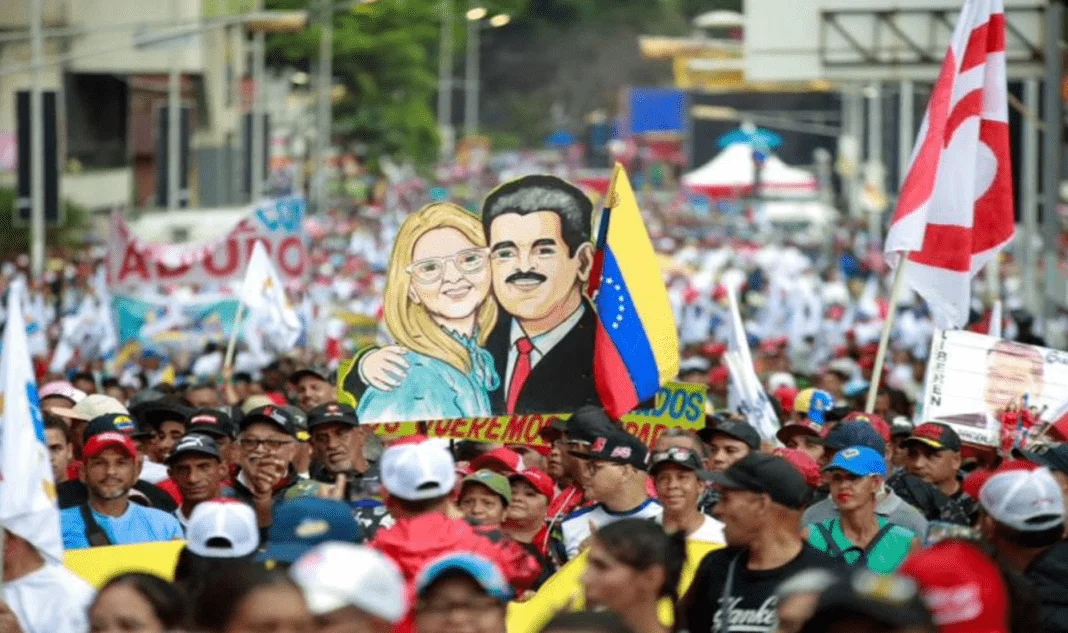
In a striking divide of perceptions, Venezuelan communities inside and outside their homeland have shown dramatically different responses to the recent U.S. military operation against Venezuela. On January 3, 2026, U.S. forces abducted President Nicolas Maduro and his wife Cilia Flores, triggering celebrations among Venezuelan expatriates in Miami and other U.S. cities, while causing mass protests within Venezuela itself.
This stark contrast highlights how geography, socioeconomic backgrounds, and exposure to different information environments have shaped divergent reactions to the same event. While U.S. and Western media prominently featured diaspora celebrations, they largely overlooked the substantial demonstrations occurring across Venezuela that condemned the military action which reportedly killed and wounded over 100 people.
The Venezuelan diaspora in the United States, particularly in Miami, tends to come from middle and upper-class backgrounds with higher rates of educational attainment than the average Venezuelan. Many emigrated after Hugo Chavez came to power in 1999 or following the economic deterioration that accelerated under U.S. sanctions. Their socioeconomic positioning has predisposed many to embrace narratives that blame Venezuela’s troubles primarily on government mismanagement rather than external pressures.
“The Venezuelan diaspora in the United States tends to adhere most closely to a U.S.-centric neoliberal worldview,” notes sociologist Yader Lanuza, who has studied the political divisions among Venezuelans. “These individuals often see themselves as part of a U.S.-aligned cosmopolitan milieu.”
Within Venezuela, the reaction has been markedly different. The military attack generated what political analysts describe as a “rally-behind-the-flag” effect, with citizens across political lines condemning the violation of national sovereignty. The bombing damaged infrastructure in both pro-government and opposition neighborhoods, destroying medical supplies for dialysis patients and damaging research facilities.
Chavismo, the political movement founded by former president Hugo Chavez, remains the strongest political force within Venezuela, having won the majority of elections over the past two decades. The movement controls most levers of power and maintains a mobilized base through communal organizations and the United Socialist Party (PSUV).
Following Maduro’s abduction, Vice President Delcy Rodriguez assumed leadership responsibilities. The Bolivarian government has worked to counter what it describes as U.S. propaganda that aims to fracture the movement and demoralize supporters. Government institutions have remained functional, with Rodriguez enjoying high approval ratings as she navigates the crisis.
Economic factors also play a role in the different perspectives. While many in the diaspora left during peak economic hardship, those who remained in Venezuela have witnessed modest economic recovery since 2020, despite continuing sanctions. This firsthand experience of improvement, however limited, has reinforced support for the government among many citizens.
The information environment forms another crucial dividing line. Venezuelan expatriates in the U.S. receive news primarily through Western corporate media and social networks that emphasize anti-government narratives, while citizens in Venezuela have access to state media and alternative information sources that offer counternarratives highlighting U.S. involvement in the country’s difficulties.
Meanwhile, negotiations between U.S. officials and Venezuelan authorities continue, though details remain closely guarded. Both sides appear to be maneuvering for advantage in what has become both a diplomatic crisis and an information war.
As one Venezuelan emigrant in Paris noted at a recent solidarity rally: “Venezuela is a country that, despite imperialist sanctions, endures. It’s time to stop legitimizing narratives that justify invasions.”
The situation continues to develop, with the long-term implications of this military action still uncertain for both Venezuela’s political future and broader regional stability.
Fact Checker
Verify the accuracy of this article using The Disinformation Commission analysis and real-time sources.

11 Comments
This is a complex and sensitive issue. It’s important to understand the different perspectives and backgrounds of Venezuelans inside and outside the country. The divergent reactions highlight the impact of geography, socioeconomics, and information access on perceptions of events.
Agreed, this is a nuanced situation that deserves careful analysis. It’s crucial to consider the varied experiences and contexts shaping the reactions.
The contrasting views between the Venezuelan diaspora and those within the country underscore the challenges of obtaining objective information and the role of media narratives. A balanced understanding requires examining multiple sources and perspectives.
Absolutely, it’s important to look beyond the dominant media narratives and seek out diverse viewpoints to get a more complete picture of the situation.
This event highlights the complexities of geopolitics and how national identities and allegiances can shift based on one’s geographic and socioeconomic position. Understanding these dynamics is crucial for informed analysis.
Absolutely, the divergence in reactions underscores the importance of considering the nuances of identity, privilege, and access to information when examining such events.
The data on the socioeconomic backgrounds of the Venezuelan diaspora versus the general population is interesting. That likely plays a significant role in shaping their differing reactions and perceptions.
It’s concerning to see the reported casualties from the military action. Regardless of one’s political leanings, the loss of life is always tragic. A thorough and impartial investigation into the events would be warranted.
The influence of U.S. sanctions on Venezuela’s economic deterioration is an important contextual factor to consider when analyzing the different perspectives. The impact of such policies on the general population should not be overlooked.
That’s a good point. The role of external factors like sanctions in shaping the economic and political landscape is crucial to understanding the full context of this situation.
This case study highlights the challenges of navigating complex geopolitical conflicts and the importance of seeking out diverse, well-informed sources to develop a nuanced understanding of events. Simplistic narratives often fail to capture the full picture.