


Listen to the article
Adityanath Accuses Congress of “False Propaganda” Over Varanasi Temple Demolition Claims
Uttar Pradesh Chief Minister Yogi Adityanath strongly refuted allegations regarding the demolition of temples at Manikarnika Ghat in Varanasi, accusing the Congress of deliberately spreading misinformation to impede development projects in the sacred city.
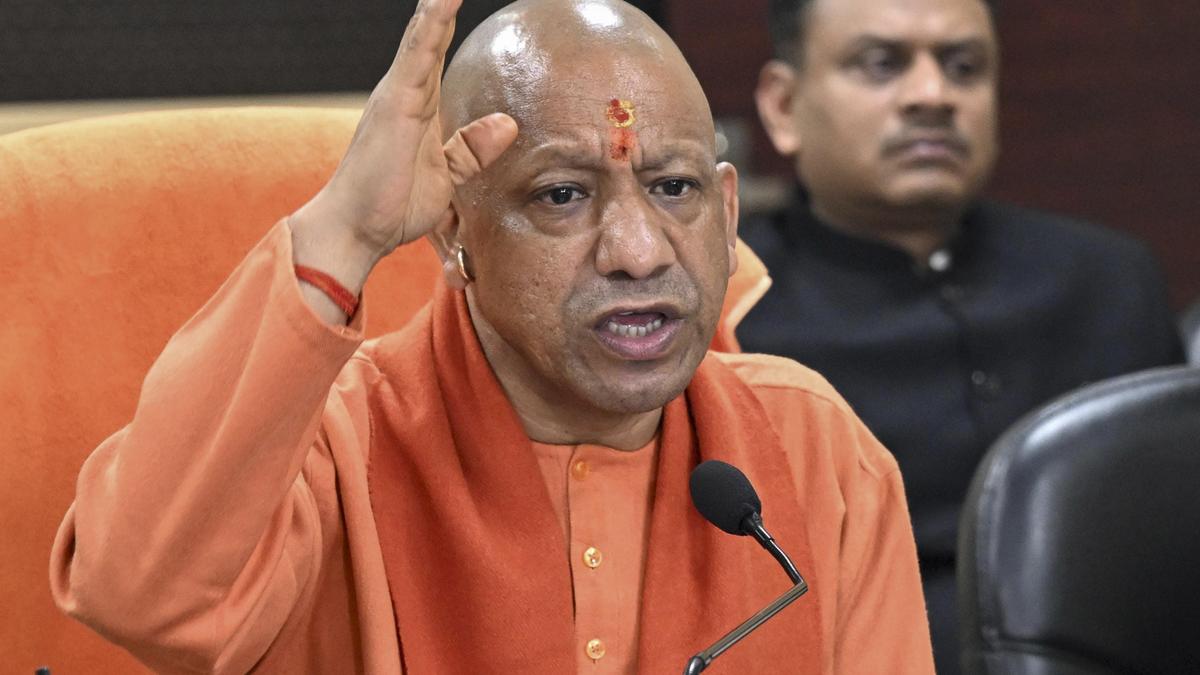
During a press conference in Varanasi on Saturday, Adityanath claimed that images of damaged idols were being circulated on social media as part of a calculated attempt to create public outrage and disrupt ongoing redevelopment efforts at the historic ghat.
“Conspiracies are being hatched to obstruct the comprehensive development projects undertaken over the last 11 years, and misinformation is being spread,” Adityanath said. “When the Kashi Vishwanath Dham was being constructed, similar conspiracies emerged. Broken remnants of idols from statue-making workshops were circulated on social media to falsely claim that temples were being demolished.”
The Chief Minister’s visit to Varanasi came amid growing controversy over renovation work at Manikarnika Ghat, one of the city’s oldest and most sacred cremation sites along the Ganges River. Local activists and opposition parties have raised concerns about potential damage to ancient shrines during the modernization efforts.
Adityanath used the opportunity to criticize what he described as decades of neglect of Varanasi following India’s independence. “After Independence, Kashi did not receive the respect it deserved, nor the development it should have witnessed,” he said. “Over the past 11 years, Kashi has once again begun preserving and promoting its spiritual and cultural heritage while also achieving new heights through physical and infrastructural development.”
The redevelopment of Varanasi, Prime Minister Narendra Modi’s parliamentary constituency, has been a flagship project of both the central and state governments. The Kashi Vishwanath Corridor, completed in 2021, significantly transformed the area surrounding the ancient temple by clearing congested lanes and creating a spacious complex connecting the shrine to the Ganges riverfront.
Highlighting the economic impact of these development initiatives, Adityanath presented impressive visitor statistics. “Before the construction of the Kashi Vishwanath Corridor, an average of 5,000-25,000 pilgrims visited the shrine daily. After the corridor, this number has risen to 1.25 to 1.5 lakh devotees per day,” he stated. “On special occasions, footfall increases to six to ten lakh. Last year alone, more than 11 crore devotees visited Baba Vishwanath Dham. Kashi by itself has contributed ₹1.3 lakh crore to the country’s GDP.”
The controversy reflects ongoing tensions between preservation of heritage and modernization efforts in India’s ancient cities. Varanasi, considered one of the world’s oldest continuously inhabited urban settlements with a history spanning over 3,000 years, presents unique challenges for urban planners attempting to balance reverence for tradition with contemporary infrastructure needs.
Adityanath credited Prime Minister Modi with establishing a vision that maintains Varanasi’s historic character while presenting it as a modern religious and cultural destination. “Whether it is the construction of the Ram Temple at Shri Ram Janmabhoomi in Ayodhya after 500 years or development works in Prayagraj, Kashi, Ayodhya, Vindhyavasini Dham, Buddhist pilgrimage sites, or other heritage locations across India, all beautification and conservation works are being carried out smoothly under the leadership of Prime Minister Modi,” he said.
The Congress party has not yet issued a formal response to Adityanath’s accusations, though regional opposition leaders have called for greater transparency regarding the redevelopment plans and better consultation with local religious authorities and heritage experts.
Urban development experts note that the transformation of Varanasi represents one of India’s most ambitious heritage city renovation projects, with potential lessons for similar initiatives across the country’s numerous historic urban centers.
Fact Checker
Verify the accuracy of this article using The Disinformation Commission analysis and real-time sources.

9 Comments
Accusations of ‘false propaganda’ are concerning, as they can undermine legitimate concerns. I hope all parties can come together to find a way forward that respects the cultural and historical significance of Varanasi.
The redevelopment of Varanasi is an important issue that deserves careful consideration. I’m interested to learn more about the specific plans and how they aim to balance the needs of the local community with larger development goals.
This seems to be a complex issue with valid arguments on both sides. I’m curious to learn more about the specifics of the redevelopment plans and how local communities have been consulted throughout the process.
Maintaining the historical and spiritual significance of Varanasi is important, but development can also bring important improvements. I hope the government can find a way to balance these competing priorities.
It’s concerning to hear allegations of misinformation being spread. Objective, fact-based reporting is crucial in these types of debates. I look forward to seeing more details emerge about the redevelopment plans.
The redevelopment efforts in Varanasi seem to be a politically charged issue. It’s important to address concerns about cultural preservation while also allowing for necessary infrastructure upgrades. A balanced approach that respects heritage is ideal.
The demolition of temples is a sensitive topic that deserves careful investigation. I’m curious to learn more about the specifics of the redevelopment plans and how local stakeholders are being consulted.
The Chief Minister’s comments raise some valid points about the need for development, but the concerns about cultural preservation also deserve serious consideration. A middle ground solution may be the best path forward.
Accusations of ‘false propaganda’ are common in politics. Without access to unbiased information, it’s difficult to determine the truth. I hope both sides can come together to find a solution that benefits the local community.