


Listen to the article
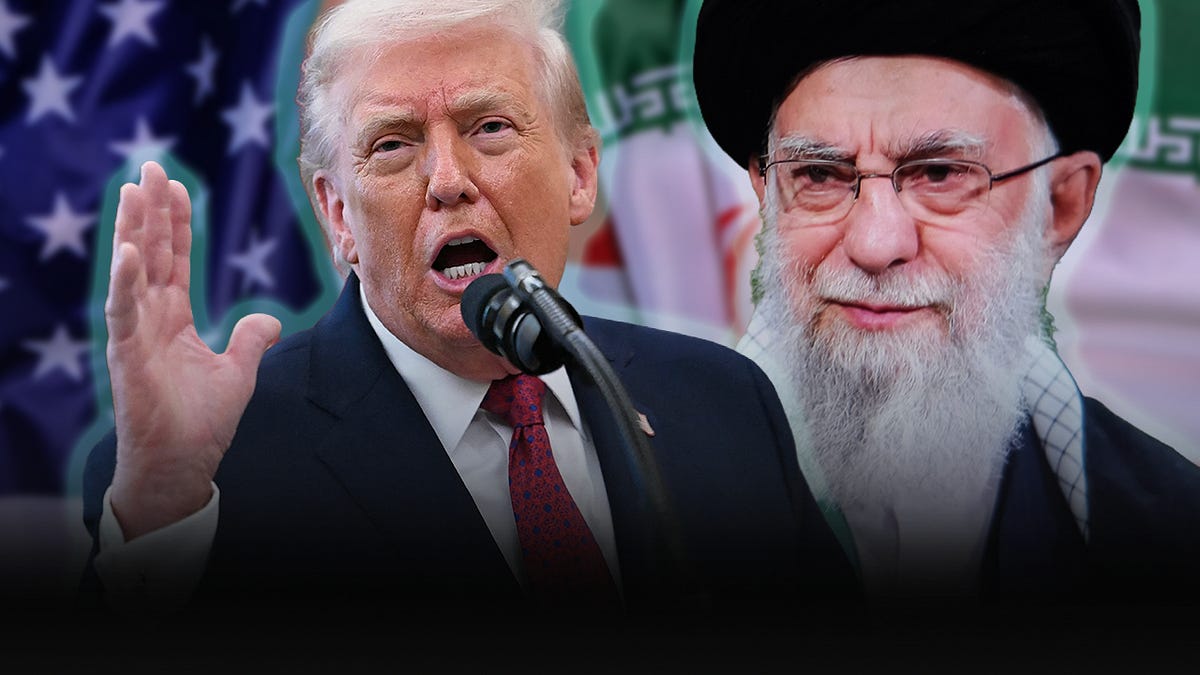
In a stark historical parallel to today’s foreign policy debates, the rhetoric surrounding America’s military interventions has changed little since the Vietnam War. As tensions escalate with Iran following President Trump’s unprecedented military buildup in the Middle East, Americans are witnessing familiar propaganda patterns that have preceded nearly every U.S. foreign conflict over the past seven decades.
When President Lyndon B. Johnson dramatically escalated American involvement in Vietnam in 1965, he framed the conflict as a humanitarian mission during a pivotal speech at Johns Hopkins University. “Tonight Americans and Asians are dying for a world where each people may choose its own path to change,” Johnson declared, comparing U.S. motives to those of American revolutionaries fighting for independence from Britain.
This narrative—that America intervenes purely from benevolence and selflessness—has become a template for justifying subsequent military actions. “We want nothing for ourselves,” Johnson insisted about Vietnam, “only that the people of South Viet-Nam be allowed to guide their own country in their own way.”
Central to selling this narrative was the strategic deployment of Western-connected Vietnamese activists who claimed to represent their countrymen’s desire for American intervention. Organizations like The American Friends of Vietnam, later revealed to have CIA connections, were instrumental in convincing Americans that ordinary Vietnamese people welcomed U.S. military action.
To further galvanize support, government officials and media outlets characterized the enemy not merely as repressive but as uniquely barbaric. Tom Dooley’s bestseller “Deliver Us From Evil” described North Vietnamese atrocities so savage “that only the Nazis could compete with such sadism.” Historians later determined many of these accounts were fabricated.
This propaganda playbook reappeared during the 2003 Iraq War, when President George W. Bush echoed Johnson’s language: “We have no ambition in Iraq, except to remove a threat and restore control of that country to its own people.” Vice President Dick Cheney famously predicted, “We will, in fact, be greeted as liberators.”
The pattern continued through interventions in Libya, Syria, and Venezuela, with carefully selected exiles presented as authentic voices of their homelands, invariably claiming their compatriots desired American military action. Targeted regimes were consistently portrayed as committing atrocities rivaling history’s worst—with Saddam Hussein repeatedly compared to Hitler.
In each case, those questioning military action faced accusations of supporting tyrannical regimes and being indifferent to the suffering of oppressed peoples. Opposition to the Vietnam War was characterized as supporting Ho Chi Minh; critics of the Iraq War were labeled “objectively pro-Saddam”; and today, those questioning potential conflict with Iran are portrayed as sympathetic to the ayatollahs.
The humanitarian outcomes of these interventions have seldom matched the rhetoric. Vietnam saw an estimated 3.8 million Vietnamese deaths, with 11.7 million South Vietnamese forced from their homes and up to 4.8 million exposed to toxic chemicals like Agent Orange. The Pentagon Papers later revealed systematic government deception about the war’s progress, while the Gulf of Tonkin incident—the pretext for escalation—was ultimately confirmed as fabricated by the U.S. Naval Institute.
Despite this track record, recent polling by The Washington Post shows that Americans overwhelmingly oppose new foreign interventions. The promise to end such wars was central to President Trump’s 2016 electoral victory, suggesting a growing public awareness of these patterns.
As tensions with Iran escalate, the familiar cycle of demonization, selective representation, and accusations against critics continues unabated. While the specific target has changed, the techniques remain identical to those used to justify previous conflicts—conflicts that most Americans, including Vietnam veterans, now view as mistakes based on government deception.
For a public increasingly skeptical of foreign entanglements, recognizing these recurring patterns may be crucial to evaluating calls for new military interventions before they begin rather than regretting them after the fact.
Fact Checker
Verify the accuracy of this article using The Disinformation Commission analysis and real-time sources.

7 Comments
This article highlights an important point – the US frequently frames its military actions as noble crusades for freedom and democracy, when the underlying motivations are often much more complex and self-serving.
Exactly. We should be wary of this simplistic ‘good vs. evil’ narrative and dig deeper to understand the geopolitical and economic factors driving US foreign policy.
This pattern of war rhetoric has indeed been a recurring feature of US foreign policy for decades. The claim of altruistic intervention to allow people to ‘choose their own path’ rings hollow given the history of US military interventions.
It’s concerning to see the same propaganda tactics being deployed again to justify potential military action. We should be highly skeptical of claims that the US is acting solely out of benevolence and selflessness.
Absolutely. The historical record shows a consistent pattern of the US pursuing its own strategic interests, often at the expense of the people it claims to be helping.
The parallels between the rhetoric used to justify the Vietnam War and current tensions with Iran are quite striking. It’s crucial that we learn from history and subject these claims of altruism to rigorous scrutiny.
This is a timely and insightful analysis. The ability to critically examine the narratives used to justify military interventions is essential for a well-informed public discourse on these important issues.