


Listen to the article
Immigration and Customs Enforcement (ICE) has sparked controversy with its recent social media strategy, which critics describe as a troubling blend of memes, AI-generated imagery, and dehumanizing content to promote the administration’s immigration policies.
In March, ICE arrested a woman accused of drug trafficking and illegal entry. The White House’s official Twitter account then used AI to create a cartoon illustration of her weeping in handcuffs, styled after Studio Ghibli animations. The post garnered 155,000 likes and 76 million views, with many supporters claiming the image represented exactly what they had voted for.
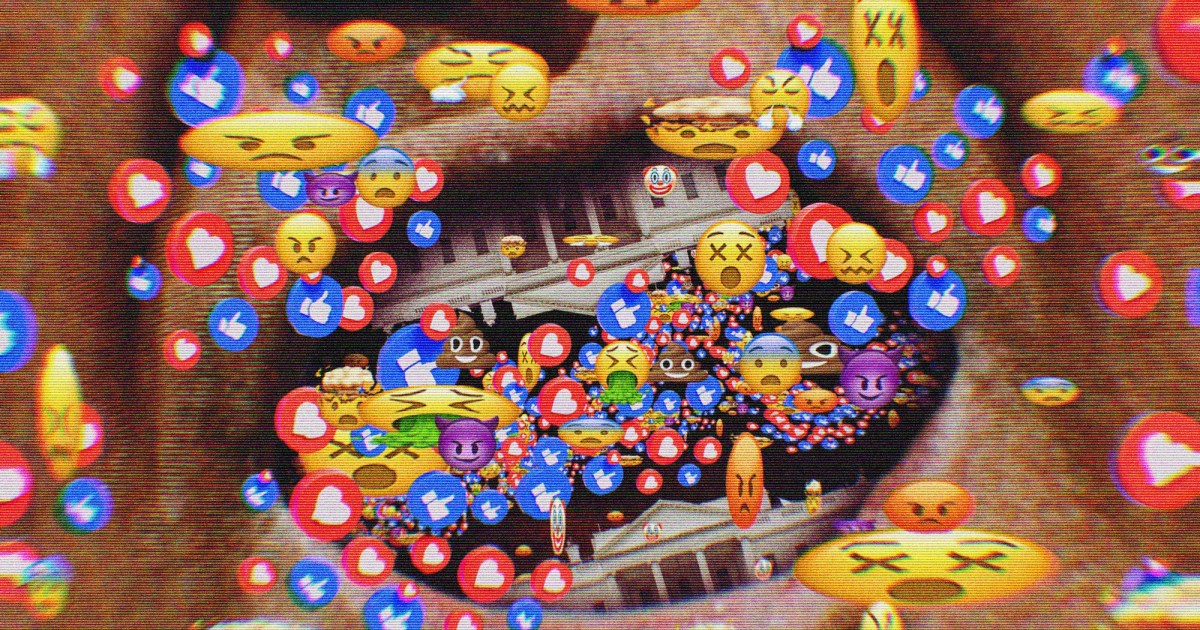
This incident exemplifies what has become the official communication approach of U.S. government agencies, including ICE, the White House, and the Department of Homeland Security. Their social media accounts now regularly feature memes, AI-generated images, and references to popular culture that trivialize serious enforcement actions.
“It’s classic, textbook propaganda,” says Joan Donovan, a disinformation scholar and co-director of the Critical Internet Studies Institute. She believes these posts are likely created by younger men “who work for relatively cheap or for free, for the glory of Trump resharing a meme.”
The content often targets young white men through recruitment-style posts. One example repurposes a 1970s-looking van advertisement asking, “Want to deport illegals with your absolute boys?” Another ICE recruitment effort features Uncle Sam at a crossroads with signposts labeled “INVASION” and “CULTURAL DECLINE” pointing one way and “SERVICE” and “OPPORTUNITY” pointing another.
Experts have noted disturbing connections to far-right imagery. The phrase “Which way, American man?” used in one post closely mirrors “Which way, Western man?”, the title of a book by white nationalist author William Gayley Simpson that has become a popular far-right meme.
The administration has also used social media to generate support for controversial policies like the immigration detention facility nicknamed “Alligator Alcatraz.” Even before the facility officially opened, administration officials joked about escapees dying by alligator attacks and shared AI-generated images of President Trump alongside alligators wearing ICE hats.
Jason Stanley, a philosopher and professor at the University of Toronto who is leaving the United States due to “concerns over fascism,” sees these tactics as part of a larger strategy. “What you have is this desire to get people to buy into the fun of sadism,” he explains. The memes about detention and deportation invite audiences to delight in what Stanley describes as “torture.”
Stanley connects this to what his colleague Timothy Snyder calls “sadopopulism”—implementing policies that harm certain populations while encouraging scapegoating against marginalized groups. “What they’re offering people is not health insurance or economic security,” Stanley says. “They’re offering them delight in the torture of others.”
The use of propaganda to normalize state violence has historical precedents. During the Holocaust, cartoons depicted Jews as rats to provoke disgust. More recently, supporters of former Philippines President Rodrigo Duterte used memes to popularize his deadly drug war. Russian military bloggers increased propagandistic imagery before the full-scale invasion of Ukraine in 2022.
Donovan warns that these propaganda efforts coincide with ICE lifting age caps on recruitment and sharing memes about fathers and sons “hunting migrants” together. She fears these tactics could catalyze “a new, potentially very violent street movement.”
The approach mirrors strategies documented in extremist spaces. In 2017, a leaked style guide from neo-Nazi website Daily Stormer instructed writers that “the unindoctrinated should not be able to tell if we are joking or not” and to “make light of” violence.
“These accounts are offering up a view of America that isn’t about inclusivity and democracy,” Donovan concludes. “History is our cipher here. It’s going to help decode the imagery, the dog whistles, the derivative way in which they’re using aspects of culture.” She warns that eventually, “There’s a price to pay for that kind of behavior.”
Fact Checker
Verify the accuracy of this article using The Disinformation Commission analysis and real-time sources.

6 Comments
This is a concerning trend. Using propaganda tactics like memes and AI-generated images to promote harsh enforcement policies is troubling. We need our government to communicate with honesty, nuance and a focus on solutions, not manipulation.
This is concerning. Using AI and memes to dehumanize people and promote harsh policies is troubling. We need government communications that are factual, compassionate, and focused on real solutions rather than propaganda tactics.
I’m worried about the government’s increasing reliance on propaganda tactics like this. Trivializing serious issues through memes and AI imagery seems like a deliberate attempt to sway public opinion rather than inform it. We deserve better from our leaders.
This is a deeply troubling development. Using AI and memes to dehumanize people and promote harsh policies is unacceptable. Our government should be focused on transparent, fact-based communication that addresses real problems, not propaganda that distorts the truth.
I’m troubled by the government’s apparent shift towards propaganda tactics like this. Trivializing serious enforcement actions with memes and AI imagery seems like an attempt to manipulate public opinion rather than inform it. We deserve honest, nuanced communication from our leaders.
I agree, the use of AI-generated imagery and memes to promote policies feels very manipulative. It’s important that the government maintains a factual, transparent, and ethical approach in their communications.