


Listen to the article
In a significant strategic shift, the U.S. State Department is intensifying its public diplomacy efforts to counter propaganda campaigns from adversaries while communicating American foreign policy priorities to international audiences, according to a senior official.
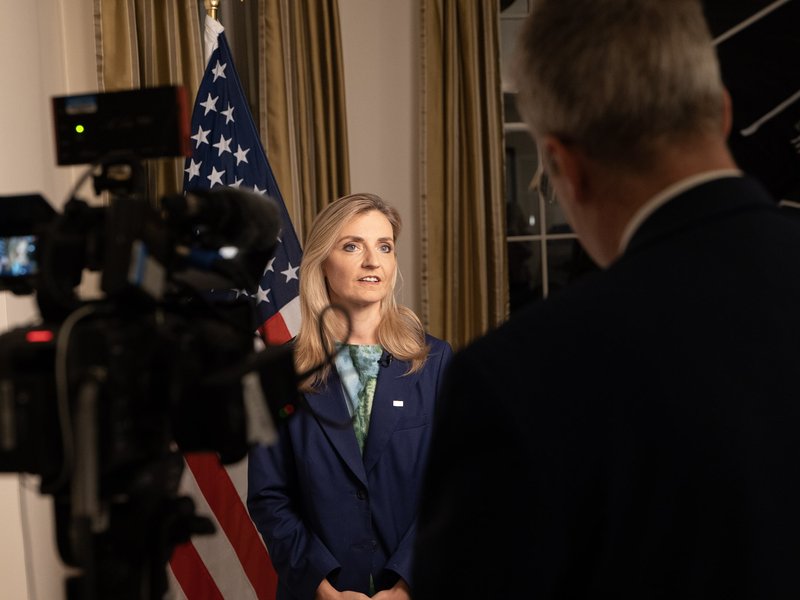
Under Secretary of State for Public Diplomacy Sarah Rogers detailed these initiatives during testimony before the House Foreign Affairs Committee on Thursday, framing public diplomacy as a critical component of U.S. national security in an era of heightened geopolitical competition.
“As the President has said, the United States is conducting military operations in Iran under Operation Epic Fury to eliminate threats posed by the Iranian regime to America, our forces and our partners,” Rogers told lawmakers. Her testimony comes amid escalating tensions in the Middle East, with the State Department’s immediate focus centered on ensuring the safety of American citizens abroad.
The department has significantly ramped up evacuation efforts in recent weeks. “Since February 28th, the department has facilitated the safe return of over 17,500 American citizens from the Middle East,” Rogers said, highlighting the scale of the operation. Officials are utilizing social media and the Smart Traveler Enrollment Program to communicate safety guidance to Americans in affected regions.
Beyond the immediate crisis management, Rogers outlined a comprehensive approach to public diplomacy built on two main pillars. The first involves cultivating long-term relationships through educational and cultural exchanges managed by the Bureau of Educational and Cultural Affairs. Programs like Fulbright, Gilman, and the International Visitor Leadership Program create connections with emerging foreign leaders and help build lasting international partnerships.
“We maintain a global network of exchange programmes, English language initiatives and cultural partnerships that connect us to millions of emerging leaders,” Rogers explained.
The second pillar focuses on strategic messaging through the Bureau of Global Public Affairs, which Rogers described as shaping “global media narratives using every digital channel to reach our key audiences.” The department is increasingly leveraging advanced technologies to enhance these efforts.
“We are harnessing artificial intelligence and advanced analytics to identify emerging trends and measure effectiveness,” she said, pointing to the adoption of modern tools to counter sophisticated disinformation campaigns from countries like China and Iran.
The State Department has also implemented new branding guidelines to ensure American-funded initiatives are clearly identified abroad. “We’ve implemented a new unified branding guideline centered on the American flag,” Rogers noted, emphasizing the importance of linking U.S. assistance to its source.
Rogers highlighted how public diplomacy efforts are tailored to advance specific foreign policy objectives across different regions. In the Western Hemisphere, initiatives focus on combating illegal immigration and disrupting transnational criminal organizations. Indo-Pacific programs emphasize American technological leadership, while Middle Eastern and African efforts center on building partnerships that promote peace and economic development.
Sports diplomacy has emerged as an increasingly important tool in this arsenal. With the United States set to host several major international sporting events in the coming years, including the FIFA World Cup and Los Angeles Olympic Games, Rogers sees unique opportunities for cultural engagement.
“We are seizing unique opportunities to amplify our impact as the country enters a decade of sports ahead of the FIFA World Cup and Los Angeles Olympic Games,” she said. “We are using this milestone to celebrate American achievement on the global stage.”
The enhanced focus on public diplomacy comes at a time when international information spaces are increasingly contested. Rogers emphasized that freedom of expression remains America’s “most famous freedom and our number one strength,” with the United States actively advocating for free speech internationally while simultaneously working to counter foreign propaganda efforts that threaten American interests.
As geopolitical tensions persist, these diplomatic initiatives represent a key component of Washington’s broader strategy to maintain influence and counter adversaries in the information domain.
Fact Checker
Verify the accuracy of this article using The Disinformation Commission analysis and real-time sources.

6 Comments
The Under Secretary’s testimony emphasizes the importance of public diplomacy as a strategic tool in the current geopolitical environment. Effective communication and messaging can be just as vital as traditional military operations.
It’s encouraging to see the State Department taking a more proactive approach to countering adversarial propaganda. Clear and consistent messaging will be key to shaping the narrative and protecting American interests.
Countering propaganda from adversaries like Iran and China is a critical national security concern. It will be important to see how the U.S. State Department’s public diplomacy initiatives evolve to address these threats.
Interesting to see the U.S. ramp up public diplomacy efforts to counter adversary propaganda. Effective communication of American foreign policy priorities is crucial in today’s geopolitical landscape.
The State Department’s focus on evacuating over 17,500 American citizens from the Middle East in recent weeks highlights the scale of the ongoing challenges. Diplomacy and messaging will be key to navigating these complex situations.
Agreed. Keeping American citizens safe abroad is a top priority, and the evacuation efforts underscore the volatile nature of the region.