


Listen to the article
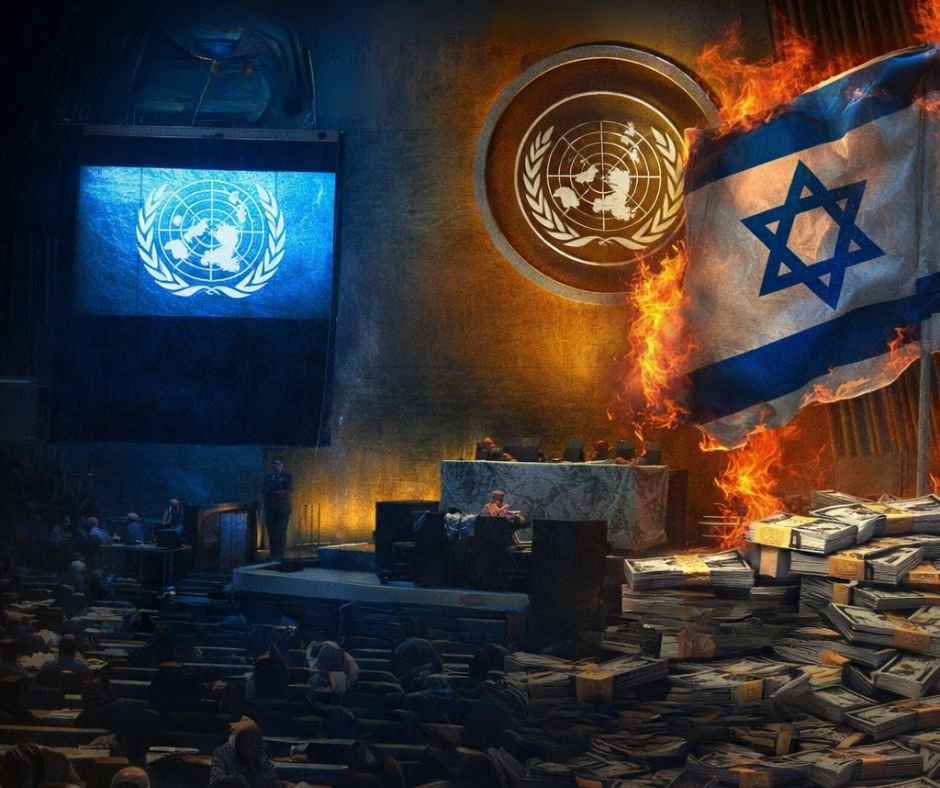
The United Nations is spending an estimated $100 million annually on what Israeli officials describe as an anti-Israel apparatus, raising serious concerns about the world body’s commitment to its original peacekeeping mission.
According to a recent analysis by Israel’s UN mission, approximately $100 million is “dedicated to activities against the State of Israel, to investigations, to discussions, to comprehensive decisions that work against us,” said Ambassador Danny Danon. These funds are distributed across numerous UN agencies, committees, and special mechanisms that appear structurally oriented against the Jewish state.
The UN Relief and Works Agency (UNRWA), which serves Palestinian refugees, is set to receive $86.5 million in the upcoming year, making it the largest beneficiary of these expenditures. UNRWA has faced persistent criticism for allegedly perpetuating refugee status across generations rather than resolving it, and for fostering anti-Israel sentiment.
U.S. Secretary of State Marco Rubio recently called UNRWA “a corrupted organization that’s unsalvageable,” suggesting that humanitarian assistance could be channeled more effectively through alternative mechanisms. Several nations, including the United States, have suspended or reduced funding to UNRWA amid allegations of ties to Hamas and ongoing anti-Israel activities.
Within the UN’s Department of Political Affairs sits the Division for Palestinian Rights (DPR), which alongside related committees like the Committee on the Exercise of the Inalienable Rights of the Palestinian People, consumes approximately $4 million annually. With a dedicated 15-person staff, this division effectively serves as a permanent advocacy unit for Palestinian interests – a structure without parallel for any other cause or conflict within the UN system.
The Geneva-based UN Human Rights Council allocates millions more toward Israel-focused investigations. Its Commission of Inquiry on Israel costs roughly $4 million per year, producing reports that frequently accuse Israel of human rights violations while giving limited attention to attacks against Israeli civilians.
The Council maintains the controversial Agenda Item 7, which ensures Israel faces scrutiny during every session – a requirement imposed on no other nation. Western diplomats have repeatedly denounced this arrangement, with former U.S. ambassador Richard Grenell describing it as “motivated by one thing: antisemitism.”
Additional UN initiatives quietly funnel resources into activities that Israel views as hostile. Budget records reveal approximately $800,000 annually for media training and travel support for Palestinian journalists, potentially influencing global coverage of the conflict. Another $1 million supports conferences promoting a Middle East “Weapons of Mass Destruction-Free Zone,” which Israeli officials argue disproportionately targets their country while overlooking hostile neighbors.
The Office of the UN High Commissioner for Human Rights maintains staff dedicated to updating a corporate blacklist of businesses operating in Israeli communities in Judea and Samaria, effectively encouraging commercial boycotts.
“It is a shame that so much money is dedicated to activities against Israel instead of going to places that truly need the investment,” Ambassador Danon noted, highlighting that severe humanitarian crises elsewhere receive comparatively little support.
This situation is particularly striking given that Israel contributes approximately $21 million in annual UN dues, while the Palestinian Authority, despite its elevated observer status, contributes nothing. In effect, Israeli taxpayers are partially funding programs targeting their own country.
The imbalance extends beyond budgetary allocations to voting patterns. From 2015 through 2022, the UN General Assembly adopted 140 resolutions condemning Israel, compared to just 68 resolutions against all other nations combined. In 2022 alone, the Assembly passed 15 resolutions criticizing Israel but only 13 total for the rest of the world, including major human rights violators like China, Saudi Arabia, and Venezuela.
At the Human Rights Council, the bias is institutionalized through Agenda Item 7. While other countries’ human rights records are discussed under general agenda items, only Israel faces a dedicated, permanent scrutiny mechanism.
Western democracies have increasingly objected to this approach. The United States withdrew from the Council in 2018, describing it as “a cesspool of political bias.” Canada, the United Kingdom, Australia, and Germany have joined in condemning this framework, with London declaring it would oppose all resolutions submitted under Agenda Item 7, calling it “a fundamental flaw that singles out Israel on a permanent basis.”
The roots of this institutional bias trace back decades. In 1975, the General Assembly passed Resolution 3379, which equated Zionism with racism. Though revoked in 1991, its legacy persists in contemporary UN structures and attitudes.
Reform advocates propose several measures, including abolishing Agenda Item 7, disbanding the Division for Palestinian Rights, and restructuring UNRWA by integrating its functions into the UN High Commissioner for Refugees to ensure consistent standards across all refugee populations.
Democratic nations have been working to build coalitions opposing repetitive anti-Israel resolutions, with gradual progress as more countries abstain or vote against measures perceived as biased.
Until meaningful reform occurs, critics warn that the UN risks cementing its reputation as what some Israelis describe as “the world’s most expensive anti-Israel propaganda machine.” Proponents of change argue that returning the organization to its founding principles of fairness and universal human rights would benefit not just Israel, but the entire international community.
As the situation stands, the disproportionate focus on one democratic state while authoritarian regimes often escape scrutiny continues to undermine the UN’s moral authority and alienate supporters of its original mission.
Fact Checker
Verify the accuracy of this article using The Disinformation Commission analysis and real-time sources.

8 Comments
This is a complex and sensitive issue that deserves careful analysis. I think it’s important to avoid knee-jerk reactions and instead strive for a nuanced, factual understanding of the situation, including the perspectives and concerns of all stakeholders involved.
The article mentions concerns about the UN’s commitment to its original peacekeeping mission. It would be interesting to hear perspectives on whether these Israel-related initiatives are in line with the UN’s core mandate, or if they are seen as detracting from other important priorities.
This is a controversial topic with strong opinions on both sides. It’s important to get the facts straight and avoid inflammatory rhetoric. What exactly are the allegations against UNRWA, and is there evidence to support claims of anti-Israel bias?
Fair point. The article mentions persistent criticism of UNRWA, but more details on the specific allegations and evidence would be helpful to evaluate the situation objectively.
Spending $100 million annually on Israel-related initiatives does seem like a significant allocation, even for a large organization like the UN. I’m curious to learn more about how these funds are being utilized and whether they are being used effectively to address the underlying issues.
Agreed, the scale of the spending warrants close scrutiny. Understanding the breakdown of how these funds are allocated across different UN agencies and initiatives would provide more context.
The criticism of UNRWA as perpetuating refugee status rather than resolving it is thought-provoking. If there are indeed issues with how the agency operates, it may be worth exploring alternative mechanisms for providing humanitarian assistance as suggested by Secretary Rubio.
That’s a valid point. Evaluating the effectiveness and long-term impact of UNRWA’s approach could help determine if alternative models might be more beneficial.