


Listen to the article
Ukrainian Speed Skater Forced to Remove Inspirational Message from Helmet at Olympics
Ukrainian short track speed skater Oleh Handei has been instructed to cover an inspirational message on his helmet at the Winter Olympics after officials deemed it connected to the ongoing conflict with Russia, marking the second such incident involving Ukrainian athletes at the Games.
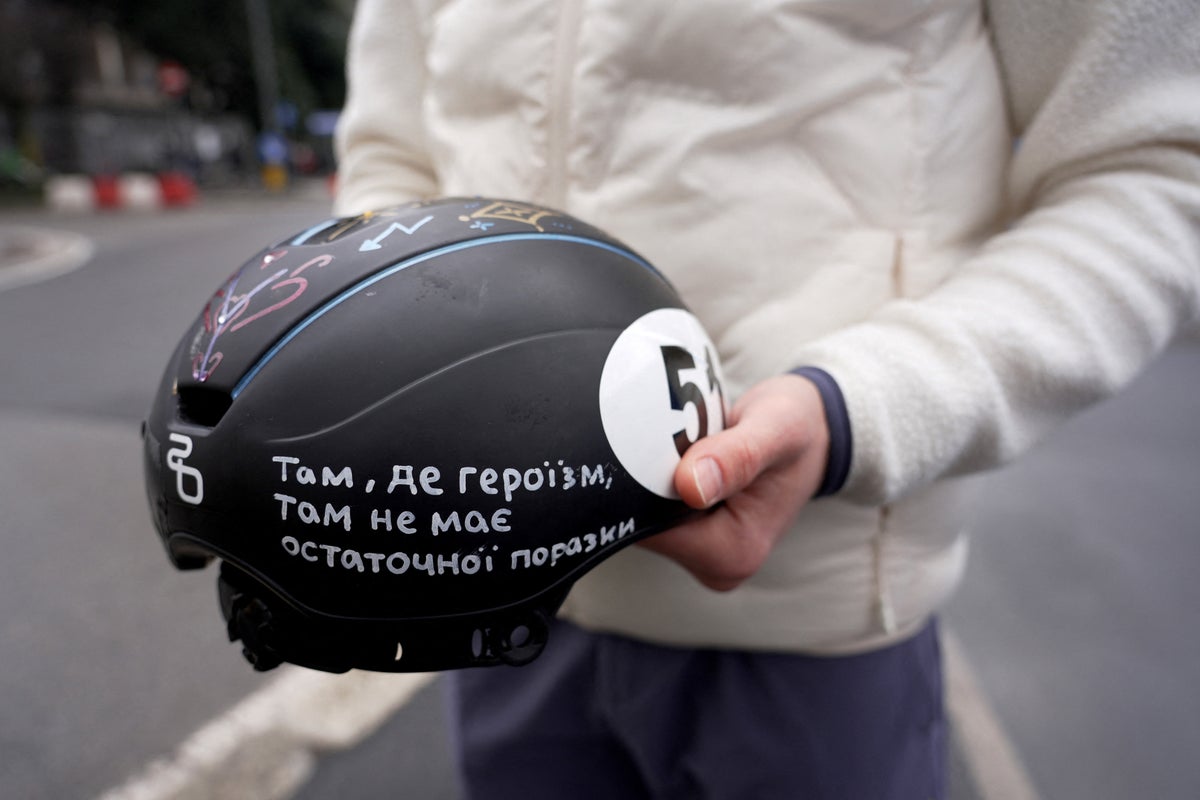
Handei, who is scheduled to compete in the 1500 meters at the Milano Cortina Games on Saturday, had decorated his helmet with the quote: “Where there is heroism, there can be no final defeat.” The line, penned by renowned Ukrainian writer Lina Kostenko, was intended as personal motivation for the athlete to perform at his peak.
“They saw my sentence and they said to me, ‘Sorry but it’s war propaganda,'” Handei told Reuters in a television interview. He confirmed he would comply with the ruling to ensure his participation in the competition.
The incident follows the more severe case of Ukrainian skeleton racer Vladyslav Heraskevych, who was ejected from competition entirely over his “helmet of remembrance,” which depicted athletes killed since Russia’s full-scale invasion of Ukraine began in February 2022. Heraskevych’s disqualification came despite a personal appeal from the head of the International Olympic Committee (IOC) not to wear the helmet.
Following his removal from competition, Heraskevych characterized the decision as a victory for “Russian propaganda” and accused the IOC of making a “terrible mistake.” The situation highlights the ongoing tensions surrounding Russia’s war in Ukraine and how it continues to reverberate through international sporting events.
The IOC maintains strict rules prohibiting athletes from making political statements at Olympic venues. These regulations have been particularly scrutinized during recent Games, as athletes increasingly seek to use their platforms to advocate for causes they believe in while organizers attempt to maintain the Olympics’ traditional political neutrality.
Handei initially hesitated to speak publicly about the incident but said he was emboldened by Heraskevych’s example. He firmly rejected the characterization of their messages as propaganda.
“It’s not propaganda, it’s not,” Handei insisted. Explaining his teammate’s intentions, he added: “He [Heraskevych] just reminds us, reminds the world that we actually exist as a country, we exist as a people, as humans, so we need some support, we need some understanding.”
The controversy comes amid broader tensions surrounding Russia’s participation in international sports. While Russian athletes were banned from the Tokyo 2020 Summer Olympics and Beijing 2022 Winter Olympics under their national flag due to doping violations, the country’s invasion of Ukraine led to further restrictions. For the Milano Cortina Games, the IOC has permitted individual Russian athletes to compete as neutrals without national symbols, a decision criticized by both Ukraine and those seeking stronger sanctions.
Ukraine’s athletes have been competing under extraordinarily difficult circumstances, with training facilities damaged by Russian attacks and many athletes displaced from their homes. The Ukrainian Olympic Committee has repeatedly highlighted these challenges while advocating for the complete exclusion of Russian and Belarusian athletes from international competition.
Despite the controversy surrounding his helmet, Handei expressed determination to focus on his upcoming race while finding a way to show solidarity with Heraskevych. “I hope I can focus on my competition,” he said.
The incident has reignited debate about where the line should be drawn between personal expression and political statements at the Olympics, especially for athletes from countries experiencing active conflicts. As the Games continue, officials will likely face further challenges in navigating these sensitive geopolitical issues while maintaining the spirit of international cooperation that the Olympics aim to embody.
Fact Checker
Verify the accuracy of this article using The Disinformation Commission analysis and real-time sources.

14 Comments
This is a tough situation for the Ukrainian athletes involved. They likely just wanted to show personal motivation and pride, not make a political statement. But the IOC has to be cautious about potentially inflammatory displays, even if well-intentioned.
You raise a good point. The athletes’ intentions may have been purely personal, but the IOC has to consider the broader geopolitical context and avoid being seen as taking sides in the conflict.
This is a tricky situation for the IOC. They want to uphold neutrality, but censoring athletes’ personal messages comes across as heavy-handed. Perhaps they could set clear guidelines that allow for expressions of motivation and pride, while still avoiding overt political statements.
The IOC’s rulings here seem understandable from a neutrality standpoint, but it’s a shame the Ukrainian athletes can’t express themselves freely. Sports should be about bringing people together, not dividing them further over geopolitical tensions.
I agree, it’s an unfortunate situation. The IOC is in a difficult position trying to maintain neutrality, but it risks appearing heavy-handed in restricting athletes’ ability to convey personal messages and sentiments.
It’s understandable the IOC wants to avoid the Olympics being used as a political platform, but restricting athletes’ ability to express themselves seems counterproductive. Sports should bring people together, not divide them further over geopolitical tensions.
The IOC’s decisions here seem overly restrictive. While they need to avoid the Olympics being used as a political platform, banning personal messages and expressions of national pride goes too far. There must be a middle ground that allows athletes to convey their motivations and pride without crossing into overt propaganda.
The IOC’s decisions here seem overly cautious. While they want to avoid political statements, banning personal messages and expressions of national pride feels like an overreaction that dampens the Olympic spirit. There must be a middle ground they can find.
This is a complex issue without easy answers. The IOC wants to maintain neutrality, but restricting athletes’ ability to express themselves feels like the wrong approach. Sports should bring people together, not divide them further over geopolitical tensions. I hope the IOC can find a better way forward.
Interesting to see this controversy over athlete expressions at the Olympics. It highlights the political sensitivities around the war in Ukraine, even at sporting events. I wonder how the IOC will balance allowing athletes’ free speech while avoiding perceived propaganda.
Agreed, these cases underscore the delicate line Olympic officials must walk. Athlete expression is important, but the IOC likely wants to avoid the Games becoming a platform for overt political messaging.
This controversy highlights the delicate balance the IOC must strike between allowing athletes’ free speech and avoiding the Olympics being used for political messaging. It’s a tough situation, but I hope they can find ways to be more permissive of personal expressions while still upholding neutrality.
The IOC’s rulings here seem well-intentioned but misguided. While they need to maintain neutrality, banning personal messages and expressions of national pride feels heavy-handed and goes against the spirit of the Olympics. There must be a middle ground they can find.
This issue highlights the complex balance between free speech, politics, and the Olympic spirit of sportsmanship and unity. The IOC has to walk a fine line, but I hope they can find ways to allow athletes to express themselves within reason.