


Listen to the article
Ukrainian Skeleton Athlete Disqualified from Winter Olympics Over War Memorial Helmet
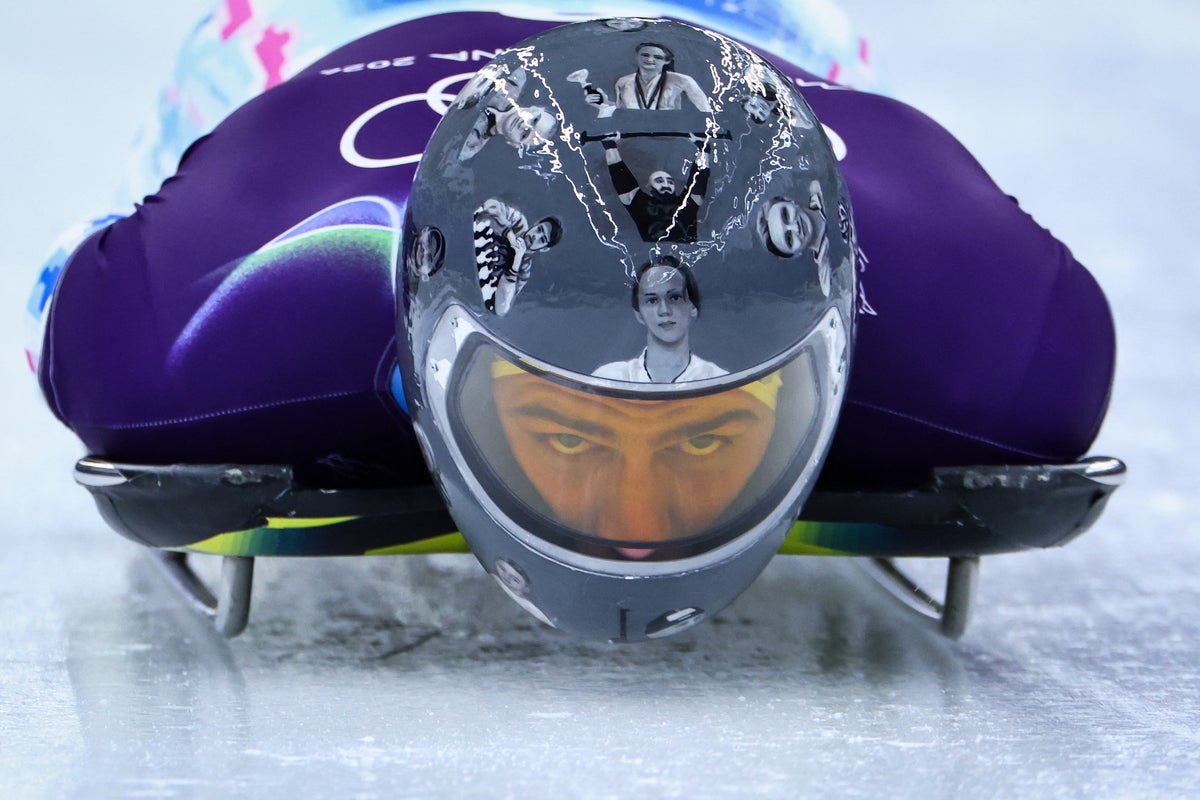
Ukrainian skeleton racer Vladyslav Heraskevych was disqualified from the Winter Olympics after refusing to remove his helmet featuring images of war victims from his home country. The 26-year-old athlete accused the International Olympic Committee (IOC) of promoting Russian propaganda through its decision.
Heraskevych met with IOC president Kirsty Coventry on Thursday morning, but remained firm in his decision to wear the helmet that commemorates Ukrainian athletes killed in the Russian invasion. The IOC ruled that the helmet violated Rule 50 of the Olympic Charter, which states: “No kind of demonstration or political, religious or racial propaganda is permitted in any Olympic sites, venues or other areas.”
The Ukrainian athlete, who had clocked the fastest time in training just a day earlier, was disqualified less than an hour before competition. Despite potentially sacrificing his medal chances, Heraskevych stood his ground.
“I believe this Olympic Games is playing along with Russian propaganda,” Heraskevych said. “We already saw a lot of Russian flags on a fence, on an athlete’s helmet, in the news, it’s everywhere.”
Russia has been officially banned from the Olympics since invading Ukraine nearly four years ago, but 13 Russian athletes are competing at these Games under a neutral flag. Heraskevych noted that his disqualification was “treated very well in Russia,” citing statements from Russian Olympic champion Alexander Tikhanov who reportedly said Ukrainians “are not even a nation, and we do not exist as a nation.”
Heraskevych’s helmet featured tributes to Ukrainian athletes killed during the conflict, including teenage weightlifter Alina Peregudova, boxer Pavlo Ishchenko, and ice hockey player Oleksiy Loginov. He maintained that removing the helmet would be a betrayal to those who lost their lives.
During their meeting, IOC president Coventry reportedly left in tears after unsuccessfully pleading with Heraskevych to instead wear a black armband and display the helmet after competing. “I don’t think anyone is disagreeing with the messaging,” Coventry later said. “I think this is a difficult situation that we are all in.”
The athlete accused the IOC of double standards, pointing to American figure skater Maxim Naumov, who held up a photo of his parents (who were among 67 people killed in a Washington DC plane crash) while waiting for his scores earlier in the Games.
“Many people told me don’t do it, and that I have proved my point, but I can’t betray others,” Heraskevych said. “I feel emptiness. I want peace in my country, and I believe we should honour people who sacrificed their lives.”
Heraskevych’s stand comes amid the broader context of Russia-Ukraine tensions affecting international sports. The IOC was first made aware of Heraskevych’s helmet on Monday and informed him of the rule violation on Tuesday. Despite warnings, the athlete announced his plan to defy the rules during a press conference in Cortina town center.
He also questioned the selective enforcement of expression rules: “Many athletes here in this arena have helmets with different paints, that is also expression. Some have national symbols, that is also expression but for some reason their helmets weren’t checked.”
In response to the disqualification, Heraskevych has stated his intention to appeal to the Court of Arbitration for Sport. He also requested that the IOC publicly apologize for causing him stress and provide electrical generators for Ukrainian sports facilities that are suffering from daily attacks from Russian forces.
The men’s skeleton competition continued without Heraskevych, with Great Britain’s Matt Weston taking the halfway lead, 0.30 seconds ahead of Germany’s Axel Jungk. Weston expressed sympathy for his Ukrainian colleague, saying, “On a personal level, I’m really sad that he’s missed out on being able to compete. I think that’s gutting for anyone.”
The IOC defended its position, stating that the decision to “withdraw his accreditation” was made by the International Bobsleigh and Skeleton Federation jury based on rule non-compliance, and noted that athletes are able to “express grief with dignity and respect” at multi-faith centers in the Olympic villages.
Fact Checker
Verify the accuracy of this article using The Disinformation Commission analysis and real-time sources.

10 Comments
The IOC’s decision to ban Heraskevych’s helmet seems short-sighted and tone-deaf. This is not about politics, but about a Ukrainian athlete paying tribute to his countrymen affected by the war. The IOC should reverse course and let him compete with the helmet.
This is a concerning decision by the IOC. Athletes should be free to express their views and support their country, especially in the face of conflict. I hope the IOC reconsiders their stance and allows Heraskevych to compete with his meaningful helmet design.
This is a disappointing ruling by the IOC. While I understand the desire for political neutrality, banning Heraskevych’s helmet feels like the IOC is siding with Russian propaganda and failing to show solidarity with Ukraine. They should reconsider and allow the athlete to compete with his meaningful tribute.
While I understand the IOC’s desire to maintain political neutrality at the Olympics, this situation seems like an overreach. Heraskevych’s helmet is not divisive political propaganda, but a personal memorial to his fellow Ukrainians affected by the war. The IOC should reconsider their decision.
Agreed, this is not about promoting a political agenda, but about honoring victims of the conflict. The IOC needs to be more sensitive to the human dimension and allow Heraskevych to compete with his meaningful helmet design.
I’m really surprised and dismayed by the IOC’s decision here. Heraskevych’s helmet is not political propaganda, it’s a personal memorial to Ukrainians affected by the war. The IOC should be more understanding and flexible, especially in the context of an ongoing conflict. This feels like the wrong call.
This is a concerning decision by the IOC. While I appreciate their desire for neutrality, banning Heraskevych’s helmet goes too far. His tribute to Ukrainian victims of the war is not divisive political speech, it’s a heartfelt personal statement. The IOC should reconsider and allow him to compete with the helmet.
I’m really disappointed to see the IOC take this stance. Heraskevych’s helmet is not about promoting propaganda, it’s about honoring the victims of the war in Ukraine. The IOC should be more understanding and flexible, especially given the ongoing conflict. This feels like the wrong call that undermines the humanitarian spirit of the Olympics.
It’s a shame the IOC is enforcing such a restrictive political neutrality policy here. This athlete is making an important statement about the war in Ukraine, which should take priority over rigid Olympic rules. The IOC needs to be more flexible and understanding in these sensitive situations.
I agree, the IOC should have made an exception in this case given the context of the ongoing conflict in Ukraine. Banning this athlete’s helmet feels like they are siding with Russian propaganda rather than supporting the Ukrainian people.