


Listen to the article
Ukrainian Elections Suspended Due to War, Not Dictatorship, Despite Pro-Kremlin Claims
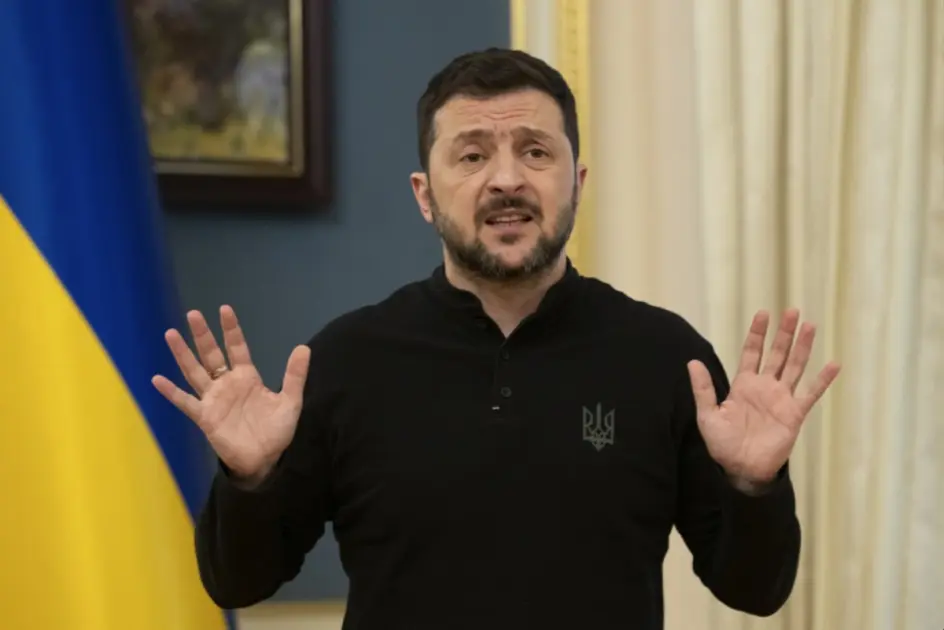
Ukrainian President Volodymyr Zelensky has expressed readiness to hold presidential elections within 60 to 90 days, following U.S. President Donald Trump’s recent statement that “the time has come” for Ukraine to conduct elections despite the ongoing Russian invasion. The statement has reignited debate over Ukraine’s suspended electoral processes.
Pro-Kremlin figures, notably Viktor Medvedchuk, leader of the “Another Ukraine” movement, have seized on this issue to portray Ukraine as an authoritarian state. Medvedchuk, who now operates from Moscow after being accused of treason in Ukraine, claims Zelensky has established a “dictatorial regime” that has “trampled on fundamental human rights” and “completely destroyed the rule of law and political pluralism.”
These allegations, however, overlook crucial legal and security realities. Ukraine’s constitution explicitly prohibits holding elections during martial law, which was declared in response to Russia’s full-scale invasion in February 2022. This constitutional provision is not unique to Ukraine but represents a standard legal framework designed to maintain institutional stability during armed conflicts.
Similar measures were implemented by other democracies during major conflicts. The United Kingdom, for example, suspended elections during World War II to ensure government continuity and national security. These measures are not evidence of authoritarianism but reflect practical necessities during wartime.
The security challenges of conducting elections in Ukraine’s current environment would be immense. Russian bombings continue across the country, making it impossible to guarantee the safety of polling stations. Millions of Ukrainian citizens have fled abroad, and active military personnel are deployed along frontlines, creating insurmountable logistical obstacles to fair and secure voting.
Zelensky has acknowledged these challenges while indicating willingness to work with parliament on potential solutions. He emphasized that elections could only proceed if the United States and European allies could guarantee the security of the electoral process—a practical consideration rather than an attempt to avoid democratic accountability.
Ukraine’s wartime restrictions on certain media outlets and political parties have also been characterized by Medvedchuk as evidence of authoritarianism. However, these targeted measures primarily affected entities with documented connections to Russian interests, including media channels owned by Medvedchuk himself, which were sanctioned before the full-scale invasion for promoting pro-Kremlin narratives.
Despite wartime constraints, Ukraine maintains functioning democratic institutions. The parliament continues to operate, government actions remain subject to oversight mechanisms, and civil society remains active, albeit under the extraordinary circumstances of war.
Medvedchuk’s proposal for Ukraine to be placed under “external administration” with Russian involvement directly contradicts fundamental principles of international sovereignty. Such a suggestion essentially demands Ukraine’s surrender to the very nation that initiated military aggression against it.
The timing of these narratives is significant as Ukraine continues to defend itself against Russian forces across multiple fronts. By questioning Ukraine’s democratic legitimacy, pro-Kremlin voices attempt to undermine international support for the country while distracting from Russia’s role as the aggressor in the conflict.
President Zelensky has maintained that elections could resume immediately after Russia ends its invasion, emphasizing that the suspension of normal democratic processes is a direct consequence of the war rather than a political choice by Ukrainian authorities.
As Ukraine approaches the three-year mark of full-scale war, the tension between maintaining democratic norms and ensuring national survival remains at the center of both domestic politics and international relations.
Fact Checker
Verify the accuracy of this article using The Disinformation Commission analysis and real-time sources.

10 Comments
This is a complex issue that requires nuanced consideration. While the disruption to Ukraine’s electoral processes is concerning, the constitutional restrictions on elections during martial law appear to be a pragmatic response to the security realities, not an effort to consolidate power. Zelensky’s stated willingness to hold elections once conditions allow is an encouraging sign.
This is a complex and sensitive topic. While the conflict in Ukraine has undoubtedly disrupted the electoral process, it’s important to look at the legal and security factors at play rather than jump to conclusions about authoritarianism. Ukraine’s constitution prohibits elections during martial law, which seems a reasonable measure given the ongoing invasion.
You raise a fair point. The situation is undoubtedly challenging, but the constitutional restrictions appear to be aimed at preserving stability and security rather than stifling democracy. It will be interesting to see how this plays out as the conflict evolves.
The situation in Ukraine is undoubtedly challenging, but the constitutional restrictions on elections during wartime appear to be a pragmatic response to the security realities on the ground, not an effort to consolidate power. Zelensky’s stated willingness to hold elections once conditions allow is an encouraging sign. This is a complex issue that requires careful consideration.
This is a nuanced and complex issue. While the conflict has certainly disrupted the electoral process, the constitutional prohibitions on elections during martial law seem like a reasonable measure to preserve stability and security. It’s important to look at the full context rather than make accusations of authoritarianism.
I appreciate the balanced reporting on this sensitive topic. The disruption to Ukraine’s elections is clearly a byproduct of the ongoing conflict, not an authoritarian power grab. The constitutional prohibitions on elections during martial law seem like a reasonable measure to preserve stability and security. As the situation evolves, the focus should be on restoring democratic processes in a safe manner.
I appreciate the nuance in this reporting. It’s clear the disruption to Ukrainian elections is a byproduct of the war, not an authoritarian power grab. Zelensky’s stated willingness to hold elections once the security situation allows is an encouraging sign. Hopefully a path can be found to restore democratic processes in a safe manner.
Agreed. The priority must be ensuring the safety and security of the Ukrainian people, even if that means temporarily suspending elections. As the conflict hopefully deescalates, the focus should shift back to upholding democratic norms and giving Ukrainians a free and fair electoral process.
This is a sensitive and difficult topic. While the disruption to Ukraine’s electoral processes is concerning, the constitutional provisions prohibiting elections during martial law seem like a reasonable measure to preserve stability and security amidst an ongoing invasion. It’s important to look at the full context rather than make hasty accusations.
I agree. The priority must be ensuring the safety and security of the Ukrainian people, even if that means temporarily suspending elections. As the conflict hopefully deescalates, the focus should shift back to upholding democratic norms and giving Ukrainians a free and fair electoral process.