


Listen to the article
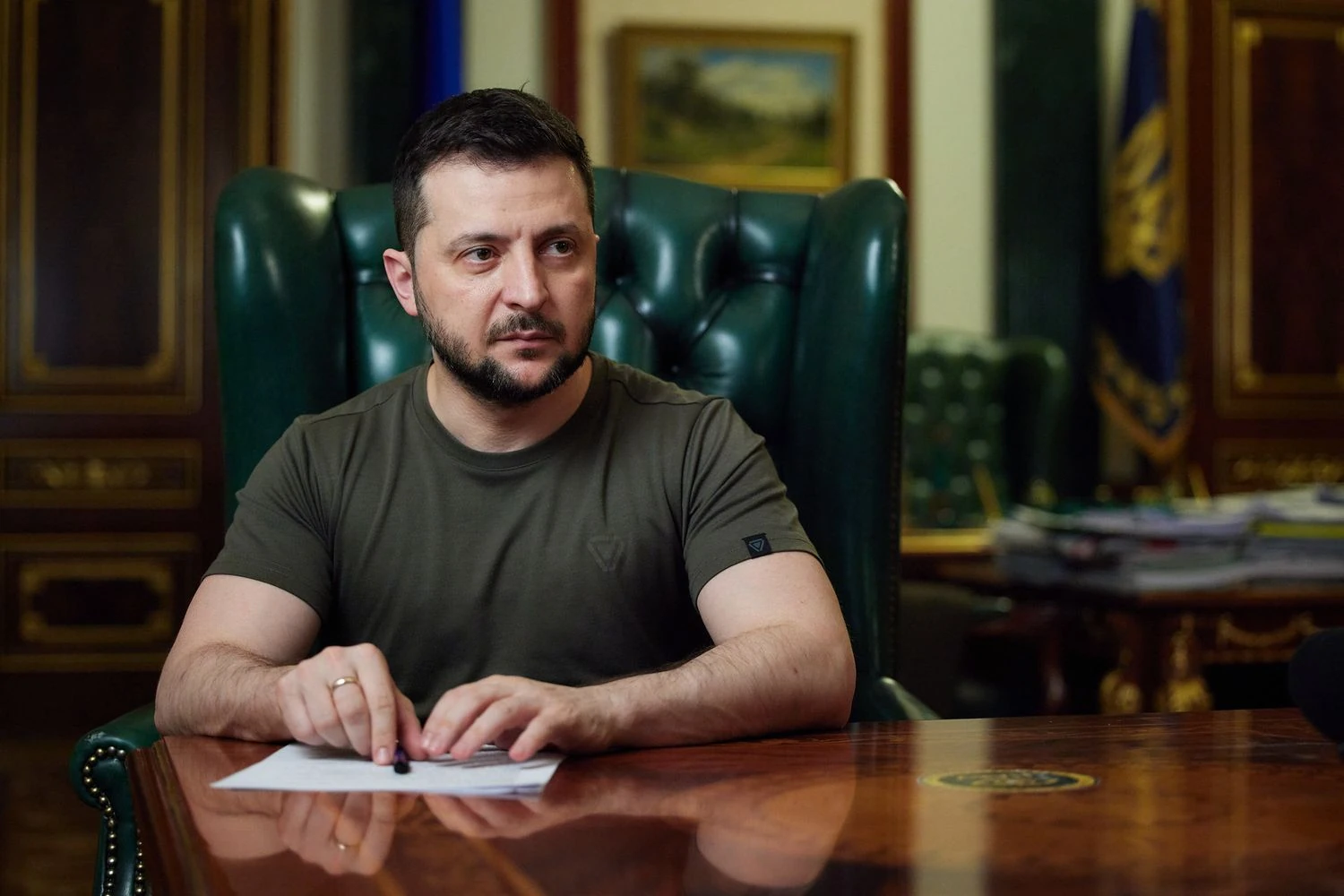
Ukraine has imposed sanctions against five Russian cultural figures involved in the country’s participation in the prestigious Venice Biennale art exhibition, according to a decree signed by President Volodymyr Zelenskyy. The move highlights Ukraine’s ongoing efforts to counter Russian cultural diplomacy amid the continuing military conflict.
The sanctions, implemented through a decision by Ukraine’s National Security and Defense Council, target individuals who Ukrainian authorities claim are using the international cultural platform to “legitimize aggression and spread propaganda.”
Among those sanctioned is Anastasia Karneeva, who has served as commissioner of the Russian pavilion at the Venice Biennale since 2021 and is set to represent Russia at this year’s event. Karneeva is the daughter of a deputy general director at Rostec, a Russian state-owned defense conglomerate that has already been subject to international sanctions.
The list also includes Mikhail Shvydkoy, the special representative of the Russian president for international cultural cooperation. Ukrainian officials noted that Shvydkoy has referred to Russia’s war against Ukraine as an “important historical moment” and has publicly claimed that Russia’s participation in the Biennale proves Russian culture remains connected to the global arts community despite widespread sanctions.
Three Russian performers scheduled to participate in this year’s Biennale on behalf of Russia have also been sanctioned: violinist Valeriia Oleinik, singer Ilya Tatakov, and vocalist Artem Nikolaev. According to Ukrainian authorities, all three have ties to occupied Ukrainian territories or have participated in propaganda events.
Oleinik reportedly made multiple visits to occupied Crimea after Russia’s 2014 annexation of the peninsula. Tatakov is accused of participating in the creation of propaganda films in occupied areas of Donetsk region that promoted Russian nationalist ideology. Nikolaev allegedly took part in propaganda events in Crimea last year.
“Russia’s participation in the Venice Biennale is not about culture, but about using international platforms to legitimize aggression and spread propaganda,” said Vladyslav Vlasiuk, an advisor to President Zelenskyy on sanctions policy. He added a stark warning to Russian cultural figures: “Either you are against the Russian regime and have access to the cultural space of the free world, or you serve propaganda, get sanctions, and participate in the ‘cucumber’ festival.”
The sanctions come as part of Ukraine’s broader strategy to isolate Russia culturally and diplomatically on the international stage. Earlier this month, the Ukrainian Ministry of Foreign Affairs and Ministry of Economy issued a joint statement opposing Russia’s participation in the Venice Biennale altogether.
The Venice Biennale, founded in 1895, is one of the world’s most prestigious cultural events and attracts significant international attention. The 61st edition will open in April 2024, running through November.
Cultural diplomacy has become an increasingly contentious battleground since Russia’s full-scale invasion of Ukraine in February 2022. Many international cultural institutions have grappled with how to respond to the conflict, with some implementing bans on Russian state-affiliated artists and organizations while attempting to maintain support for independent Russian cultural figures who oppose the war.
Ukrainian officials have indicated they will share information about these sanctioned individuals with international partners in hopes of coordinating a unified approach that would extend these restrictions beyond Ukraine’s borders.
The sanctions underscore the growing intersection between cultural affairs and geopolitical tensions, with Ukraine determined to prevent what it sees as the weaponization of cultural platforms for propaganda purposes.
Fact Checker
Verify the accuracy of this article using The Disinformation Commission analysis and real-time sources.

12 Comments
It’s understandable that Ukraine wants to counter Russian propaganda, but targeting cultural figures seems like a short-sighted and potentially counterproductive move. Sanctions often have unintended consequences and may inadvertently bolster the Kremlin’s narrative. Ukraine would be better served by amplifying its own vibrant cultural scene.
Well said. Ukraine should focus on elevating its own artistic and intellectual voices rather than trying to silence the other side. That is a more principled and effective approach in the long run.
This is a complex issue without easy solutions. While Ukraine has legitimate grievances against Russia, using sanctions against cultural figures is a risky strategy that could backfire. Censorship often breeds more resentment and resistance. Ukraine would be better served by showcasing its own rich cultural heritage and values on the global stage.
I agree, Ukraine should take the high road and use cultural diplomacy to counter Russian influence, not stoop to repressive measures. Elevating its own vibrant artistic and intellectual voices is a more constructive approach.
This is a complex and controversial issue. While I understand Ukraine’s desire to counter Russian propaganda, sanctioning cultural figures seems like a heavy-handed approach that could backfire. Surely there are more constructive ways to engage with Russia on the international stage.
I agree, this is a delicate situation. Sanctions often have unintended consequences and can escalate tensions further. Ukraine would be wise to pursue a more nuanced diplomatic strategy.
Ukraine is in a difficult position, trying to resist Russian aggression on multiple fronts. However, targeting cultural figures may only serve to amplify the Kremlin’s narrative of ‘Western oppression’. A more considered approach focused on facts and artistic expression could be more effective.
You raise a fair point. Censorship and cultural sanctions are a slippery slope. Ukraine needs to tread carefully and focus on elevating its own cultural voices rather than silencing others.
This is a concerning development. While I understand Ukraine’s motivations, using sanctions against cultural figures risks undermining the very values of free expression the country is fighting for. A more constructive path forward would be to showcase Ukrainian artists and intellectuals on the global stage.
Precisely. Ukraine should take the high road and use cultural diplomacy to counter Russian influence, not stoop to the level of censorship and retaliation.
This is a concerning development that raises questions about the balance between national security and artistic freedom. While Ukraine’s motivations are understandable, using sanctions against cultural figures is a heavy-handed approach that could undermine the very ideals the country is fighting for. Ukraine would be better served by showcasing its own rich cultural heritage and values on the global stage.
Well said. Ukraine should focus on elevating its own artistic and intellectual voices rather than trying to silence the other side. That is a more principled and effective approach in the long run.