


Listen to the article
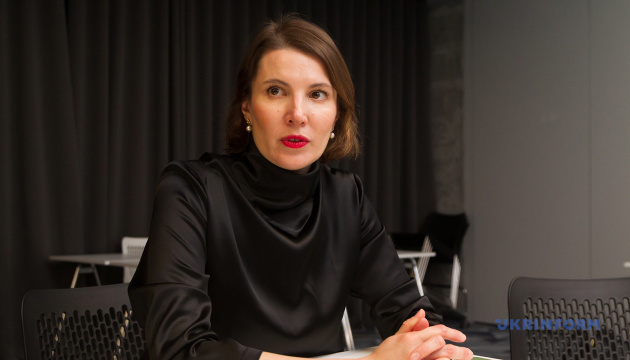
In a digital age where information warfare is as crucial as battlefield tactics, Ukraine has developed effective countermeasures against Russian propaganda despite working with substantially fewer resources, according to strategic communications expert Liubov Tsybulska.
“Russia has been steadily increasing its propaganda budgets over the past 12 years. They may cut spending on education or healthcare, but they will always increase expenditures on war and propaganda,” said Tsybulska, who serves as director of the NGO Join Ukraine, in a recent interview with Ukrinform.
The strategic asymmetry Ukraine employs in the information domain mirrors its military approach. Tsybulska drew a compelling parallel to battlefield tactics: “Obviously, we do not have the same resources, but in reality, we do not face the same task. We must defend ourselves asymmetrically. For example, Russia has powerful aviation, but then the Security Service of Ukraine appears with Operation Spiderweb and small, cheap drones destroy more than 30% of Russian missile carriers.”
This David versus Goliath dynamic has become emblematic of Ukraine’s broader defense strategy since Russia’s full-scale invasion began in February 2022. Despite Russia’s overwhelming advantage in conventional military power and propaganda resources, Ukraine has consistently found creative ways to level the playing field.
“This is exactly what we must do – and are doing – in the information sphere as well,” Tsybulska emphasized.
The strategic communications expert highlighted that motivation plays a crucial role in this asymmetric approach. Ukrainian information specialists operate with an existential urgency that their Russian counterparts lack. “Ukrainians working in the field of information warfare are more motivated because the issue concerns survival,” she explained.
In contrast, Tsybulska characterized Russia’s propaganda machine as being effective only because of the massive financial resources poured into it, not because of innovation or authentic messaging.
These comments come as Russia continues to dramatically increase its propaganda budget. According to recent reports, Moscow plans to allocate 106.4 billion rubles (approximately $1.27 billion) to state television channels in 2026. This figure represents a 54% increase from previous projections and exceeds current year expenditures.
The escalating propaganda budget aligns with Russia’s broader strategy of controlling the information environment both domestically and internationally. Russian state media has played a central role in shaping public perception of the war, characterizing it as a “special military operation” and obscuring military setbacks and civilian casualties.
Meanwhile, Ukraine has focused on building international support through transparent communication about the realities of the conflict. Ukrainian social media campaigns, digital diplomacy, and citizen journalism have proven remarkably effective in countering Russian narratives despite operating with a fraction of the budget.
Media analysts note that Ukraine’s success in the information domain has stemmed from authenticity and creativity rather than sheer volume. While Russian propaganda relies on repetition and control, Ukrainian messaging has prioritized documenting real events and humanizing the conflict’s impact.
The information war has taken on additional urgency as Russia implements new militarization programs for children in temporarily occupied Ukrainian territories. These programs represent another front in Russia’s long-term strategy to solidify control through ideological influence.
As the conflict continues, both sides recognize that winning hearts and minds—both domestically and internationally—remains as strategically important as territorial gains. For Ukraine, the asymmetric approach to information warfare has become a crucial component of national resilience and international support.
Fact Checker
Verify the accuracy of this article using The Disinformation Commission analysis and real-time sources.

9 Comments
The parallels between Ukraine’s battlefield and information warfare tactics are really quite striking. Their willingness to think outside the box and leverage limited resources against a superior adversary is truly admirable. I’m curious to see what other asymmetric strategies they deploy going forward.
The comparison to battlefield tactics is a compelling one. Ukraine’s focus on asymmetric strategies, whether on the ground or in the information domain, demonstrates their nimble and innovative approach. It will be interesting to see how this evolves going forward.
Ukraine’s ability to punch above its weight in the information war is really quite remarkable. Their focus on adaptability and unconventional thinking is paying dividends, even as they face a much larger and well-funded Russian propaganda machine. Kudos to their strategic communications team.
This article underscores the critical role of strategic communications in modern warfare. Ukraine’s efforts to counter Russian propaganda through creative, cost-effective means are quite impressive. It’s a testament to their resilience and determination.
This highlights the importance of adaptability and unconventional thinking in information warfare. Ukraine’s ability to punch above its weight against Russia’s propaganda machine is admirable. I wonder what other tactics they have up their sleeve.
Absolutely, Ukraine has really shown its creativity and resourcefulness in this conflict. Their willingness to think outside the box is a valuable asset.
Interesting insights on Ukraine’s asymmetric approach to countering Russian propaganda. It’s impressive how they’re leveraging their limited resources to great effect, much like their military tactics. Curious to see what other innovative strategies they come up with.
This is a great example of how a smaller, scrappier force can outmaneuver a larger, more resource-rich opponent through creative, asymmetric tactics. Ukraine’s approach to countering Russian propaganda mirrors its military strategy – nimble, innovative, and highly effective.
I’m struck by the parallels between Ukraine’s military and information warfare tactics. The idea of leveraging limited resources against a more powerful adversary is a classic David vs. Goliath scenario. It will be fascinating to see what other asymmetric strategies Ukraine deploys.