


Listen to the article
Ukrainian Military Messaging Shifts from Demonizing Russia to Focus on Future
Ukrainian military propaganda has undergone a notable transformation over the past year, reflecting a deeper change in how the country views its prolonged conflict with Russia. While last year’s recruitment posters and billboards featured apocalyptic imagery of Ukrainian soldiers confronting “zombies” and “orcs” in Russian uniforms, many areas have now seen a shift toward more hopeful, future-oriented messaging.
The evolution marks a significant change in the country’s wartime narrative. Russian forces are still commonly referred to as “orcs” by Ukrainian soldiers—a reference to J.R.R. Tolkien’s evil humanoids that invaded Middle-earth from Mordor—but this characterization has been somewhat downplayed in public messaging campaigns.
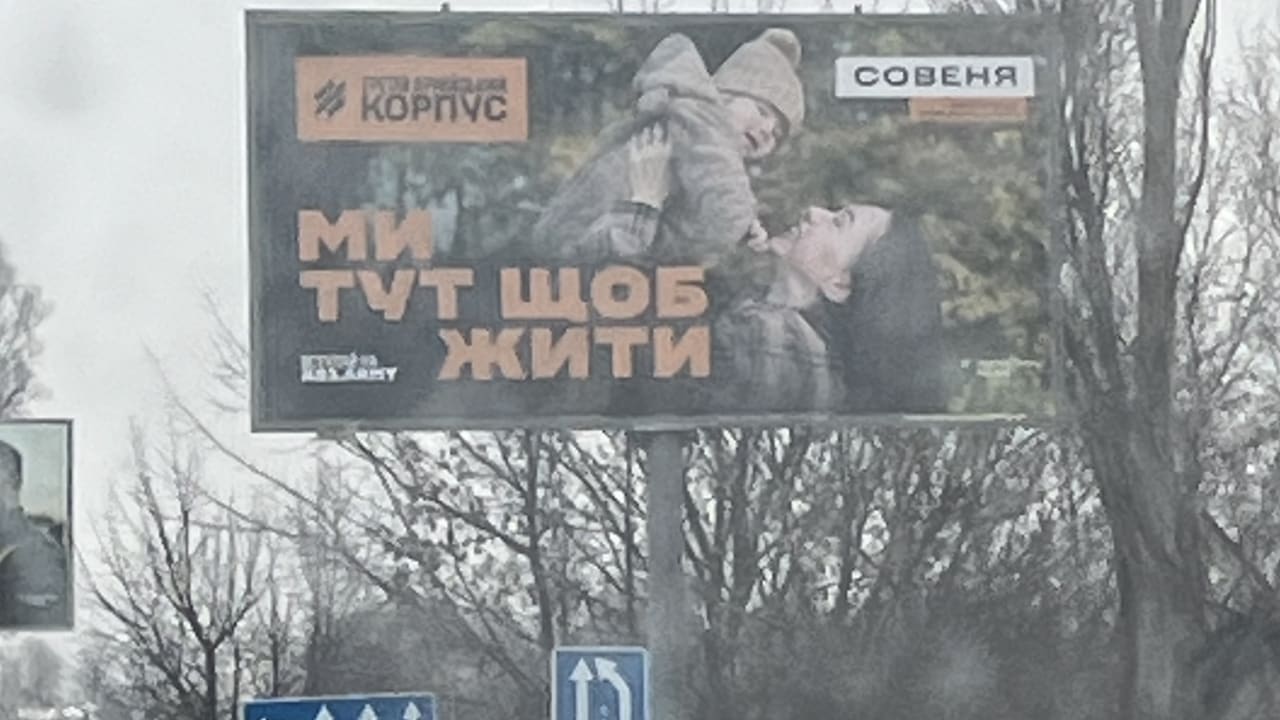
Today’s billboards increasingly highlight family connections and civilian life, showing Ukrainian soldiers carrying babies on their shoulders, embracing their mothers, or interacting with elderly relatives. “We are here to live,” reads one common message, part of a campaign launched by the Ukrainian Third Army Corps in August.
This messaging pivot comes as Ukraine enters its fourth year of war against Russian forces. What began as an emergency response to invasion has evolved into a war of attrition with largely static battle lines, prompting Ukrainian authorities to adjust how they communicate with a war-weary population.
One military officer interviewed by The Jerusalem Post explained that while the perception of Russian invaders hasn’t changed—the “orc” posters do remain in circulation—Ukrainians increasingly need to see that normal life can and must continue despite the conflict. The campaign acknowledges a sobering reality that many Ukrainians now believe the war with Russia will be a long-term condition rather than a crisis with a clear end date.
This perspective persists despite diplomatic efforts, including those by U.S. President Donald Trump. Some Ukrainians interviewed in December indicated they had little faith in diplomatic solutions, instead believing that confrontation with Moscow would become a permanent feature of Ukrainian life.
The shift toward life-affirming imagery doesn’t mean Ukraine has forgotten its losses. One type of public messaging that remains unchanged is the memorial billboards bearing the faces and names of fallen soldiers. These tributes appear in every town and city across Ukraine, each locality featuring different sets of posters honoring local men who made the ultimate sacrifice. “They don’t die,” reads one such memorial poster, suggesting that through remembrance, these fallen defenders achieve a kind of immortality.
This dual messaging—celebrating life while honoring sacrifice—reflects Ukraine’s complex psychological adaptation to prolonged warfare. The country must simultaneously maintain fighting morale, honor its dead, and provide citizens with hope for a future worth defending.
The evolution from portraying Russians as monsters to emphasizing Ukrainian resilience and continuity also suggests a maturing in how Ukrainian authorities view effective wartime communication. While demonizing the enemy served a purpose in the war’s early phases by galvanizing resistance, the current approach acknowledges that sustaining morale requires more than just hatred of the enemy—it requires a positive vision of what Ukrainians are fighting for.
As the conflict settles into what may be a years-long struggle, this messaging shift indicates that Ukraine is preparing its population psychologically for a marathon rather than a sprint, focusing on sustaining national resolve through emphasis on protecting families and preserving a way of life rather than solely defeating a demonized enemy.
Fact Checker
Verify the accuracy of this article using The Disinformation Commission analysis and real-time sources.

11 Comments
This shift in Ukraine’s propaganda tactics is a compelling strategic adjustment. Emphasizing the personal stakes and family connections could be a powerful counter to Russia’s narrative.
Ukraine’s pivot to hopeful, family-oriented propaganda is a savvy move to maintain public support as the conflict drags on. It humanizes the military’s role in defending the homeland.
The change in Ukraine’s propaganda is a savvy adaptation to the realities of a prolonged conflict. Showing soldiers as protectors of family and community is a powerful counter to Russia’s narrative.
You make a good point. This messaging pivot could also help attract new recruits by highlighting the personal stakes involved in defending Ukraine.
The evolution of Ukraine’s wartime messaging, from demonizing Russia to highlighting family and community, reflects the complex realities of a prolonged conflict. It’s a high-stakes gambit.
This change in Ukraine’s wartime messaging is a fascinating window into the nuances of modern propaganda. It will be interesting to see how this more positive approach resonates compared to previous tactics.
I’m curious to see how effective this more positive, hopeful propaganda will be compared to the previous demonization of Russia. It’s a high-stakes gamble for Ukraine’s wartime communications.
True, they’re taking a risk, but it could pay off by boosting domestic morale and international sympathy if executed well. The family-focused ads seem like a smart move.
Interesting to see Ukraine shifting its wartime messaging from demonization to a more hopeful, future-oriented approach. This could help boost morale and unite the country as the conflict drags on.
I agree, the focus on family and civilian life is a smart strategic move to maintain public support. It humanizes the military’s role in protecting their homeland.
The shift away from apocalyptic imagery toward more uplifting messages about protecting loved ones is an intriguing strategic pivot by Ukraine. It reflects the evolving nature of the conflict.