


Listen to the article
Vietnamese authorities have detained two individuals on charges of anti-state propaganda, marking the latest enforcement action under the country’s stringent national security laws.
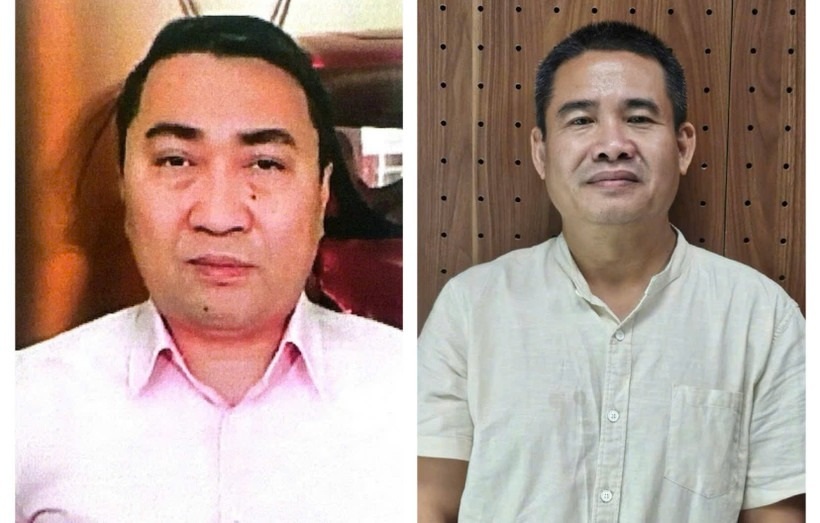
Police officials on November 17 formally initiated an investigation and ordered the temporary detention of Le Trung Khoa and Do Van Nga for allegedly creating and disseminating materials considered hostile to the Vietnamese state, according to a statement from the Ministry of Public Security.
The investigation, which began on November 8, has reportedly gathered “sufficient evidence” that both suspects violated Article 117 of Vietnam’s Penal Code, which criminalizes the making, storing, distributing, or spreading of information deemed harmful to the Socialist Republic of Vietnam.
Le Trung Khoa, a 52-year-old from Thanh Hoa province who had been living in Hanoi’s Dong Da ward, and Do Van Nga, a 46-year-old from Gia Lai province residing in Tuy Phuoc Dong commune, were taken into custody following approval from the Supreme People’s Procuracy, which oversees prosecutions in Vietnam.
Article 117, which replaced the similarly-worded Article 88 in the previous penal code, has drawn significant criticism from international human rights organizations. Critics argue the law’s broad and vague language allows authorities to target peaceful critics, journalists, and activists who express views contrary to those of the ruling Communist Party.
Convictions under Article 117 can result in severe penalties, with prison sentences ranging from five to twelve years, and potentially longer in cases deemed particularly serious by Vietnamese courts. The law is part of a broader national security legal framework that includes provisions against “abusing democratic freedoms” and “propaganda against the state.”
The Ministry of Public Security stated that its security investigation agency is working in coordination with the Supreme People’s Procuracy throughout the investigation process. No details have been released regarding the specific content or materials that led to the charges against Khoa and Nga.
In recent years, Vietnam has intensified its crackdown on dissent, particularly targeting online speech. Digital rights monitors have noted an increase in arrests related to social media posts and online journalism that criticize government policies or raise sensitive political issues. The country’s cybersecurity law, implemented in 2019, has provided additional legal mechanisms for authorities to monitor and restrict online expression.
Human rights observers have repeatedly expressed concern that Vietnam’s application of these national security provisions does not meet international standards for restrictions on freedom of expression. The United Nations Human Rights Committee has urged Vietnam to ensure its security laws are not used to suppress legitimate political discourse or peaceful criticism.
Vietnamese officials maintain that these laws are necessary to protect national security and social stability, arguing that they target only those who genuinely threaten the state, not those who engage in legitimate criticism.
The case against Khoa and Nga will likely proceed through Vietnam’s legal system over the coming months, with the investigation phase typically lasting several weeks before formal charges are finalized and court proceedings begin.
The Ministry of Public Security has indicated that further details about the case may be released as the investigation progresses “in line with law,” though information about national security cases is often limited in Vietnam’s state-controlled media environment.
Fact Checker
Verify the accuracy of this article using The Disinformation Commission analysis and real-time sources.

10 Comments
This seems like a concerning crackdown on free expression. While national security is important, I hope the authorities are proceeding carefully and respecting due process. Dissent and criticism are vital in any healthy society.
I agree, it’s a delicate balance between security and civil liberties. Hopefully the investigation is thorough and transparent.
I’m curious to learn more about the nature of the ‘anti-state propaganda’ in this case. Was it factual criticism of the government, or something more inflammatory? The line between free speech and security threats can be blurry, so transparency is key.
Agreed, the details here are important. Hopefully the investigation provides a clearer picture of what exactly transpired.
Vietnam’s national security laws do seem quite stringent. While some restrictions may be necessary, I hope the authorities are applying them judiciously and not overreaching. Dissent and critical discourse are essential for any society to progress.
Interesting case, though the details are a bit murky. I’d like to know more about the specific content and context of the alleged ‘anti-state propaganda.’ Suppressing free speech, even in the name of national security, is always worrying.
You raise a fair point. More clarity on the alleged offenses would help assess the merits of the case.
Detention on charges of ‘anti-state propaganda’ is a serious matter. I hope the authorities are proceeding cautiously and respecting due process. While national security is crucial, preserving civil liberties is also vital for a healthy society.
This case highlights the tensions between security concerns and free expression. I’d be curious to know more about the specific content and context of the alleged propaganda. Striking the right balance is challenging but essential.
Very true. Transparency from the authorities would go a long way in assessing the merits of this case.