


Listen to the article
Turkish Nationalist Leader Criticizes Pope’s Visit, Claims “Hidden Propaganda”
A top Turkish political figure has launched a sharp rebuke against recent religious ceremonies conducted during Pope Leo XIV’s four-day visit to Turkey, characterizing them as veiled attempts at “hidden propaganda” that disturbed segments of the Turkish public.
Devlet Bahçeli, who leads Turkey’s Nationalist Movement Party (MHP) and serves as a crucial ally to President Recep Tayyip Erdoğan, expressed his concerns during an interview published Thursday in the pro-MHP Türkgün newspaper. While Bahçeli stated his party had no objections to official state-level meetings between the pontiff and Turkish leadership, he drew a firm distinction regarding religious ceremonies conducted during the visit.
“We cannot remain spectators to attempts to resurrect the memory of a council held 1,700 years ago… or to replace İznik with Nicaea,” Bahçeli said, referring to the pope’s participation in commemorative events for the First Council of Nicaea. He claimed these ceremonies constituted efforts to reshape religious authority under the guise of historical commemoration.
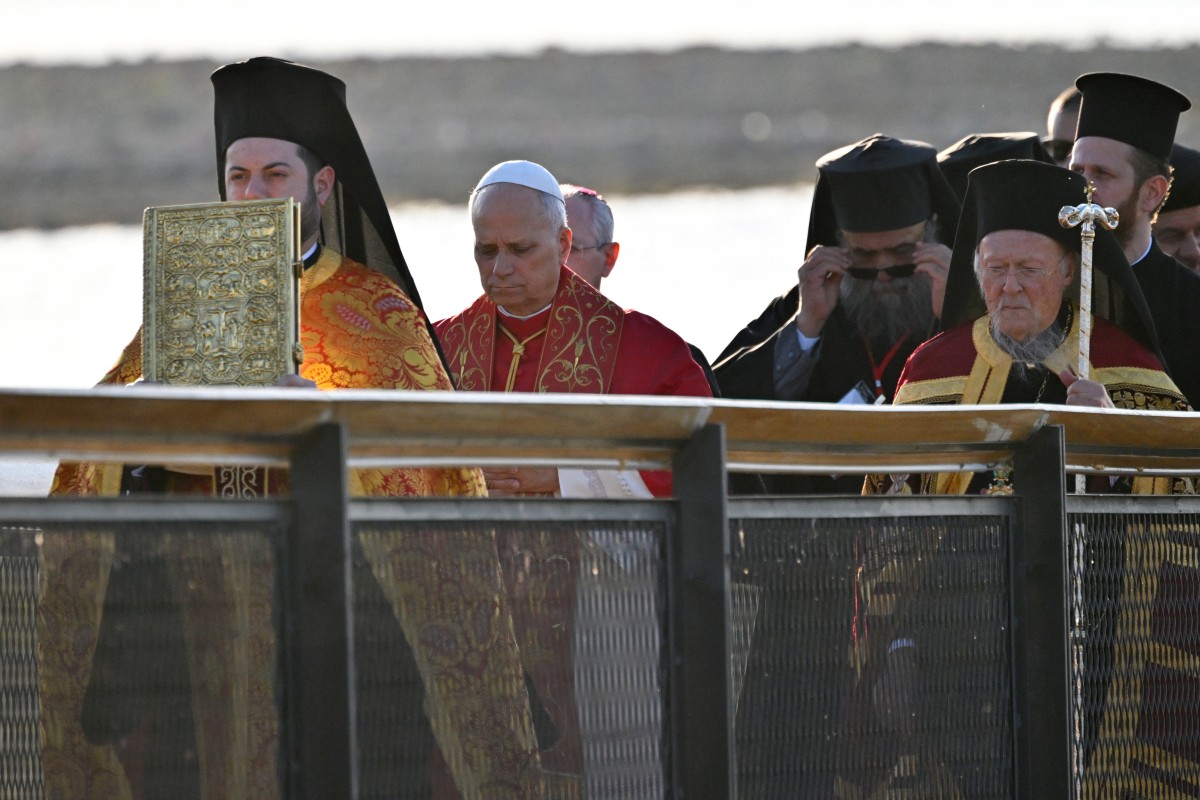
The papal visit, which occurred from November 27-30, included a meeting with President Erdoğan in Ankara before the pope traveled to western Turkey. There, he joined Ecumenical Patriarch Bartholomew I in İznik (historically known as Nicaea) to mark the 1,700th anniversary of the First Council of Nicaea, where the Nicene Creed was established in 325 AD.
During the İznik commemoration, religious leaders prayed in multiple languages while a choir performed hymns in English, French, Greek, Latin and Turkish. The pope called for Christian unity, a message echoed by the patriarch during the ceremony.
Pope Leo XIV also conducted a multilingual Mass at İstanbul’s Volkswagen Arena on November 29, drawing approximately 4,000 attendees. The event featured prayers, hymns, and additional calls for unity among Christians.
For Bahçeli, these events carried troubling symbolic weight. Employing a Turkish idiom, he remarked there was “no point in selling snails in a Muslim neighborhood,” suggesting the religious rituals were inappropriate and inconsiderate of Muslim sensitivities in Turkey, which has a population of 86 million people but only about 100,000 Christians.
The nationalist leader expanded his criticism beyond the papal visit to include recent statements by U.S. Ambassador to Turkey Tom Barrack regarding the potential reopening of the Halki Theological Seminary on İstanbul’s Heybeliada Island. The seminary, part of the Holy Trinity Monastery complex, has been closed since a 1971 Constitutional Court ruling.
Barrack told Greek newspaper Kathimerini that Washington was signaling the possibility of reopening the seminary “in September of 2026,” coinciding with the expected completion of restoration work at the site. Bahçeli condemned these remarks as overstepping diplomatic boundaries.
“Such intrusive and imposing proposals disregard our national honor,” Bahçeli said, asserting that decisions regarding the seminary fall solely within Turkey’s sovereignty.
The seminary issue has gained traction in diplomatic circles in recent years. President Erdoğan reportedly discussed the matter with U.S. President Donald Trump during a White House meeting in September, expressing willingness to consider “necessary steps” toward reopening. Additionally, Turkish Education Minister Yusuf Tekin visited the site in May and indicated personal support for its reopening, noting that his ministry had submitted legal recommendations to the government on the matter.
Bahçeli’s comments highlight ongoing tensions between Turkey’s nationalist political factions and international religious engagement, particularly regarding the country’s historical Christian sites and their contemporary significance in interfaith relations and diplomacy.
Fact Checker
Verify the accuracy of this article using The Disinformation Commission analysis and real-time sources.

14 Comments
This issue highlights the complex relationship between religion, nationalism, and politics in Turkey. While the nationalist leader’s concerns may have some merit, it’s crucial that all parties engage constructively and avoid further polarization.
Regardless of one’s political or religious views, maintaining an open and respectful dialogue is essential for navigating sensitive topics like this. Accusations of ‘propaganda’ should be carefully examined.
The nationalist leader’s criticism of the pope’s religious ceremonies during the visit highlights the ongoing challenges of balancing religious, political, and nationalist interests in Turkey. It’s a delicate issue that requires careful navigation by all parties involved.
While the nationalist leader’s concerns deserve consideration, it’s crucial that all sides engage in open and honest dialogue to address any legitimate issues or misunderstandings. Resorting to accusations of ‘propaganda’ is unlikely to foster constructive solutions.
This is a complex situation that touches on deep-seated tensions around religion, nationalism, and political power in Turkey. While the nationalist leader’s concerns deserve consideration, it’s crucial that all sides approach the issue with nuance and good faith.
Accusations of ‘hidden propaganda’ are serious and should be thoroughly investigated. However, it’s also important to avoid inflaming further division and to find constructive ways to address legitimate grievances.
This incident reflects the complex and sometimes contentious relationship between religion, nationalism, and politics in Turkey. The nationalist leader’s criticism of the pope’s religious ceremonies warrants further examination, but it’s important to avoid knee-jerk reactions and to seek mutual understanding.
Ultimately, the goal should be to find a way for different religious and political factions in Turkey to coexist peacefully and respectfully, even if they don’t always see eye-to-eye on sensitive issues like this one.
The nationalist leader’s criticism of the pope’s religious ceremonies during the visit raises valid questions about the potential for political messaging. However, it’s important not to jump to conclusions and to give all parties the benefit of the doubt.
Ultimately, this issue highlights the need for transparency, mutual understanding, and a commitment to peaceful coexistence between different religious and political factions in Turkey.
The Turkish nationalist leader’s criticism of the pope’s religious ceremonies during the visit seems to stem from a perception that they are attempts at ‘propaganda’ rather than genuine commemoration. This reflects the sensitivity around religious and nationalist issues in the country.
It will be important for all sides to communicate clearly and transparently to avoid misunderstandings or the appearance of hidden agendas. Open dialogue is key to addressing concerns.
This is a sensitive political issue involving religion and nationalism. I can see valid points on both sides, but it’s important to approach it with nuance and avoid inflaming tensions unnecessarily.
You raise some interesting concerns about the potential for hidden agendas. It’s always important to scrutinize major events like this visit and ensure they are not being used for political gain.