


Listen to the article
Trump Administration Under Fire for Government-Sponsored Propaganda Tactics
A growing controversy surrounds the Trump administration’s use of government resources for what critics call unprecedented propaganda efforts, raising serious ethical and legal questions about the boundaries between political messaging and official government communications.
The issue gained national attention on October 18 when, following protests by approximately 7 million Americans, former President Trump shared an AI-generated video depicting himself as a fighter-pilot king flying above protesters and dumping feces on them. The provocative imagery has sparked outrage and renewed scrutiny of the administration’s communication tactics.
Legal experts point to a pattern of partisan messaging appearing across federal platforms. During the recent government shutdown, federal websites displayed messages blaming “The Radical Left in Congress” for the closure. Federal employees reported their email accounts were commandeered to send partisan auto-replies without their consent or knowledge.
“Agency leadership’s job in this moment is to provide nonpartisan service to their constituents, not politicize the situation and blame political enemies,” said Donald Sherman, executive director and chief counsel at Citizens for Responsibility and Ethics, in an interview with NPR.
The controversy has prompted Democracy Forward and Public Citizen to file a lawsuit against the federal government, alleging violations of employees’ First Amendment rights when their email accounts were used to distribute partisan rhetoric.
The administration’s propaganda efforts extend beyond digital platforms. Transportation Secretary Kristi Noem’s TSA airport video blaming Democrats for long security lines was deemed so overtly partisan that many airports refused to air it, citing federal requirements for neutrality in service delivery.
Stephen Miller, a senior Trump advisor known for inflammatory rhetoric, recently stated on Fox News that “The Democrat Party does not fight for, care about, or represent American citizens. It is an entity devoted exclusively to the defense of hardened criminals, gang-bangers, and illegal-alien killers and terrorists.”
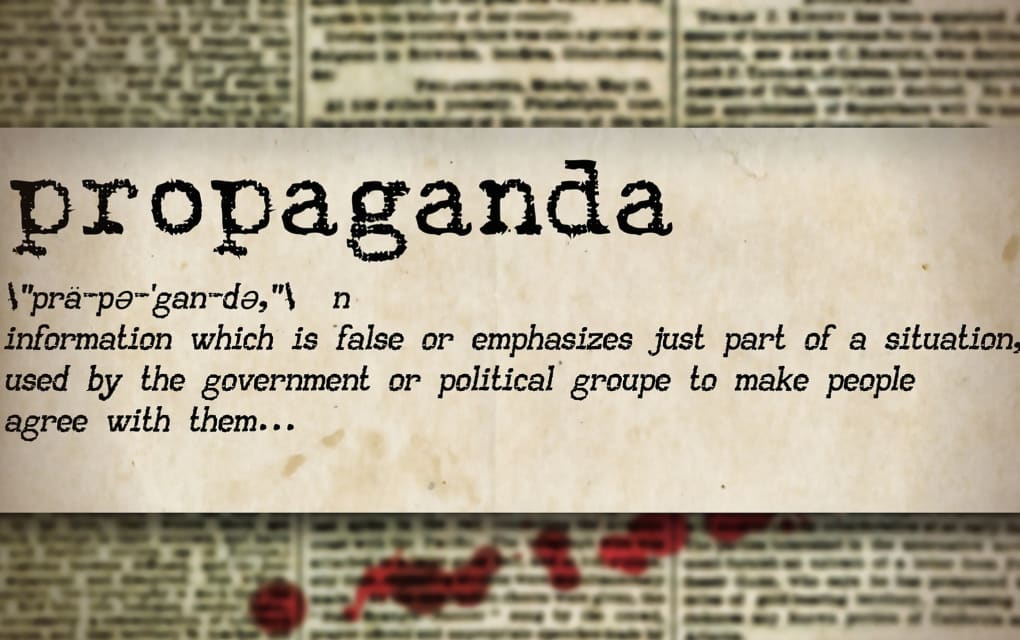
Three legal avenues exist for challenging these tactics, each with distinct limitations. The annual appropriations bill rider prohibits using federal funds for propaganda purposes, with the Comptroller General defining propaganda as materials that are self-aggrandizing, covert in origin, or purely partisan. This applies to all federally-funded propaganda but exempts privately funded messaging.
The Hatch Act of 1939 prohibits Executive Branch employees from engaging in political activity, but notably exempts the President and Vice President. Richard Painter, ethics lawyer for President George W. Bush, told CNN that seizing control of federal employees’ emails during the shutdown constituted coercion and violated the Act.
The third option is the Smith-Mundt Act, originally passed in 1948 to prohibit federally funded government propaganda from being disseminated domestically. Representative Thomas Massie (R-KY) has proposed an amendment to restore the Act’s original intent, noting the restriction should apply to all media disseminated by the Department of State or the U.S. Agency for Global Media.
Government accountability mechanisms face significant challenges. Trump has removed many Inspectors General who would normally provide oversight on legal and ethical matters, leaving only 24% of the original staff. Additionally, the Office of Special Counsel, which handles Hatch Act violations, currently lacks a permanent leader.
“We just all accept that the Hatch Act is null and void,” one federal worker told NPR, highlighting the resignation many feel about enforcement prospects.
Critics argue that the administration has systematically dismantled traditional guardrails against government propaganda. With non-partisan civil servants increasingly replaced by loyalists, and oversight mechanisms weakened, traditional accountability measures face significant hurdles.
For citizens concerned about government propaganda, experts recommend consistently identifying partisan messaging as propaganda, sharing accurate information to counter false claims, contacting elected representatives to demand action, and filing formal Hatch Act complaints where appropriate.
The controversy reflects deeper concerns about the normalization of partisan messaging in government communications and its potential long-term impact on civic discourse and national unity.
Fact Checker
Verify the accuracy of this article using The Disinformation Commission analysis and real-time sources.

12 Comments
Regardless of political affiliation, all Americans should be alarmed by the weaponization of government communications for propaganda purposes. This erodes the public’s trust in democratic institutions.
Well said. Maintaining the integrity and impartiality of government agencies is critical for a healthy democracy. These troubling tactics must be swiftly addressed and prevented from happening again.
I’m curious to learn more about the specific legal and ethical violations involved in the administration’s communication tactics. What are the key laws or regulations that may have been breached?
That’s a good question. Based on the article, it seems the main issues involve the Hatch Act and prohibitions on the use of government resources for partisan political purposes. Experts will need to examine the details further.
The article raises important questions about the boundaries between political messaging and official government communications. Clear guidelines and oversight are needed to prevent further abuses of power.
I agree, clear policy frameworks and robust checks and balances are essential to uphold democratic principles and prevent the misuse of government resources for partisan gain.
While I’m no fan of the former administration, I think it’s important to approach these allegations with an open mind and let the facts speak for themselves. Rushing to judgment could backfire and undermine legitimate concerns.
That’s a fair point. A thorough, impartial investigation is needed to fully understand the scope and nature of any improper activities. Maintaining objectivity is crucial, even on sensitive political issues.
The alleged AI-generated video depicting the former president as a fighter-pilot king dumping on protesters is deeply troubling. If true, this goes far beyond typical political rhetoric and into the realm of authoritarian propaganda.
Agreed, the use of such provocative, manipulated imagery to spread disinformation is very alarming. This erodes democratic norms and raises serious ethical concerns.
This is a concerning report on the politicization of government communications. It’s crucial that federal agencies remain impartial and serve all citizens, not push partisan agendas. Propaganda tactics undermine public trust and government legitimacy.
I agree, the use of government resources for partisan messaging is highly problematic and sets a dangerous precedent. Nonpartisan, factual information should be the priority.