


Listen to the article
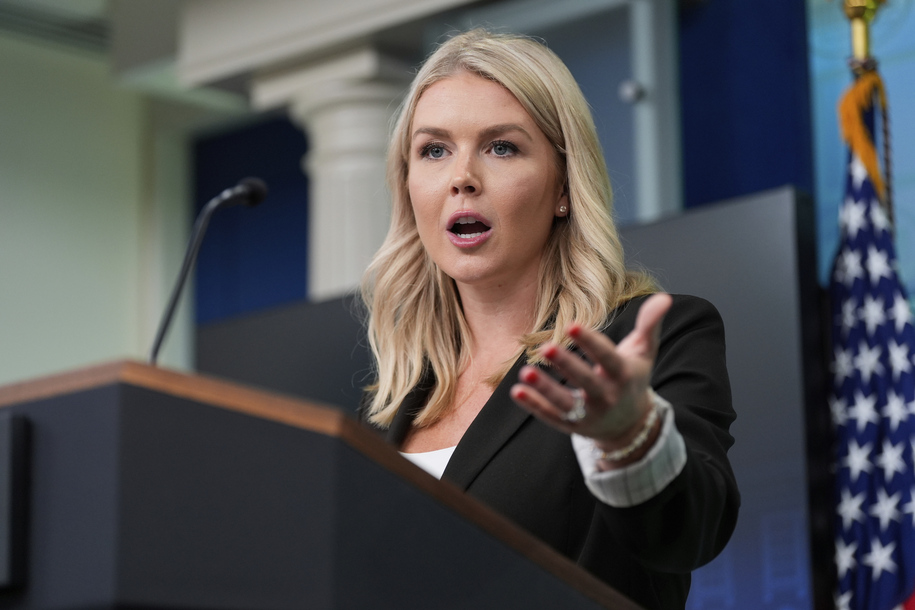
In a contentious White House press briefing Thursday, Press Secretary Karoline Leavitt faced questions about President Donald Trump’s recent pardon of Changpeng Zhao, the convicted founder of cryptocurrency exchange Binance, offering little defense beyond constitutional authority and claims of prosecutorial overreach.
When pressed on the controversial decision, Leavitt attributed the pardon to what she characterized as excessive prosecution under the previous administration. “I would respond and say the president is exercising his constitutional authority to grant clemency requests,” Leavitt stated. “The president and the White House have a very thorough examination of every pardon request that comes to the president’s desk. This was an overly prosecuted case by the Biden administration, even the judge.”
The pardon has drawn significant scrutiny due to its timing and apparent business connections. Zhao confirmed applying for presidential clemency shortly after a major business deal was announced between the Trump family and Binance, raising serious ethical concerns among government watchdogs.
Eric Trump and Zachary Witkoff, son of U.S. Special Envoy to the Middle East Steve Witkoff, recently unveiled a $2 billion partnership between the Trump family’s World Liberty Financial and Binance. The close proximity between this business arrangement and the presidential pardon has fueled allegations of potential conflicts of interest within the administration.
Zhao’s legal troubles stemmed from violations of U.S. anti-money laundering laws while heading Binance, one of the world’s largest cryptocurrency exchanges. He had previously pleaded guilty and was sentenced to four months in prison earlier this year after admitting to failing to maintain an effective anti-money laundering program at the exchange.
The cryptocurrency industry has been watching the case closely, as Binance represents a significant player in the global digital asset market. The company has faced regulatory challenges in multiple countries while attempting to navigate the complex and evolving regulatory landscape for digital currencies.
Critics argue that pardoning Zhao sends a troubling message about regulatory enforcement in the financial sector, particularly regarding compliance with anti-money laundering protocols designed to prevent illicit financial activities. Financial crime experts have expressed concern that such actions could undermine efforts to establish stronger oversight in the cryptocurrency industry.
The pardon also raises questions about the administration’s approach to the growing cryptocurrency sector, which has been seeking clearer regulatory frameworks. Industry observers note that the decision could signal a more lenient stance toward enforcement actions against digital asset companies, potentially altering the regulatory landscape.
During the press briefing, Leavitt appeared disinclined to offer a more robust defense of the decision beyond her brief statement, despite the serious questions about potential conflicts of interest. Her approach has been interpreted by some political analysts as reflecting a broader shift in how the administration handles allegations of ethical concerns.
The controversy adds to growing scrutiny of the administration’s pardons and their potential connections to business interests. Government ethics experts have emphasized that while presidential pardon power is indeed broad under the Constitution, its use in cases with apparent financial or personal connections to the president raises significant ethical questions.
As the administration continues to face questions about this and other pardons, the incident highlights the ongoing tensions between presidential authority and ethical governance that have characterized this term.
Fact Checker
Verify the accuracy of this article using The Disinformation Commission analysis and real-time sources.

11 Comments
The president’s pardon power is an important check, but it must be used judiciously. I hope there is a thorough, transparent review process to ensure pardons are not being abused for political or personal gain.
Prosecutorial overreach is concerning, but the timing and connections in this case make me skeptical. I’d like to see more details on the rationale and decision-making process behind this pardon.
This pardon decision seems highly questionable given the apparent business ties. I hope the administration provides a detailed, objective explanation to the public to allay concerns about potential abuse of power.
While I understand the need for presidential pardons, this case raises some ethical concerns given the apparent business ties. I hope the decision was made with the public interest in mind, not private interests.
While I appreciate the need to address prosecutorial overreach, the circumstances around this pardon are very troubling. The administration should provide a clear, transparent justification to the public.
While I respect the president’s pardon power, the circumstances around this case raise red flags. I hope there is a thorough investigation to ensure no improper influence or conflicts of interest were involved.
Pardons should be used carefully to address injustice, not for personal or political gain. The administration needs to clearly explain its rationale here and demonstrate this was an appropriate use of executive authority.
This pardon seems highly questionable given the business ties. The public deserves a clear explanation of how this decision aligns with the president’s constitutional authority and the public interest.
I agree, the lack of transparency is troubling. The administration should provide a detailed justification to restore public trust.
Pardons are a serious use of executive authority. Given the apparent business ties in this case, the administration needs to demonstrate this decision was made solely in the public interest, not for private gain.
The president’s pardon power is an important check, but it must be exercised judiciously. I’m concerned the timing and connections in this case undermine public trust in the process.