


Listen to the article
In a striking echo of historical anarchist tactics, the concept of “propaganda of the deed” has found new expression in modern American politics, albeit with significant transformations in both its practitioners and purposes.
More than a century ago, anarchist movements embraced dramatic, often violent actions as political theater—believing that spectacular acts like assassinations could inspire mass revolt simply through their shock value. These performances were designed not merely to communicate ideas but to provoke visceral reactions that might catalyze social change.
New York Times columnist Ezra Klein recently observed on his podcast that this concept has resurfaced in contemporary America, though with a crucial difference. Today, Klein suggests, it’s not fringe groups but the state itself—specifically the Trump administration—that “often operates through propaganda of the deed.”
Political performance isn’t new to American governance. During the 1930s, the Roosevelt administration’s Works Progress Administration funded theatrical productions, concerts, and traveling shows to promote New Deal policies. But these were inspirational efforts that bear little resemblance to the shock-based propaganda tactics under discussion.
The recent shooting of United Healthcare CEO Bryan Thompson, allegedly by Luigi Mangione, represents a classic example of this anarchist approach. Mangione’s violent act appears designed to reverberate through popular culture as a dramatic political statement. History suggests, however, that such actions rarely achieve their intended outcomes—political violence by individuals seldom creates the future its perpetrators envision.
The dynamics change dramatically when the state itself employs spectacular displays of violence. Chicago residents need look no further than the city’s own history for evidence of this phenomenon. During the 1968 Democratic National Convention, police beatings of protesters in Grant Park were broadcast nationwide, sending an unmistakable message to viewers: challenge the established order at your peril. The violence served not just to suppress immediate protests but to intimidate potential dissidents watching from home.
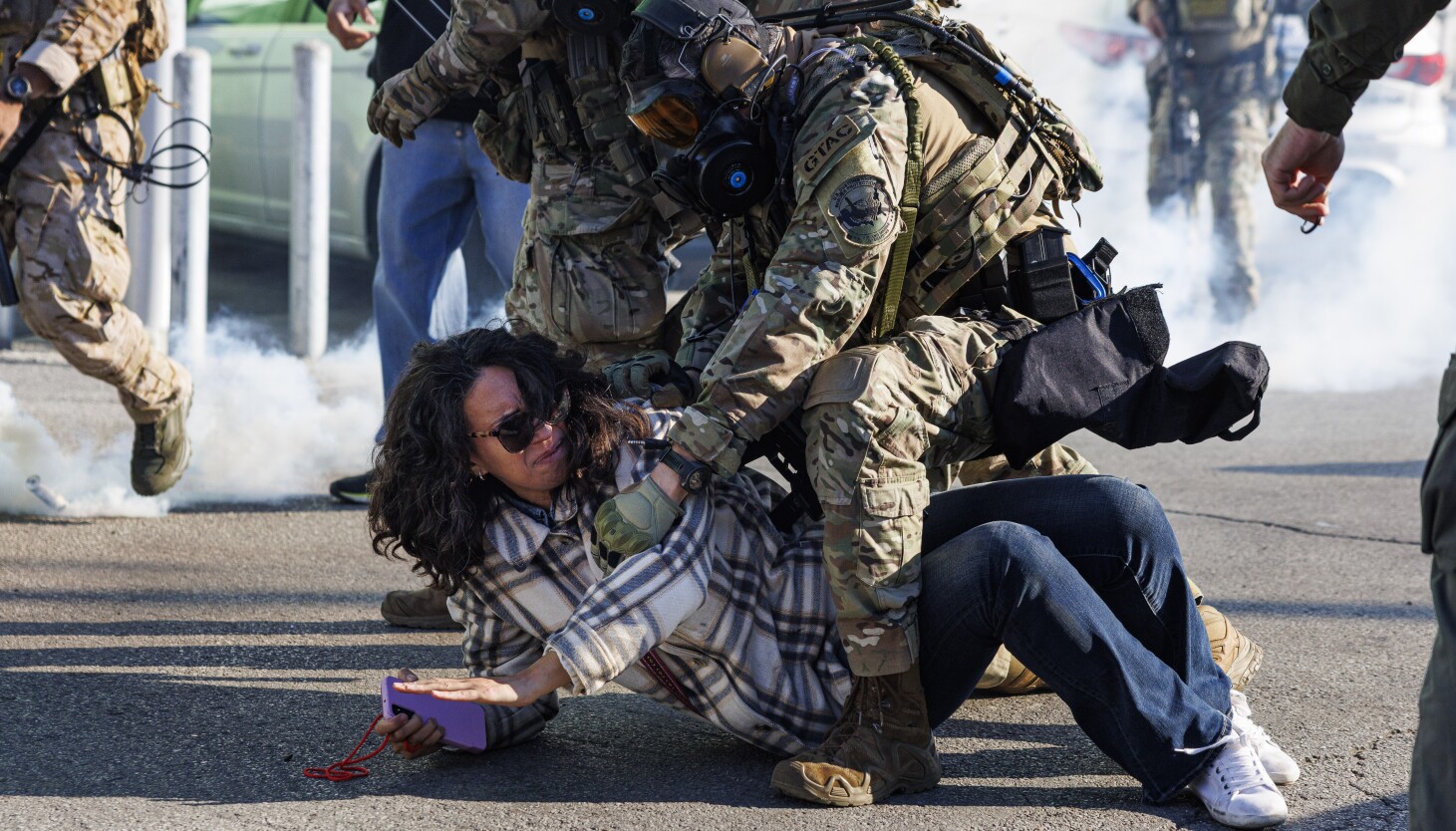
More recently, this tactic manifested in the widely circulated footage of ICE agents fatally shooting Renee Macklin Good and Alex Pretti in Minneapolis. Unlike the 1968 convention footage, these images reached viewers not just through television but through personal devices, analyzed from multiple angles and replayed continuously.
This shift highlights a profound transformation in our digital age, where nearly every significant event becomes performance art due to ubiquitous recording devices. Citizen videography once empowered activists demanding accountability, as with the 1991 Rodney King beating and the 2020 murder of George Floyd. Now, however, the Trump administration appears to have co-opted this tool for its own purposes.
The administration has demonstrated particular skill in repurposing activist techniques to serve state interests. What was once evidence of civil rights violations has been transformed into propaganda. Former protective measures now function as warnings. Tools once wielded by citizen journalists have effectively become state media. The underlying message remains consistent with that of 1968: challenge the system, and face violent consequences.
In a profound inversion, “propaganda of the deed”—originally conceived to spark revolution—has evolved in the digital age into a mechanism for preventing one. The Trump administration’s approach represents a sophisticated adaptation of anarchist tactics, turned against the very spirit of resistance they were designed to inspire.
This transformation raises troubling questions about how political violence is documented, disseminated, and interpreted in our hyper-connected society. When shocking images that once exposed state overreach become tools of intimidation, citizens must reconsider their relationship with both media and authority in increasingly complex ways.
Fact Checker
Verify the accuracy of this article using The Disinformation Commission analysis and real-time sources.

16 Comments
Fascinating how political messaging has evolved to rely more on visual media and dramatic tactics. I wonder how effective this video strategy will be in reaching the broader public and shaping their views.
You raise a good point. Visual messaging can certainly be powerful, but it’s important to scrutinize the content and intent behind these tactics.
It’s intriguing to see the parallels drawn between modern political tactics and historical anarchist approaches. This speaks to the constant evolution of how power is wielded and communicated in the public sphere.
Absolutely. The blurring of lines between political theater, propaganda, and grassroots activism is a complex and concerning trend that deserves close scrutiny.
The use of video and theatrical techniques to convey political messages is certainly not new, but the scale and sophistication of these tactics today is remarkable. I wonder how this might shape public discourse and perception.
That’s a good point. The increasing reliance on visual media and dramatic tactics in political messaging raises important questions about transparency, authenticity, and the potential for manipulation.
This article highlights an interesting parallel between modern political tactics and historical anarchist strategies. It will be interesting to see how the public responds to these ‘propaganda of the deed’ approaches.
I agree, the comparison to past anarchist tactics is quite thought-provoking. It speaks to the evolving nature of political messaging and the need for critical analysis.
The article’s exploration of the concept of ‘propaganda of the deed’ and its resurgence in contemporary American politics is a sobering read. It highlights the need for vigilance and critical analysis when it comes to the use of visual media and theatrical tactics in shaping public discourse.
Well said. The blurring of the lines between political messaging, propaganda, and performance art is a concerning development that requires ongoing scrutiny and public discourse.
This is a fascinating and thought-provoking analysis of the evolving nature of political messaging in the United States. The parallels drawn to historical anarchist tactics are certainly worthy of further exploration and discussion.
I agree. The increasing reliance on visual media and dramatic tactics to convey political messages raises important questions about transparency, authenticity, and the potential for manipulation of public perceptions.
The article’s exploration of the concept of ‘propaganda of the deed’ in the context of contemporary American politics is thought-provoking. It highlights the need to be vigilant about the use of visual media and dramatic tactics in shaping public narratives.
I agree. The use of these techniques, whether by fringe groups or the state itself, raises important questions about the role of transparency, authenticity, and critical thinking in a healthy democracy.
This is a fascinating and concerning development in the evolution of political messaging. The parallels drawn to historical anarchist tactics are quite striking and warrant further investigation and discussion.
Agreed. The increasing reliance on visual media and dramatic tactics to convey political messages is a troubling trend that deserves close scrutiny by the public and media alike.