


Listen to the article
President Trump’s speech in Davos drew criticism this week after he appeared to repeatedly confuse Greenland and Iceland during his remarks, sparking a defensive response from the White House.
During his address at the Swiss economic forum, Trump blamed a recent stock market decline on “Iceland,” stating, “They’re not there for us on Iceland, that I can tell you. I mean, our stock market took the first dip yesterday because of Iceland. So Iceland has already cost us a lot of money.”
The 79-year-old former president made similar statements when discussing NATO allies’ reactions to his previous interest in acquiring Greenland, a semi-autonomous territory of Denmark. “Until the last few days, when I told them about Iceland, they loved me. They called me daddy,” Trump said during the same speech.
These comments quickly drew attention from the media, with NewsNation reporter Libbey Dean noting on social media that Trump “appeared to mix up Greenland and Iceland around three times.”
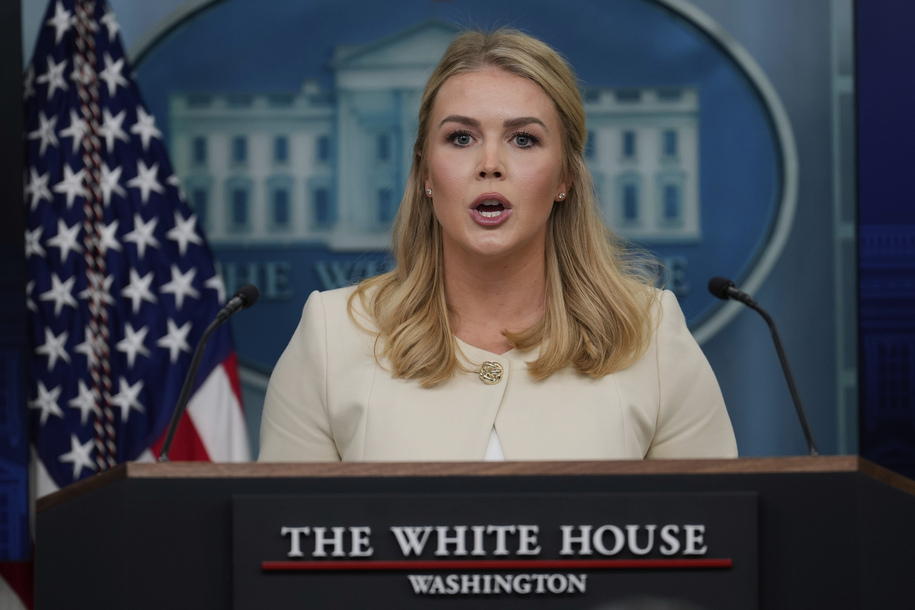
White House Press Secretary Karoline Leavitt swiftly defended the president, responding to Dean’s post by stating, “No he didn’t, Libby. His written remarks referred to Greenland as a ‘piece of ice’ because that’s what it is. You’re the only one mixing anything up here.” Notably, Leavitt misspelled the reporter’s first name in her response.
The exchange highlights the ongoing tensions between the Trump administration and the press corps. Former Obama White House aide Tommy Vietor commented on the situation, suggesting Leavitt was in a difficult position having to “deny reality” after Trump had previously criticized his communications team in front of reporters.
This incident occurs against the backdrop of Trump’s well-documented interest in Greenland. In 2019, during his first term as president, Trump’s suggestion that the United States might purchase Greenland from Denmark became international news, with Danish Prime Minister Mette Frederiksen calling the idea “absurd” at the time.
Greenland, the world’s largest island, holds strategic importance due to its location in the Arctic and abundant natural resources. The region has become increasingly significant in geopolitical discussions about climate change, shipping routes, and mineral rights. Meanwhile, Iceland is an independent country with its own distinct history and government.
The confusion between the two Nordic territories comes at a time when Arctic policy and North Atlantic relations remain important factors in U.S. foreign policy. The Arctic region has seen increased military interest from Russia and China in recent years, making accurate diplomatic communications about the area particularly important.
Media analysts note that the incident reflects a pattern of the current administration’s approach to messaging—forcefully rejecting unflattering coverage while maintaining that the president’s statements are being misrepresented, regardless of video evidence.
The episode also underscores the intense scrutiny facing all presidential communications on the international stage, where verbal slips can potentially impact diplomatic relationships and market confidence.
As global leaders continue to navigate complex international relationships and economic challenges, clear and accurate communication remains essential for effective diplomacy and public trust in government institutions.
Fact Checker
Verify the accuracy of this article using The Disinformation Commission analysis and real-time sources.

9 Comments
This is just another example of the former president’s tendency to make claims without regard for facts. Conflating Greenland and Iceland shows a lack of geopolitical awareness.
Absolutely. Leaders need to have a firm grasp on global realities, not just their own preferred narratives. Dismissing clear evidence is a worrying sign.
Ah, another case of the former president mixing up his facts. Greenland and Iceland are quite different – one is an autonomous territory, the other a full-fledged country. This seems to be a recurring issue for him.
You’re right, it’s concerning when a leader gets basic geographic facts wrong. Proper knowledge of global affairs is crucial, especially on the world stage.
It’s concerning to see the White House response here. Dismissing audio evidence of mistakes, rather than acknowledging them, sets a troubling precedent.
You make a good point. Refusing to be accountable for errors, no matter how small, undermines faith in the political process. Transparency should be the priority.
The White House’s dismissal of the audio evidence is disappointing, but not surprising. Trying to cover up these kinds of mistakes rather than owning up to them erodes public trust.
Agreed. Transparent and accountable leadership is essential, even if it means admitting to errors. Doubling down on falsehoods is a dangerous path.
Mixing up Greenland and Iceland is a pretty basic geographical error for a former US president. The White House’s defensive reaction is not a good look.