


Listen to the article
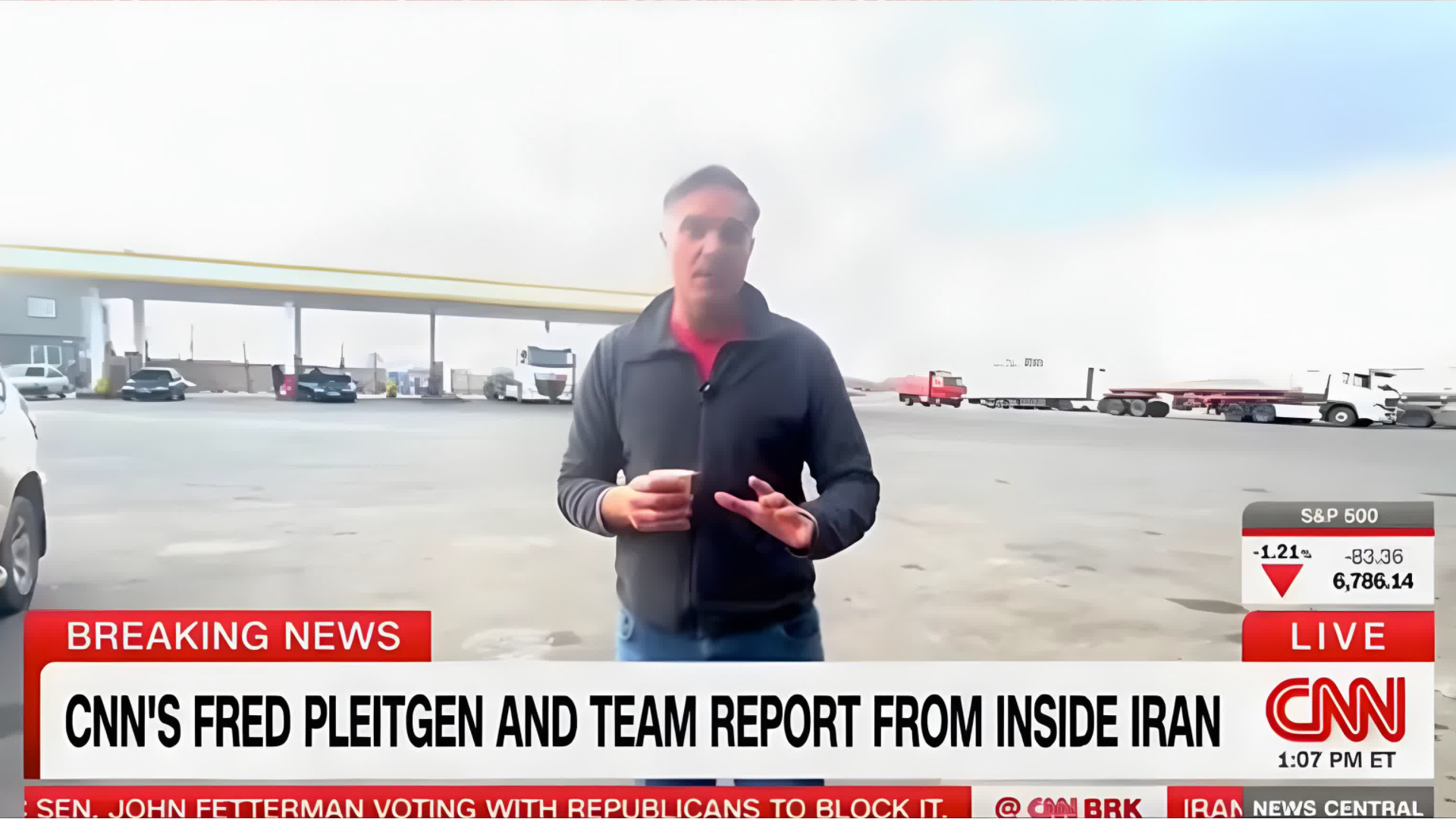
A senior Trump administration official has leveled serious accusations against CNN, claiming the network is disseminating “pro-Iran regime propaganda” following a viral report broadcast from within the Islamic Republic.
The controversy erupted after CNN aired a segment from its correspondent in Tehran that quickly gained traction across social media platforms. The report, which provided on-the-ground coverage from Iran, sparked immediate backlash from the administration, which has maintained a hardline stance toward Iran throughout President Trump’s tenure.
The unnamed senior official’s remarks represent the latest escalation in the already tense relationship between the Trump administration and mainstream media outlets. CNN has faced repeated criticism from administration figures who have questioned its coverage of foreign policy issues, particularly regarding Middle Eastern affairs.
This incident occurs against the backdrop of deteriorating U.S.-Iran relations, which have significantly worsened since President Trump withdrew from the Iran nuclear deal, formally known as the Joint Comprehensive Plan of Action (JCPOA), in May 2018. The administration has since pursued a “maximum pressure” campaign, implementing severe economic sanctions aimed at curtailing Iran’s regional influence and nuclear ambitions.
Media experts note that reporting from inside Iran presents unique challenges for Western journalists, who must navigate strict government oversight while attempting to deliver accurate information to global audiences. Foreign press in Iran typically operates under considerable restrictions, with authorities closely monitoring content.
“International news organizations face an incredibly difficult balancing act when reporting from countries with restricted press freedoms,” explained Dr. Melissa Rogers, a media studies professor at Georgetown University. “They must weigh access against potential government influence, all while striving to present a complete picture to viewers.”
CNN has defended its reporting, maintaining that its coverage aims to provide American viewers with perspectives that help them understand the complex geopolitical situation. Network representatives emphasized that reporting from within Iran does not equate to endorsement of the regime’s policies or positions.
The Trump administration has consistently criticized media coverage it perceives as undermining its foreign policy objectives, particularly regarding Iran, North Korea, and China. Officials have argued that certain media narratives can complicate diplomatic efforts and potentially strengthen adversarial regimes.
The tension highlights broader questions about foreign correspondence in authoritarian states and the responsibilities of news organizations in presenting multiple perspectives on international conflicts. Critics of the administration’s position suggest that hearing diverse viewpoints, even from within adversarial nations, is essential for informed public discourse on foreign policy matters.
Regional experts point out that understanding internal Iranian dynamics is crucial for effective policy formation. “Getting information directly from Iran, even with its limitations, provides valuable insights that can’t be obtained from external analysis alone,” said Dr. Karim Sadjadpour, a senior fellow at the Carnegie Endowment for International Peace.
The controversy comes at a particularly sensitive time, as U.S.-Iran tensions have periodically flared throughout 2020, following the January killing of Iranian General Qasem Soleimani in a U.S. drone strike and Iran’s subsequent missile attacks on U.S. bases in Iraq.
Neither CNN nor the White House has released additional statements regarding the specific content of the report that prompted the accusation. Media watchdog organizations have called for transparency from both parties to clarify the nature of the disputed coverage.
As the presidential election approaches, foreign policy regarding Iran remains a contentious issue, with significant implications for regional stability in the Middle East. Both political parties have staked out distinct positions on how to address Iran’s nuclear program, support for proxy groups, and human rights record.
The incident underscores the enduring tensions between the current administration and mainstream media outlets, particularly regarding coverage of complex foreign policy challenges in regions where American interests are deeply engaged.
Fact Checker
Verify the accuracy of this article using The Disinformation Commission analysis and real-time sources.

10 Comments
This seems like a tense back-and-forth between the Trump administration and CNN. I’d be curious to hear both sides’ perspectives on the accusations of ‘pro-Iran regime propaganda’. Objective journalism is important, but it’s a fine line between reporting the facts and being perceived as taking sides.
I agree, it’s a complex issue. Both the administration and media outlets need to be careful not to let political divides compromise factual reporting. Transparency and accountability from all sides would help build public trust.
This clash highlights the delicate dance between the media, the government, and the public interest. While the Trump administration may have legitimate concerns, attacking the press’s credibility is a risky move that could further erode public trust. Balanced, fact-based reporting is essential, even on polarizing foreign policy issues.
Well put. Maintaining the independence and integrity of the press is crucial for a healthy democracy. Both sides need to resist the temptation to score political points and instead focus on upholding journalistic standards and ensuring the American public receives accurate, unbiased information.
The Trump administration’s hardline stance on Iran is well known, so it’s not surprising they would be quick to criticize any coverage they perceive as sympathetic to the Iranian regime. However, CNN will likely argue they were simply reporting the facts on the ground as their correspondent witnessed them.
You make a fair point. Reasonable people can disagree on where to draw the line between objective reporting and perceived bias. It’s an important debate, as the American public deserves accurate, impartial news coverage on critical foreign policy issues.
The Trump administration’s accusations against CNN are serious, but without seeing the full context of the report, it’s hard to assess their validity. Responsible journalism requires balance and objectivity, even on sensitive geopolitical issues like U.S.-Iran relations. Both sides should avoid inflammatory rhetoric and focus on facts.
I agree, knee-jerk accusations of ‘propaganda’ are rarely productive. A more constructive approach would be for the administration to engage directly with CNN, provide specific critiques, and seek to improve journalistic standards rather than simply lashing out. Open dialogue is key.
This dispute highlights the challenges of maintaining journalistic integrity in a highly polarized political environment. Both sides have incentives to portray the other as ideologically motivated. Hopefully cooler heads can prevail and they can find common ground on the importance of factual, unbiased reporting.
Well said. Preserving press freedom and public trust in media is crucial, even as outlets and politicians frequently clash. Thoughtful, nuanced analysis from all sides is needed to navigate these tricky situations.