


Listen to the article
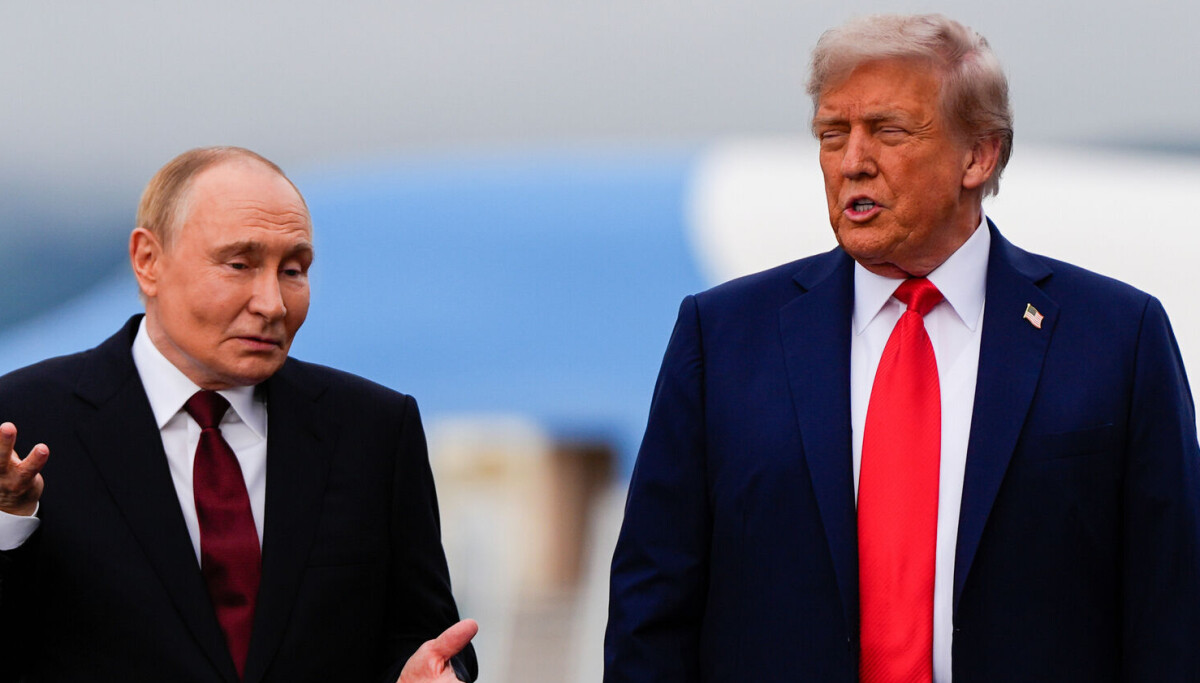
U.S. and Russian propaganda narratives share a common view of Europe in decline, according to researchers studying information warfare. Both countries’ leaders have increasingly portrayed Europe as a continent in moral and cultural freefall, despite their otherwise divergent political interests.
Since Donald Trump’s presidency, U.S. rhetoric toward Europe has become increasingly critical. In January at the Davos summit, Trump claimed to love Europe while simultaneously declaring that Europeans are “destroying themselves” and must change their culture to survive. His Vice President, JD Vance, previously accused European politicians of being undemocratic.
Russia researcher Johanne Kalsaas notes striking parallels between these statements and narratives promoted by Russian President Vladimir Putin’s regime for years.
“Both regimes are fighting to promote as monotonous a narrative about the world as possible,” Kalsaas told Science Norway. “And the narrative is that Europe is in decline.”
According to Kalsaas, this portrayal hinges on accusations of collective moral and democratic failure. “Europe is, in their view, in the process of destroying itself through cultural diversity, among other things because we accept LGBT+ people,” she explained.
Trump’s criticisms specifically target Europe’s immigration policies and investments in green energy as additional drivers of what he characterizes as European decline.
Modern propaganda has evolved significantly from earlier forms, Kalsaas notes. During World War II, propaganda relied heavily on dehumanizing enemy images to provoke strong emotional responses, strengthen support for leadership, or weaken resistance.
“Whether the enemies were Jews, communists, Nazis, or Islamists, they were portrayed in a way that provoked strong emotions, dehumanized them, and thereby justified the use of violence against them,” Kalsaas said.
Today’s digital media landscape has forced propaganda techniques to adapt. Rather than focusing solely on fear, modern propaganda aims to capture attention in an endless content stream, blurring lines between information and entertainment.
Trump excels in this arena, according to Kalsaas. She points to his sharing of an AI-generated image showing himself planting an American flag on Greenland. “Consciously or unconsciously, he’s playing into a humor culture with increasingly ridiculous memes. Greenland’s sovereignty is reduced from a serious issue of international law and NATO’s continued existence into a massive joke,” the researcher observed.
Paul Buvarp, a researcher at the Norwegian Defence Research Establishment specializing in information influence and disinformation, previously told Science Norway that Trump’s approach focuses more on creating unrest than on specific content.
“It’s hard to say whether the goal is to split Europe directly. But these kinds of statements fit neatly into a narrative Trump – and parts of American politics – have already promoted: That Europe is fragmented, weak, and incapable of taking responsibility for its own security,” Buvarp explained.
This approach aligns with what The New Yorker has described as the “meme-ification” of politics, where public opinion is increasingly shaped by viral content on social media platforms. Trump’s communication strategy appears deliberately crafted for this environment.
“Shock value, spectacle, and the sensation of following a completely absurd TV series that surpasses our wildest imaginations,” is how Kalsaas characterizes this approach, noting that everything has viral potential.
The most concerning aspect of this new propaganda model, according to Kalsaas, is its potential to depoliticize populations. Rather than mobilizing citizens through fear, it aims to distract them.
“Such propaganda is not intended to make us think politically, but to distract us,” Kalsaas said. “We know this is a key strategy, especially on the Russian side: By flooding the internet with meaningless content, the population becomes depoliticized. And a politically passive population is obviously much easier to control.”
While Kalsaas avoids speculating about Trump’s specific intentions, she emphasizes the disorienting effect of his rhetoric. “It’s important to pay attention to the sense of unreality and unpredictability that follows in the wake of Trump’s statements. I think many feel an enormous sense of discouragement and powerlessness. People are beginning to doubt whether there are any rules left for the international community.”
This atmosphere of uncertainty and disempowerment, Kalsaas concludes, ultimately benefits authoritarian forces worldwide.
Fact Checker
Verify the accuracy of this article using The Disinformation Commission analysis and real-time sources.

8 Comments
This ‘Europe in decline’ narrative seems to serve the interests of both Trump and Putin, even if their reasons differ. I wonder how much of this is intentional coordination versus natural alignment of their populist messaging.
Good point. Regardless of the motivation, it’s worrying to see leaders of major powers pushing such a divisive and potentially destabilizing message.
Quite striking how the US and Russian propaganda machines are amplifying similar themes about Europe’s supposed moral and cultural decline. Feels like an attempt to undermine European unity and influence.
I share your concern. We should be vigilant about these coordinated disinformation campaigns, no matter the source.
This article highlights the troubling convergence of rhetoric between the US and Russia when it comes to Europe. Seems like a calculated effort to sow division and erode trust in European institutions.
Interesting to see the parallels between US and Russian rhetoric on Europe’s decline. Seems like an attempt to portray the West as weak and unstable, even if the underlying motivations differ. Curious to hear more analysis on this propaganda tactic.
I agree, the coordinated messaging is concerning. It’s important to look past the rhetoric and examine the facts objectively.
The parallels between Trump and Putin’s messaging on Europe’s decline are quite concerning. Appears to be a concerted attempt to undermine the EU and its democratic values. We must be wary of such coordinated propaganda efforts.