


Listen to the article
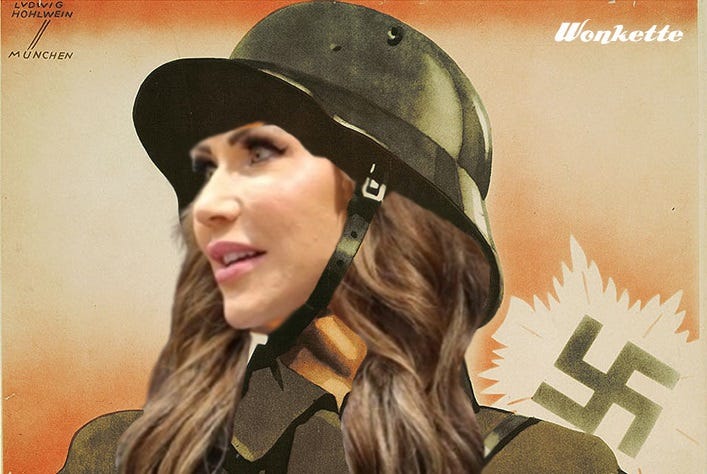
In a concerning development, the New York Times has published an investigative report highlighting a pattern of white nationalist imagery and rhetoric appearing in Trump administration social media accounts, particularly those managed by the Department of Homeland Security.
While experts on extremism have been documenting this trend for years, the Times investigation breaks new ground by revealing that at DHS, these controversial messages have explicit approval from Tricia McLaughlin, who oversees the department’s communications strategy.
The report details numerous instances of government social media accounts posting content that appears to deliberately echo white nationalist themes. When confronted about these patterns, McLaughlin firmly denied any intentional connection to extremist ideology, insisting that any perceived similarities are coincidental.
One particularly troubling example cited in the Times report involved a January 9 DHS Twitter post quoting lyrics from “We’ll Have Our Home Again,” a song widely popular among neo-Nazi groups and explicitly associated with white supremacist ideology. According to research organization Open Measures, the song has been shared hundreds of times, almost exclusively by “explicitly neo-Nazi and white supremacist channels.”
The Times reporter noted that the song was even referenced in writings left by the perpetrator of a 2023 mass shooting at a Dollar General store in Jacksonville, Florida, where three Black people were murdered.
When questioned about the post’s connection to the white nationalist anthem, McLaughlin categorically denied any relationship, claiming, “There are plenty of references to those words in books and poems,” while acknowledging she was “in charge of everything” posted on the department’s social media accounts.
However, the Times investigation revealed that when the post was viewed on Instagram’s mobile app, audio from the song’s chorus played in the background. When this was pointed out to McLaughlin, she accused the Times of participating in “a left-wing conspiracy theory” and insisted, “I’m telling you it’s not there.” Within 40 minutes of this exchange, the Instagram version of the post was deleted.
Extremism researchers interviewed by the Times emphasized that while one or two instances of overlap with white nationalist messaging might be dismissed as coincidence, the persistent pattern suggests deliberate intent. William Braniff, who heads the Polarization and Extremism Research and Innovation Lab at American University, stated that given the volume and nature of the content, “it’s much harder to dismiss.”
Other concerning examples highlighted in the report include multiple DHS posts containing exactly 14 words – a significant number in white nationalist circles referencing the slogan “We must secure the existence of our people and a future for White children.” One July post from the Department featured the 14-word caption: “A Heritage to be proud of, a Homeland worth Defending. American Progress – John Gast,” while another stated: “Think about how many criminal illegal aliens you could fit in this bad boy!”
More recently, the Department of Labor posted content with phrasing strikingly similar to the Nazi propaganda slogan “Ein Volk, Ein Reich, Ein Führer,” using instead “One Homeland. One People. One Heritage. Remember who you are, American.”
When confronted about these similarities, White House spokesperson Abigail Jackson dismissed the concerns, stating: “It seems that the mainstream media has become a meme of their own: the deranged leftist who claims everything they dislike must be Nazi propaganda. Get a grip.”
The Times investigation follows earlier reporting on similar themes from NPR, the New Republic, and the Southern Poverty Law Center, all of which have documented the increasing prevalence of far-right messaging in official government communications.
As scrutiny increases over these communications patterns, the administration’s consistent response has been to deny any intentional connection to extremist ideology while continuing to produce content that raises alarm among experts who study extremism and political radicalization.
Fact Checker
Verify the accuracy of this article using The Disinformation Commission analysis and real-time sources.

14 Comments
If these reports are accurate, it’s a serious breach of public trust. Government communications should be strictly nonpartisan and free of any association with hate groups or white nationalism. Urgent action is required to rectify this situation.
I share your concerns. The American people deserve transparent, ethical leadership that upholds democratic values, not extremist rhetoric.
If these allegations are true, it’s a deeply troubling abuse of public office. Government communications should be scrupulously nonpartisan and free of any association with hate groups or white nationalist ideology. A full investigation and swift corrective action are essential.
I agree completely. The administration must address this issue with complete transparency and a firm commitment to upholding democratic norms and values.
This is a concerning report. If true, the Trump administration’s apparent connections to extremist groups are deeply troubling. We need more transparency and accountability around these issues.
I agree, this warrants a thorough investigation. Extremist ideology has no place in government communications.
This investigation raises very troubling questions about the integrity of the Trump administration’s communications and messaging. Any connection to white nationalist ideology is completely unacceptable and must be addressed immediately.
Agreed. The public deserves clear explanations and swift corrective measures to ensure government agencies are not promoting extremist narratives, even inadvertently.
While I’m cautious about jumping to conclusions, the details in this report are quite alarming. If confirmed, the administration’s ties to white nationalist themes are a major breach of the public trust. Transparency and accountability are critical here.
I appreciate your measured approach, but this issue demands a serious response. Any government involvement with extremist ideologies is completely unacceptable and must be swiftly addressed.
This is a very concerning development. The Trump administration must provide a clear explanation and take immediate steps to address any connections between its communications and white nationalist rhetoric. The American people deserve a government that rejects extremism in all its forms.
Absolutely. Allowing government agencies to promote or enable extremist narratives, even unintentionally, is a dangerous breach of the public trust that cannot be tolerated.
The use of white nationalist imagery and rhetoric by government agencies is very disturbing. This type of content can empower and embolden hate groups, which is unacceptable. Responsible leadership is needed to address this problem.
Absolutely. The administration must swiftly condemn and remove any ties to extremist ideologies, no matter how subtle or unintentional they may be.