


Listen to the article
Iran’s Social Media Propaganda Campaign Follows Historical Pattern With New Digital Twist
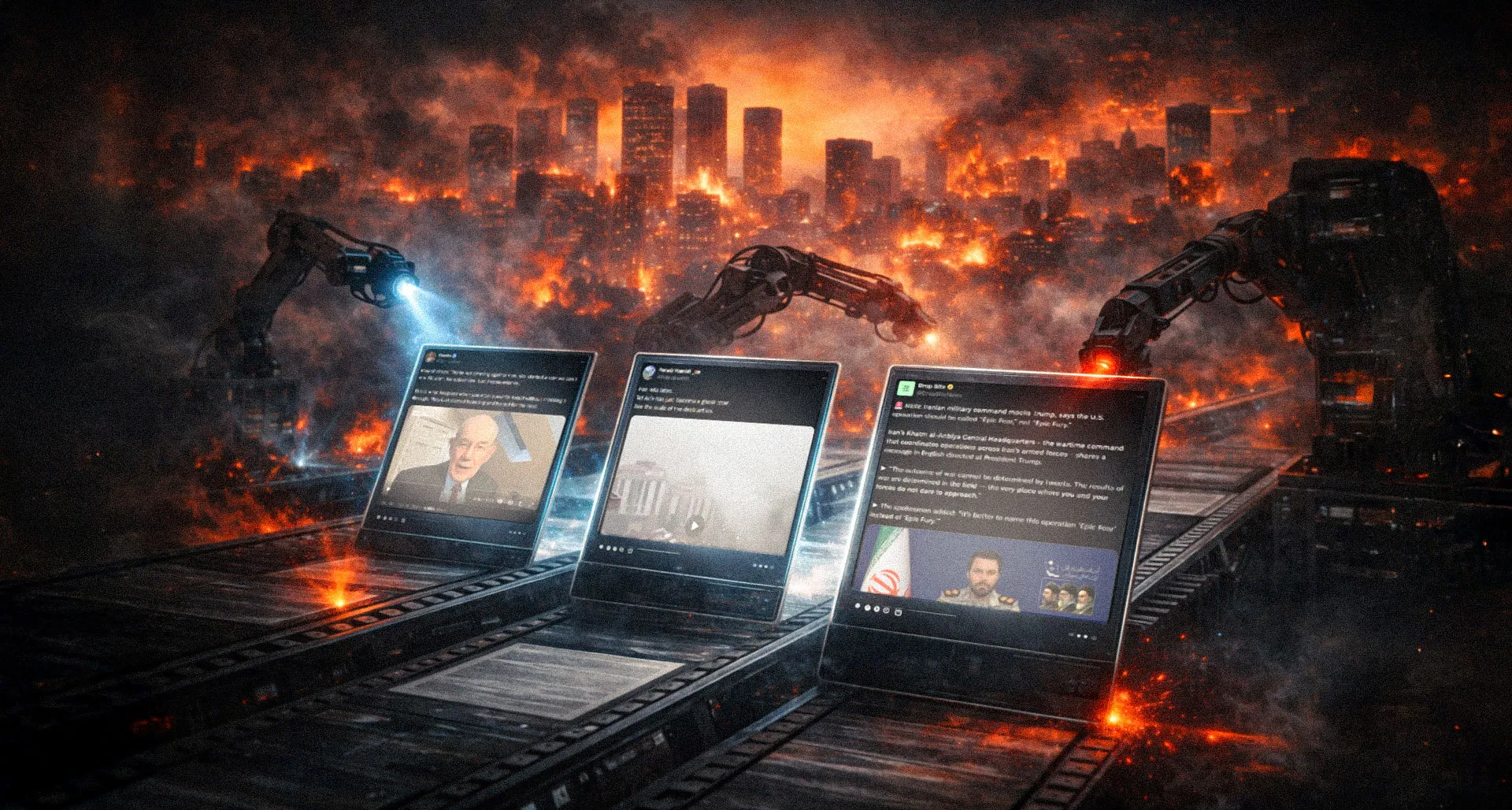
A coordinated campaign of misinformation has flooded social media during the current U.S.-Israeli conflict with Iran, employing tactics aimed at demoralizing Israelis and Americans while portraying Iran as victorious. This digital propaganda push represents the latest evolution in a century-old tradition of wartime psychological operations.
The Iranian-linked narratives follow several consistent themes: claims that Iran is winning the war and inflicting devastating damage on Israeli cities; assertions that Israeli leadership has been killed and the country is in chaos; statements that Iran possesses superior military technology and has yet to reveal its full capabilities; and messaging that portrays the United States as having been manipulated into fighting Israel’s battles at the expense of American lives.
While striking in its digital reach, this approach follows a well-established propaganda playbook. Throughout the 20th century, wartime adversaries consistently employed available communication technologies to undermine enemy morale and project illusory strength.
During World War I, German forces dropped leaflets targeting African-American soldiers, highlighting racism within U.S. military ranks to encourage desertion. The rise of radio broadcasting in subsequent decades enabled more sophisticated approaches.
World War II saw the emergence of figures like “Axis Sally,” who broadcast to American troops on behalf of Nazi Germany, attempting to foster homesickness and doubt about their partners’ fidelity. British audiences faced similar tactics from “Lord Haw Haw,” whose broadcasts mixed entertainment with exaggerated claims about German military successes. In the Pacific theater, “Tokyo Rose” served a similar function for Japanese propaganda efforts.
This pattern continued through subsequent conflicts. “Seoul City Sue” broadcast to American forces during the Korean War, while “Hanoi Hannah” employed comparable tactics during the Vietnam War. During the Gulf Wars, Iraqi radio targeted American troops with messages about “immoral Gulf emirs” and reminded soldiers of “faraway loved ones.”
Perhaps most infamous was Saddam Hussein’s spokesman Muhammad Saeed al-Sahhaf, nicknamed “Baghdad Bob,” who claimed Iraqi forces were defeating Americans even as U.S. troops entered Baghdad. Similarly, during the Six-Day War, Egyptian radio falsely proclaimed Israeli planes were being shot down while Egyptian forces supposedly advanced on Tel Aviv.
What distinguishes today’s propaganda landscape from these historical precedents is its integration into mainstream information channels. While previous generations easily identified enemy broadcasts as propaganda, social media posts claiming Tel Aviv lies in ruins or that Israel’s leadership has been eliminated can appear indistinguishable from legitimate reporting.
“On social media, viral posts can appear indistinguishable from legitimate reporting,” notes one security analyst who studies disinformation. “High follower counts, polished visuals, and algorithmic amplification give propaganda a veneer of credibility that historical broadcasts never achieved.”
This contemporary misinformation ecosystem benefits from multiple amplifiers. Some accounts may be directly linked to Iranian influence operations, while others are driven by ideology, anti-Israel or anti-American sentiment, or simply the pursuit of engagement and profit through controversial content.
The effectiveness of this approach stands in stark contrast to historical propaganda efforts, which often failed to achieve their objectives. Studies conducted during Lord Haw-Haw’s broadcasts found that most British listeners tuned in for entertainment value rather than taking the propaganda seriously. Similarly, American soldiers typically listened to Tokyo Rose, Axis Sally, and Hanoi Hannah primarily for their music selections while ignoring the accompanying messages.
Today’s digital information environment eliminates these clear distinctions. When an expert on a popular podcast characterizes the conflict as “Israel’s fault,” viewers with limited regional knowledge may accept this as objective fact rather than recognize it as potentially calculated misinformation.
As warfare has evolved from trenches to drones and hypersonic missiles, the battle for public perception has undergone an equally significant transformation—moving from leaflets and radio broadcasts to artificial intelligence, viral content, and global digital platforms.
The result is a propaganda landscape that presents unprecedented challenges for information consumers trying to separate fact from fiction in an increasingly complex geopolitical environment.
Fact Checker
Verify the accuracy of this article using The Disinformation Commission analysis and real-time sources.

11 Comments
The article highlights the enduring nature of wartime propaganda, even as the methods change. It’s a sobering reminder that critical thinking and fact-checking are essential in an era of widespread digital misinformation.
This article highlights an important issue – the ease with which adversaries can now disseminate propaganda and false narratives through social media. Vigilance and critical thinking are key to discerning fact from fiction in the digital age.
The article provides a useful historical context for understanding the current propaganda campaign targeting the U.S. and Israel. Recognizing the consistent tactics, even as the mediums evolve, can help us better defend against these influence operations.
The evolution of wartime propaganda tactics is a fascinating topic. It’s interesting to see how adversaries leverage new technologies to sway public opinion, even if the underlying themes remain consistent over time.
You’re right, the Iranian campaign seems to be following a well-established playbook. I wonder how effective these digital tactics will be compared to past wartime propaganda efforts.
This is a timely and insightful analysis of how wartime propaganda has adapted to the digital landscape. The Iranian campaign’s focus on demoralizing the enemy through social media is a concerning development that warrants close monitoring and response.
Wartime propaganda has long been used to influence public opinion and morale. It’s concerning to see how modern digital tools have expanded the reach and potential impact of these psychological operations. Fact-checking and media literacy are crucial in combating misinformation.
The historical parallels between past wartime propaganda and the current digital misinformation campaign are quite striking. It’s a good reminder that while the methods evolve, the underlying goals and techniques often remain the same.
Absolutely. Analyzing how these tactics have been used over time can help us better identify and counter contemporary propaganda efforts, even as the mediums and specifics continue to change.
I’m curious to learn more about the specific narratives being pushed by the Iranian-linked social media campaign. Portraying Iran as technologically superior and winning the war could be an attempt to boost domestic morale and discourage the opposition.
Yes, the messaging targeting demoralization of Israelis and Americans is a classic propaganda tactic. It will be important to closely scrutinize these claims and fact-check the information being spread.