


Listen to the article
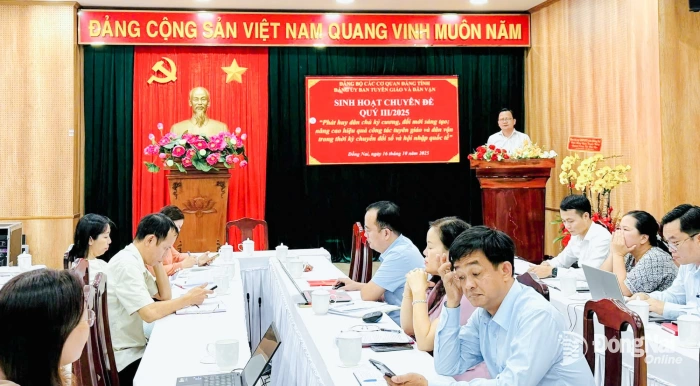
In a significant gathering focused on evolving communication strategies, Vietnamese officials and media professionals convened to address the changing landscape of propaganda and mass mobilization in the digital age. The thematic meeting explored the challenges and opportunities presented by technological advancement and increasing global connectivity.
Provincial leaders highlighted the need for modernized approaches to public communication, emphasizing that traditional methods must adapt to reach citizens who now consume information primarily through digital channels. The transformation of propaganda work—a term used in Vietnam to describe state communication and public information campaigns—has become a priority as the country deepens its international integration.
“Our communication strategies must evolve with technology while maintaining our core values,” noted a senior official present at the meeting. “The digital transformation offers unprecedented reach, but also presents challenges in terms of information security and foreign influence.”
The discussion centered on several key areas, including the development of digital platforms for government messaging, training for media professionals in new technologies, and strategies to counter misinformation that can spread rapidly through social networks.
Experts at the meeting presented data showing the dramatic shift in how Vietnamese citizens consume news, with more than 70 percent now accessing information primarily through smartphones and social media rather than traditional outlets like television and newspapers. This shift has created both opportunities for wider reach and challenges in maintaining message consistency.
Đồng Nai Province, which hosted the gathering, has been implementing a digital transformation roadmap that includes upgrading communication infrastructure in remote areas and training local officials in digital literacy. Provincial representatives shared early results showing improved public engagement with government initiatives when using multimedia formats and interactive platforms.
International integration was another focal point, with speakers noting that Vietnam’s increasing participation in global trade and diplomatic frameworks requires more sophisticated public communication. As foreign investment continues to flow into Vietnamese industrial zones, particularly in manufacturing hubs like Đồng Nai, officials stressed the importance of effectively communicating policies and opportunities to both domestic and international audiences.
“We cannot separate our propaganda work from our economic development goals,” explained an economic affairs official. “Clear communication about investment policies and business environments directly impacts our ability to attract quality foreign partners.”
The meeting also addressed concerns about foreign influence operations and the spread of content that authorities consider harmful to social stability. Officials outlined plans for improved monitoring systems and faster response mechanisms to address problematic content, while still maintaining the country’s commitments to responsible internet governance.
Media professionals attending the event raised questions about resource allocation, noting that digital transformation requires significant investment in both technology and human resources. Several speakers advocated for increased budget allocations for training programs and equipment upgrades at state media outlets.
The gathering concluded with recommendations for a comprehensive national strategy on propaganda and mass mobilization work that incorporates digital transformation as a central pillar. Proposed measures included establishing dedicated digital content teams at all levels of government, developing content guidelines specific to different digital platforms, and implementing regular evaluation mechanisms to measure effectiveness.
As Vietnam continues its trajectory of economic growth and global integration, meetings like this reflect the government’s recognition that public communication must evolve alongside other sectors. The consensus among participants was that effective propaganda work in the digital age requires not just technological adaptation, but a fundamental rethinking of how messages are crafted and delivered to increasingly connected and discerning citizens.
Officials indicated that follow-up sessions would be held in the coming months to develop concrete implementation plans based on the meeting’s conclusions.
Fact Checker
Verify the accuracy of this article using The Disinformation Commission analysis and real-time sources.

5 Comments
The digital transformation offers both opportunities and risks when it comes to propaganda and information security. It will be crucial for Vietnam to stay vigilant against foreign influence while leveraging new technology.
This conference highlights the global trend of governments adapting their public communication and propaganda efforts to the realities of the internet age. Transparency and safeguarding against misinformation will be key concerns.
The transformation of propaganda work is an intriguing topic. As global integration deepens, countries must find ways to effectively reach citizens through evolving digital channels while maintaining credibility.
Curious to see what specific digital platforms and training initiatives Vietnam develops to enhance their propaganda work. Balancing technology and traditional values is a common challenge for many nations today.
Interesting to see how Vietnam is grappling with the challenges of propaganda and public engagement in the digital age. Modernizing communication strategies while maintaining core values is a delicate balance.