


Listen to the article
From Donald Duck to SpongeBob: The Evolution of Pop Culture in War Propaganda
In 1943, Donald Duck enlisted to fight the Nazis. A Disney short film portrayed the cartoon duck living under Nazi rule, enduring food shortages and forced labor, only to wake up and realize it was all a nightmare. The film, designed to sell war bonds, achieved both artistic and public acclaim, winning an Academy Award for Best Animated Short Film and later being recognized as one of the 50 greatest animated films of all time.
Donald wasn’t alone in this patriotic effort. Bugs Bunny sang for war bonds and mocked Hermann Göring while impersonating Hitler. Popeye starred in anti-Japanese videos, while the Seven Dwarfs from Snow White were recruited for Canadian propaganda. Even Minnie Mouse and Pluto joined the effort, instructing American housewives on conserving fat during wartime rationing.
Comic book superheroes played their part too. Captain America, Batman, Superman, and Iron Man served as powerful propaganda tools, especially during World War II and the Cold War, embodying American values and strength in the face of foreign threats.
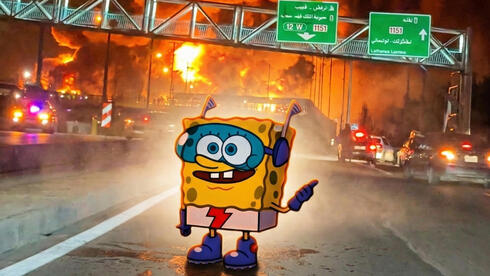
This direct use of beloved characters for war propaganda largely disappeared in subsequent decades. But now, as the United States navigates an unpopular war in Iran, the White House has revived the strategy with a distinctly modern twist: instead of theatrical animated films, today’s propaganda takes the form of viral memes distributed via social media, featuring animated characters, action movies, video games, and popular music.
Earlier this month, the official White House X account posted a 14-second video showing an aerial bombing of an Iranian target, immediately followed by SpongeBob SquarePants asking, “Want to see me do it again?” The caption boldly stated: “No breaks, no apologies.” On TikTok, footage of missile launches and bombings in Iran was set to the song “Fireman,” featuring Donald Trump raising his fist with the caption: “The fireman is coming.”
Video games have become central to this messaging strategy, part of an effort to connect with younger, gaming-oriented demographics that helped secure Trump’s 2024 victory. One TikTok video merged battlefield footage with clips from Wii Sports, while another—since removed—incorporated scenes from Call of Duty: Modern Warfare 3.
Perhaps the most striking example is a fast-paced 42-second video interweaving actual bombing footage with clips from popular entertainment franchises including Top Gun, Braveheart, Breaking Bad, Tropic Thunder, Superman, Transformers, Deadpool, and Star Wars, concluding with the phrase “flawless victory.” The video garnered nearly 65 million views on X alone.
This approach has not been without criticism. Actor Ben Stiller publicly requested that the White House remove the video, writing on X: “We never gave you permission, and we have no interest in being part of your propaganda machine. War is not a movie.”
While using popular culture as propaganda is not new—even Alexander the Great minted coins depicting himself as Hercules—today’s approach represents a significant shift in both medium and message. The Roosevelt administration’s use of Donald Duck, Popeye, and Superman aimed to sell war bonds and promote collective sacrifice. These characters embodied ideals such as “truth, justice, and the American way,” connecting individual actions to a broader national purpose.
By contrast, contemporary messaging emphasizes spectacle over substance. Rather than building narrative coherence or articulating a national vision, today’s propaganda focuses on imagery, explosions, icons, memes, and music—creating content designed for maximum virality rather than meaningful engagement.
Media and communication scholars suggest this reflects broader changes in how governments approach public messaging in the digital age. The emphasis has shifted from persuasion through storytelling to engagement through entertainment, with success measured in views and shares rather than shifts in public opinion or behavior.
While these tactics may energize political bases in the short term, questions remain about their long-term effectiveness as the war continues and its economic consequences become more tangible for average Americans.
Fact Checker
Verify the accuracy of this article using The Disinformation Commission analysis and real-time sources.

9 Comments
The article highlights an interesting contrast between the overt propaganda of wartime cartoons and the more subtle, pervasive nature of modern social media influencer marketing. It’s a sobering reminder of how persuasive media can be wielded.
Absolutely. The ability to leverage trusted figures and cultural touchstones to shape public opinion is a powerful tool, whether it’s used for patriotic or more nefarious purposes.
It’s fascinating how wartime propaganda has evolved from classic cartoon characters to modern social media influencers. I wonder how the messaging and techniques have adapted to the changing media landscape.
You raise a good point. The use of pop culture icons for propaganda purposes seems to be a recurring tactic, though the platforms and execution have certainly evolved over time.
The article provides a fascinating historical perspective on the use of pop culture icons in propaganda. It’s a sobering reminder of how even beloved characters can be weaponized to serve political agendas. I’m curious to learn more about the psychological and sociological factors that make this tactic so effective.
That’s a great point. Understanding the underlying mechanisms that make propaganda so persuasive, even when using familiar cultural touchstones, could help us develop more effective ways to identify and counter it.
This is a really interesting look at the evolution of propaganda techniques, from classic wartime cartoons to modern social media influencers. It’s a reminder of how adaptable and insidious propaganda can be, and the importance of media literacy in an age of ubiquitous digital content.
This is a thought-provoking look at the evolution of propaganda techniques. It’s alarming to see how iconic characters like Donald Duck and Minnie Mouse were co-opted for wartime messaging. I wonder how we can inoculate against such manipulative tactics in the digital age.
That’s a great question. Developing critical media literacy and fostering a more discerning public seems key to countering the influence of modern propaganda, whether it comes from governments, corporations, or other actors.