


Listen to the article
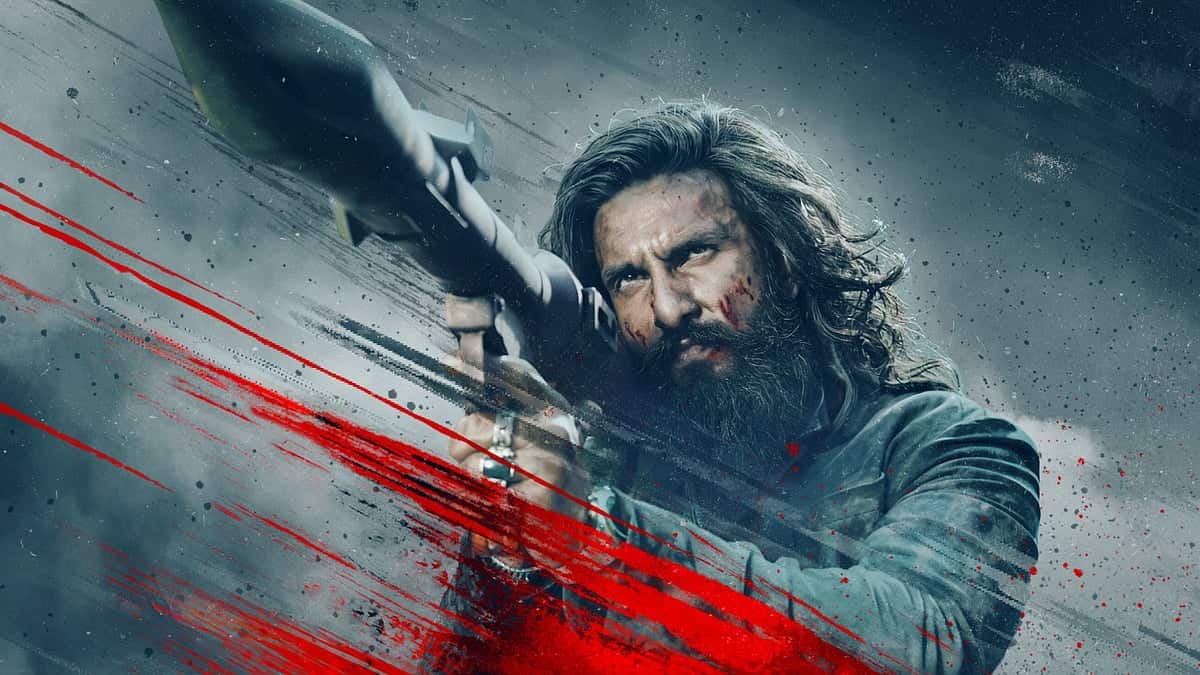
In Aditya Dhar’s latest film “Dhurandhar: The Revenge,” rage and propaganda intertwine in what critics describe as an intense but politically charged sequel. The film extends the Pakistan-based spy drama established in its 2025 predecessor, following an Indian agent’s ascent within Pakistan’s criminal underworld as he orchestrates revenge for historical attacks against India.
Despite its surface appeal as a crime thriller, industry observers note that Dhar has crafted something more politically calculated. Like his breakout hit “Uri: The Surgical Strike” (2019), this new film appears to function as advocacy for India’s current government, with critics suggesting Dhar deliberately blurs fact and fiction to showcase governmental efficiency.
The nearly four-hour sequel suffers from notable absences, particularly Akshaye Khanna, whose portrayal of Pakistani gang leader Rehman Dakait in the first film was widely praised. His character’s death at the conclusion of the original “Dhurandhar” leaves a charisma vacuum that neither Arjun Rampal as ISI handler Major Iqbal, Sanjay Dutt as a police officer, nor Ranveer Singh as the protagonist fully fills.
The narrative structure has also shifted dramatically. While marketing promised an origin story for Singh’s character Jaskirat Singh Rangi, who operates as spy Hamza Ali Mazari, these elements serve primarily as setup for events occurring from 2014 onward. The film explicitly references Prime Minister Narendra Modi’s rise to power through news footage of his swearing-in ceremony—a timestamp that critics suggest reveals Dhar’s political motivations more transparently than in his previous works.
The film’s portrayal of post-2014 India becomes increasingly one-dimensional as it progresses. Pakistani criminals, including a thinly veiled representation of Dawood Ibrahim referred to as “bade saheb,” are depicted as either frightened or provoked by India’s leadership, repeatedly referenced through the term “tea seller”—a moniker often applied to Modi in reference to his humble beginnings.
Controversially, the film appears to validate contentious policies like demonetization by suggesting it countered an influx of counterfeit currency intended to destabilize Indian elections. This narrative choice has raised eyebrows among critics who see it as historical revisionism rather than dramatic license.
The technical aspects of “Dhurandhar: The Revenge” showcase Dhar’s established production team, including music director Shashwat Sachdev, cinematographer Vikash Nowlakha, and editor Shivkumar V. Panicker. The film maintains the frenetic pacing of Dhar’s previous works, with Sachdev’s soundtrack—featuring samples from Nusrat Fateh Ali Khan’s “Jaan Se Guzarte Hain” and other recognizable tracks—providing energetic accompaniment to the action sequences.
However, critics have noted that Dhar’s stylistic choices, which worked effectively in his earlier films, begin to feel repetitive across the film’s extensive runtime. Multiple montages and character introductions set to catchy music eventually create a sense of diminishing returns rather than escalating tension.
More troubling to some viewers is the film’s apparent equation of Indian identity with Hindu identity. Several scenes depict Muslims in a negative light regardless of nationality, while other religious and cultural communities within India receive similarly reductive treatment. Punjab, for instance, is portrayed primarily as a region plagued by drug problems, despite the protagonist’s Sikh identity.
The recurring theme across Dhar’s limited but impactful filmography appears to be a militantly nationalistic sentiment captured in variations of the phrase: “This is a new India; it will enter your home and kill you too.” This positioning has resonated with audiences, as evidenced by the commercial success of his previous works.
As “Dhurandhar: The Revenge” continues its theatrical run, the critical conversation has extended beyond its merits as entertainment to examine its role in contemporary Indian political discourse—highlighting the increasingly blurred boundaries between popular cinema and political messaging in today’s media landscape.
Fact Checker
Verify the accuracy of this article using The Disinformation Commission analysis and real-time sources.

8 Comments
The length of the film is also noteworthy. Four hours is a significant investment for viewers. I wonder if the director felt the need to pack in so much content to drive home their political agenda.
Good point. The extended runtime could be a sign that the director is trying to overwhelm the audience with their message rather than letting the story unfold naturally.
It’s unfortunate to see a promising thriller franchise like this one potentially undermined by heavy-handed political messaging. I hope the filmmakers can find a way to balance the entertainment value with a more nuanced approach.
While I appreciate a good spy drama, the overtly political nature of this film is a concern. I hope the director can find a way to tell an engaging story without resorting to such overt advocacy for the current government.
I’m curious to see how the director handles the balance between the thriller elements and the political messaging. It’s a fine line to walk, and based on the summary, it seems they may have tipped too far into propaganda territory.
This film sounds like heavy-handed propaganda disguised as entertainment. I’m wary of how it seems to blur fact and fiction to portray the Indian government in a favorable light.
The absence of Akshaye Khanna’s nuanced performance is a real loss. Charismatic antagonists are often what make these types of thrillers compelling. I’m not sure the new cast can fill that void.
You make a good point. Compelling antagonists are crucial for this genre to work. If the new actors can’t capture the same magnetism, it may undermine the film’s dramatic impact.