


Listen to the article
In a dramatic escalation of international tensions, the U.S. military launched an operation on January 3, 2026, resulting in the apprehension of Venezuelan President Nicolás Maduro and his wife, Cilia Flores. The action, which included bombings that reportedly caused over 100 casualties, has sparked radically different reactions both inside Venezuela and among Venezuelan expatriates worldwide.
Venezuelan communities abroad, particularly in the United States, have responded with celebrations in cities like Miami. These gatherings, prominently featured across Western media platforms, convey an impression of widespread Venezuelan support for Maduro’s capture. However, the situation inside Venezuela tells a markedly different story.
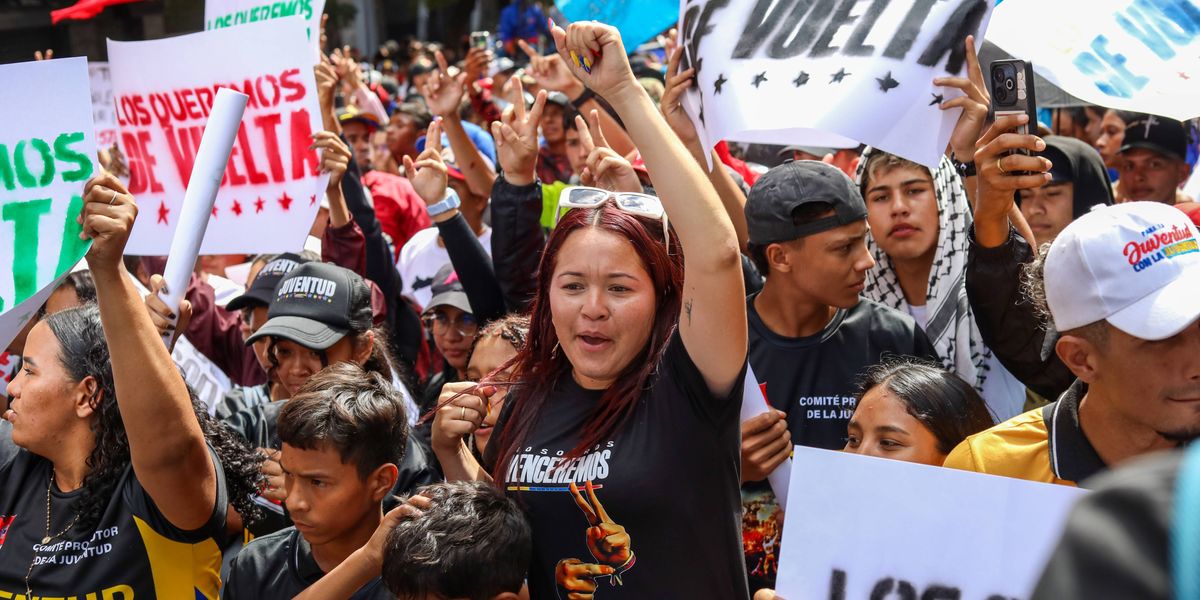
For weeks following the military action, thousands of Venezuelan citizens have taken to the streets in massive demonstrations condemning what they describe as an illegal attack on their sovereignty. These protests have received significantly less coverage in Western media, creating a stark contrast in the narratives available to global audiences.
The divergent reactions appear deeply connected to socioeconomic factors and exposure to different information environments. Analysts note that the Venezuelan diaspora in the United States tends to be more educated and from more privileged backgrounds than the average Venezuelan citizen. Many emigrated during the economic difficulties that have plagued the country, carrying with them resentment toward the Bolivarian government.
“The Venezuelan community in the U.S. is largely comprised of individuals from middle and upper-class backgrounds who left Venezuela during economic downturns,” explained a regional expert. “Their experiences and perspectives are shaped not only by personal hardship but also by the media environment they now inhabit.”
Inside Venezuela, political reactions have been complicated by what some observers call a “rally-behind-the-flag” effect. The military operation damaged infrastructure in both government-supporting and opposition areas, including the destruction of a medical supply warehouse for dialysis patients in La Guaira and a research facility in Miranda state. Brazil has since donated medical supplies to assist affected patients.
Venezuelan government institutions have remained intact following the operation, with Vice President Delcy Rodriguez assuming leadership responsibilities in Maduro’s absence. Despite predictions of governmental collapse, the administration has maintained control of state functions and mobilized supporters through existing political structures.
The country’s largest political organization, the Socialist Party (PSUV), has coordinated responses to the crisis, leveraging its extensive organizational network. State media has consistently framed the incident as an attack on Venezuelan sovereignty rather than merely on the government, an approach that appears to resonate with citizens across the political spectrum.
Economic factors may also influence the stability of the current government. Despite years of sanctions, Venezuela had reportedly experienced modest economic growth between 2020 and 2025, allowing the government to claim some success in navigating international pressure. This recovery, though limited, provides context for understanding domestic support that may not be apparent to those who emigrated during earlier economic crises.
The incident has further complicated Venezuela’s international relations. Maria Corina Machado, a prominent opposition figure, reportedly gifted a Nobel Peace Medal to former President Trump as a gesture of gratitude for the operation, an action that has intensified domestic divisions and fueled government narratives about opposition collusion with foreign interests.
Allegations of narcotrafficking against Maduro, previously highlighted in U.S. policy statements, have reportedly been removed from official proceedings against him, raising questions about the legal basis for the operation.
The aftermath has revealed unexpected vulnerabilities for Venezuelan expatriates in the United States. In a particularly ironic turn of events, Immigration and Customs Enforcement agents reportedly detained several Venezuelans at a celebration of Maduro’s capture, prompting one detainee to question his previous assumptions: “I thought Maduro was the dictator, but it is Donald Trump who has jailed us.”
As negotiations between U.S. officials and remaining Venezuelan leadership continue, analysts predict a period of uncertainty. The government’s renovation efforts for buildings damaged in the attack demonstrate institutional resilience, while limited sanctions relief may provide economic breathing room.
Regional experts suggest that while the operation represented a significant blow to the Maduro administration, the Bolivarian political movement appears to have deeper roots in Venezuelan society than many outside observers anticipated. The coming months will test whether this institutional resilience can withstand continued international pressure.
Fact Checker
Verify the accuracy of this article using The Disinformation Commission analysis and real-time sources.

10 Comments
As an observer, I’m concerned about the human cost of this crisis and hopeful that a peaceful, diplomatic solution can be found to address the needs and concerns of all Venezuelans.
This is a delicate issue with high stakes. I’d like to see more in-depth analysis on the economic drivers and international power dynamics at play in Venezuela.
The contrasting narratives illustrate the complexities of this crisis. I hope further investigation can shed light on the diverse perspectives and underlying factors at play.
The diverging narratives highlight the need for nuanced, fact-based reporting that captures the multifaceted nature of this conflict. Oversimplification risks exacerbating tensions.
This is a challenging situation with high stakes for the region. I’m interested to see how the international community responds and whether a path forward can be found.
The use of military force resulting in civilian casualties is very troubling. I hope a peaceful resolution can be found that respects Venezuelan sovereignty and the will of the people.
It’s concerning to see such a stark contrast in media coverage between celebrations abroad and protests at home. Objective reporting is crucial to understand the nuances of this evolving crisis.
Agreed. Reliable, unbiased information is needed to assess the situation without assumptions or agendas.
This is a complex geopolitical situation with conflicting narratives. I’m curious to learn more about the economic and social factors shaping perceptions inside and outside of Venezuela.
While the celebrations abroad may reflect the views of some Venezuelans, the massive protests at home suggest a more complex domestic situation. Understanding local perspectives is crucial.