


Listen to the article
In the realm of internet folklore, Bulgarian mystic Baba Vanga has become a legendary figure shrouded in mystery and alleged prophecies. Social media platforms and tabloid publications worldwide have attributed to her predictions of major global events, from the 9/11 attacks to the COVID-19 pandemic and the war in Ukraine.
Recent headlines have gone further, suggesting she foresaw the Israel-Iran conflict and even made “predictions for 2026” involving a third world war and humanity’s first alien contact. These claims generate significant online traffic, but experts from Bulgaria warn that many prophecies attributed to Vanga were likely never uttered by her.
“It’s absurd,” says Ivan Dramov of the Bulgaria-based Baba Vanga Foundation, an organization that was chaired by Vanga herself before her death. “Absolute lies have been told about this holy woman. Vanga dealt mainly with people’s health problems, not with upcoming cataclysms in the world.”
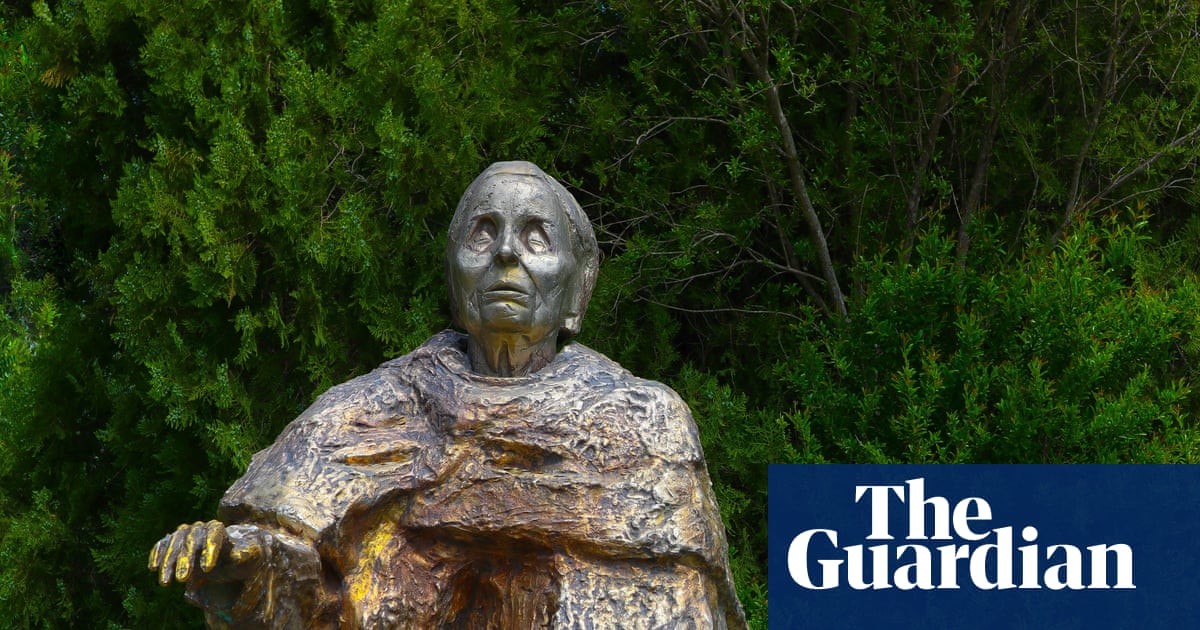
Born Vangeliya Pandeva Gushterova in 1911 in what was then the Ottoman Empire, Vanga reportedly lost her eyesight gradually after being thrown into a field by a tornado during her teenage years. She first gained local recognition during World War II when people sought her guidance about loved ones fighting at the front.
By the 1960s, Vanga had become a regional phenomenon, drawing crowds to her home in Petrich, a southwestern Bulgarian town. Her reputation spread beyond Bulgaria’s borders, attracting visitors from Russia, Romania, and Greece. According to Dramov, her counsel was typically focused on individuals’ personal matters rather than global events.
“She told people which doctor to go to, what actions to take, but nothing more,” Dramov explains.
As media coverage of Vanga increased through television, books, and talk shows, her international profile rose. Russians particularly embraced her, with researchers at the University of Texas at Austin noting that she became “one of the most noteworthy mediums of ‘truth’ in 20th- and 21st-century Russian imagination.”
The mystic’s cultural impact in Russia was so profound that she inspired a verb, “vangovat,” meaning to predict, and an expression roughly translating to: “How should I know, do I look like Baba Vanga to you?” Today, her supposed prophecies are frequently referenced in Russia, sometimes to support Kremlin-aligned narratives.
A 2024 report by media organization BIRN Albania found that Vanga’s predictions were “often used by conspiracy and disinformation media to reinforce certain narratives against NATO and the EU” in Albanian publications, with many articles citing Russian media sources.
Viktoria Vitanova-Kerber, a PhD student at the University of Fribourg, suggests that Vanga likely said little explicitly about Russia. Many predictions attributed to her—from the Soviet Union’s collapse to visions of Russia’s glorious future—can be traced to Russian writer Valentin Sidorov, who claimed to have met Vanga in the 1970s.
“There are, however, no recordings of these meetings, which allowed Sidorov a free interpretation, or possibly even construction of what Vanga has or has not said about Russia,” Vitanova-Kerber explains. “Some of his writings from the early 1990s suggest that Vanga had predicted the future primacy of Russia over the US – a narrative well-received in today’s Russia as well.”
Sidorov’s writings spawned a new generation of self-proclaimed “Vanga experts” in Russia who have gained prominence by adapting the mystic’s purported prophecies to fit contemporary political agendas, particularly those emphasizing Russian nationalism and anti-Western sentiment.
The vagueness surrounding Vanga’s actual statements makes her an ideal vehicle for political propaganda. As researchers at the University of Texas at Austin noted, her appeal lies in her flexibility as a medium “whose name and voice can be deployed for various purposes.”
Bulgarian author Zheni Kostadinova, who has written extensively about Vanga, points out that no recordings of the mystic exist, nor did she leave any written records. “Everyone puts words in her mouth that she never said,” Kostadinova states. “But because her authority as a prophetess is like that of Nostradamus, there are hundreds of people tempted to speak on her behalf.”
In a final irony, Dramov reveals that while Vanga never specifically mentioned how disinformation would exploit her legacy, she did foresee her name being misused. “She said many times that people will use her name during her life and after her death,” he says, as her image began being used commercially even as Bulgaria’s communist regime fell in 1989.
Fact Checker
Verify the accuracy of this article using The Disinformation Commission analysis and real-time sources.

10 Comments
This article is a good reminder to be critical consumers of information, especially when it comes to the mystical or supernatural. Separating fact from fiction is essential, even for historical figures like Baba Vanga.
The article makes a good point – many of the prophecies attributed to Vanga were likely fabricated or exaggerated. It’s a shame that her genuine work helping people with health issues has been overshadowed by these dubious claims.
Agree, it’s important to separate fact from fiction, especially when it comes to figures like Vanga who held a spiritual role. The Baba Vanga Foundation’s perspective on the misinformation is helpful in providing some balance.
It’s concerning to see how easily misinformation can spread online, even around historical figures like Baba Vanga. The article provides a useful counterpoint by highlighting the perspectives of experts in Bulgaria who knew her work.
The article highlights an interesting dynamic – how the internet can amplify and distort the legacy of influential individuals, even those who had no involvement in global politics or predictions. Fact-checking is crucial in an age of misinformation.
This article is a good reminder of the importance of critical thinking and fact-checking, even when it comes to the stories and legacies of influential individuals from the past. Separating truth from fiction is essential in the age of online propaganda.
This is a good reminder to be wary of online propaganda, even when it’s wrapped up in the mystique of a historical figure. I appreciate the article’s nuanced look at the reality versus the myths around Baba Vanga.
Interesting read on the myth of Baba Vanga. It’s concerning how easily online misinformation and sensationalism can spread, even around historical figures. Fact-checking and skepticism are so important these days.
The article highlights an important issue – how online propaganda can distort the legacy of public figures, even those who had no direct involvement in geopolitics or major events. Maintaining perspective and fact-checking is crucial.
It’s disappointing to see how Baba Vanga’s genuine work and reputation has been co-opted by online misinformation. The article provides a valuable perspective from experts in Bulgaria to counter the sensationalized claims.