


Listen to the article
Controversial ‘The Kerala Story 2’ Sparks Debate on Religious Tensions, Judicial Scrutiny
“The Kerala Story 2: Goes Beyond,” the sequel to the 2023 film that drew widespread attention, has ignited fresh controversy with its depiction of interfaith relationships and alleged religious conversion conspiracies. The film narrowly avoided a delay when the Kerala High Court initially stayed its February 27 release, only for a Division Bench to reverse the decision hours before its premiere.
The court’s original stay cited concerns that the Central Board of Film Certification (CBFC) had failed to properly assess whether the film threatened public order and communal harmony. Even before certification, the CBFC had mandated approximately 16 modifications, significantly cutting scenes depicting violence and adding a two-minute disclaimer explaining the film was based on true events.
Unlike its predecessor, which focused on global ISIS networks, the sequel centers on what it portrays as a domestic threat: an alleged network of Muslim men systematically luring Hindu women into marriage to alter India’s religious demographics. The narrative weaves together three stories of Hindu women from different backgrounds – Neha, a Dalit athlete from Gwalior; Divya, a teenager from Jodhpur; and Surekha, characterized as a secular liberal from Kerala.
The film claims these stories are drawn from “Mission Asmita,” a crackdown on illegal religious conversions by Uttar Pradesh Chief Minister Yogi Adityanath’s administration. However, when questioned about factual accuracy, producer Vipul Amrutlal Shah acknowledged that many stories were sourced from social media, raising questions about the film’s journalistic rigor.
One particularly controversial scene, which went viral after release, depicts a Muslim character assigning monetary values to converting Hindu women based on caste – 600,000 rupees for a Dalit woman and 1.2 million rupees for a Brahmin. Critics point out these claims mirror debunked allegations about ISIS-linked conversion operations.
The film heavily features the phrase “Mera Salim/Rasheed/Faizan aisa nahi hai” (My Salim/Rasheed/Faizan is different), which gained currency in right-wing digital spaces following the 2022 murder of Shraddha Walkar by her Muslim partner. This phrase has become a sarcastic retort to Hindu women in relationships with Muslim men.
Beyond its narrative, the film appears to promote specific policy positions, including implicit support for the Uniform Civil Code recently implemented in Uttarakhand. By portraying Muslim personal law practices as oppressive, the film presents the UCC as liberating, without addressing criticisms that the law selectively targets Muslim practices while leaving comparable provisions in Hindu personal law intact.
The climactic scene features a bulldozer demolishing a Muslim character’s house while a jingoistic rendition of “Shiv Shambo” plays in the background, appearing to legitimize the controversial “bulldozer justice” that has seen homes demolished without due process in several states. This imagery, combined with the film’s tagline “Ab sahenge nahin… ladenge” (We will not tolerate this anymore; we will fight back), has raised concerns about potential incitement.
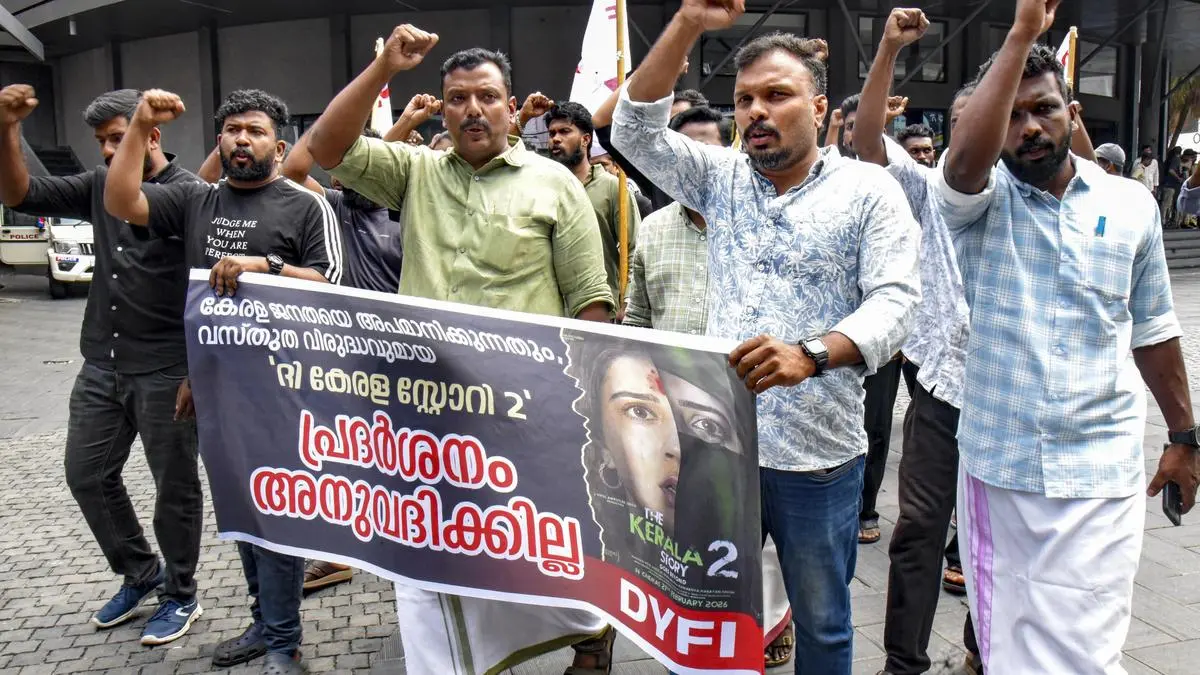
Kerala’s political establishment has responded sharply. Chief Minister Pinarayi Vijayan condemned the film as an attempt to “demonize our secular fabric,” while Congress General Secretary K.C. Venugopal accused it of trying to “insult and communally divide” the state. Student organizations have organized beef-parotta festivals across Kerala as a direct rebuttal to a scene where a character is force-fed beef.
Social media evidence suggests the film may be having its intended effect. Reports have emerged of viewers calling for violence against Muslims after screenings, with some circulating templates of the “Mera Abdul Aisa Nahi Hai journey” showing escalating violence against Hindu women in interfaith relationships.
The controversy surrounding “The Kerala Story 2” highlights the increasingly blurred lines between entertainment and political messaging in Indian cinema, raising critical questions about artistic freedom, factual representation, and the potential real-world consequences of inflammatory content.
Fact Checker
Verify the accuracy of this article using The Disinformation Commission analysis and real-time sources.

14 Comments
The Kerala Story films appear to be tapping into religious and cultural tensions in India. While these are valid areas of discussion, the approach seems to be raising concerns about potential bias and lack of impartiality.
It’s crucial that such films are thoroughly evaluated by the censor board to ensure they do not promote harmful stereotypes or incite communal tensions, even inadvertently.
The controversy surrounding this sequel highlights the need for a nuanced and impartial approach when exploring complex social and religious dynamics through film. Filmmakers have a responsibility to avoid fueling further division.
Exactly. Creative expression is valuable, but it must be balanced with a commitment to fostering greater understanding and social cohesion, rather than exacerbating existing tensions.
This sequel’s depiction of alleged ‘conversion conspiracies’ is a highly controversial and politically charged topic. Filmmakers need to be extremely cautious when exploring such sensitive issues.
Absolutely. Presenting these topics without proper context and nuance could contribute to the spread of misinformation and the further polarization of communities.
I’m curious to see how the courts navigate the legal challenges surrounding this sequel. Balancing freedom of expression with the potential for social unrest is a delicate and important task.
Absolutely. The judiciary will play a crucial role in determining if the film’s content crosses any legal boundaries while upholding democratic principles of free speech.
The Kerala Story films seem to be walking a fine line between artistic expression and potential propaganda. It’s crucial that the censor board and courts carefully evaluate the content to ensure it does not cross any ethical or legal boundaries.
I agree. While freedom of expression is essential, films dealing with such sensitive social and religious issues must be held to high standards of accuracy, balance, and responsibility.
This sequel seems to be stirring up quite a controversy. While films can shed light on important social issues, they need to handle sensitive topics with nuance and care, avoiding divisive rhetoric or blatant political agendas.
Agreed. Portraying complex realities through cinema is challenging, and filmmakers must strive for balance and objectivity, rather than fueling further polarization.
The Kerala Story films seem to be tapping into a sensitive and divisive narrative. While creative expression is important, it’s crucial that filmmakers handle such topics with great care and nuance.
Agreed. Responsible filmmaking requires a balanced approach that avoids inflaming existing social and religious tensions, even inadvertently.