


Listen to the article
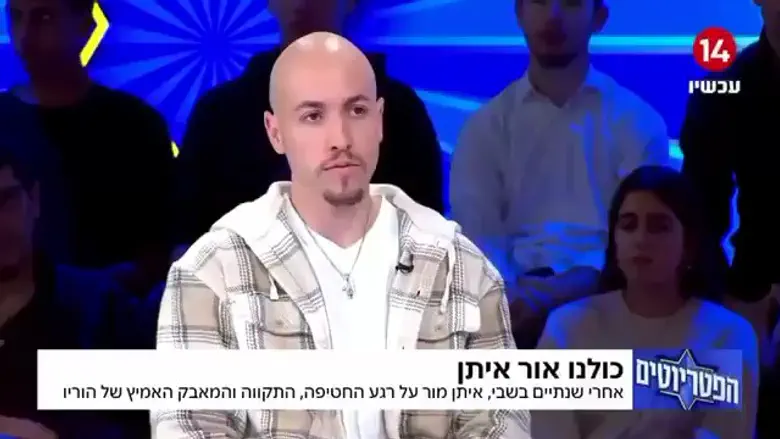
In a startling revelation that has sent shockwaves through Israeli society, former Hamas captive Eitan Mor has disclosed that his captors in Gaza were actively monitoring and seeking to influence the hostage solidarity protests occurring in Israel during his imprisonment.
During an interview with Yinon Magal on Channel 14, Mor recounted a chilling conversation that offers a rare glimpse into Hamas’s psychological warfare tactics amid the ongoing conflict. According to Mor, a Hamas official who had previously interrogated him in a Gaza tunnel later approached him with an unexpected question about the demonstrations taking place at what has become known as “Hostages Square” in Tel Aviv.
“Shortly after the middle of the war, I was sitting in an apartment in Gaza City. They took me into a tunnel and interrogated me there,” Mor explained. “After the interrogation, the officer who questioned me came back to consult with me: ‘How do we get more people to come to the Saturday night demonstrations?'”
This revelation suggests Hamas militants were not only aware of the weekly protests in Israel but viewed them as strategically beneficial to their position in the conflict. “This is essentially proof that the demonstrations only served them,” Mor concluded in his interview.
The disclosure has ignited intense debate within Israel about the unintended consequences of public protests calling for hostage deals. Since the October 7 attacks, when Hamas militants took approximately 250 hostages into Gaza, regular demonstrations have been held in Tel Aviv’s “Hostages Square” and other locations around Israel, with families and supporters demanding the government prioritize the return of captives.
Security analysts note that Hamas’s interest in these protests aligns with their broader strategy of using hostages as leverage. Dr. Michael Herzog, a former IDF brigadier general and Middle East security expert, explained to reporters: “Hamas understands that social pressure on the Israeli government potentially weakens its negotiating position. The more public discord they can generate, the more they believe they can extract concessions.”
The demonstrations have grown increasingly contentious in recent months, with some protesters criticizing Prime Minister Benjamin Netanyahu’s handling of hostage negotiations while others support the government’s approach of military pressure combined with diplomatic efforts.
Family members of hostages still held in Gaza have responded to Mor’s revelation with mixed reactions. Some maintain that public pressure remains essential for keeping the plight of captives at the forefront of national consciousness, while others have expressed concern about inadvertently playing into Hamas’s strategy.
“We cannot abandon our loved ones regardless of how Hamas might perceive our actions,” said Rachel Cohen, whose cousin remains in captivity. “The demonstrations are about maintaining pressure on our own government, not about serving Hamas’s interests.”
Government officials have largely refrained from commenting on Mor’s specific claims, though a spokesperson for the Israeli negotiating team noted that “psychological warfare is a known tactic in hostage situations” and that “the government remains committed to returning all hostages while maintaining Israel’s security interests.”
This development comes as mediation efforts led by Qatar, Egypt, and the United States continue to seek a breakthrough in negotiations for a ceasefire and hostage release deal. Previous exchanges have resulted in the release of some hostages, but dozens remain in captivity under unknown conditions.
Military strategists point out that Hamas’s awareness of internal Israeli discourse highlights the challenge of conducting hostage negotiations during an active conflict. The militant group’s demonstrated interest in Israeli public opinion underscores the complex information warfare dimension of the ongoing crisis.
As peace talks continue in fits and starts, Mor’s testimony offers a sobering reminder of the multiple battlefields in this conflict—not just the physical combat zones of Gaza, but also the psychological and political arenas where Hamas apparently seeks to exert influence even while under military pressure.
Fact Checker
Verify the accuracy of this article using The Disinformation Commission analysis and real-time sources.

16 Comments
This testimony provides a rare and concerning glimpse into Hamas’ propaganda tactics, including their efforts to monitor and manipulate public demonstrations in Israel for strategic gain. It underscores the challenging landscape in combating terrorist disinformation.
The testimony from this former Hamas captive provides a rare and concerning glimpse into the militant group’s sophisticated approach to propaganda. Their efforts to monitor and potentially influence the hostage solidarity protests in Israel underscores the complex psychological warfare dimensions of this ongoing conflict.
This is a sobering reminder of the challenges in countering terrorist propaganda and disinformation campaigns, which can involve the strategic exploitation of public demonstrations and sentiment for strategic gain.
This is a startling insight into Hamas’ propaganda tactics and their efforts to manipulate public opinion through monitoring and attempting to influence specific protests in Israel. It speaks to the broader challenge of combating terrorist disinformation campaigns.
The revelation that Hamas was actively tracking and seeking to boost attendance at the hostage solidarity protests in Israel is a disturbing example of how terrorist groups will go to great lengths to leverage public sentiment for their own propaganda objectives.
This testimony from a former Hamas captive provides a rare window into the militant group’s strategic thinking around leveraging public demonstrations for their own political gain. It’s a disturbing revelation.
Knowing that Hamas was actively trying to boost attendance at these protests in Israel really highlights their intent to use these events for propaganda purposes. It’s a concerning tactic.
The fact that Hamas was closely tracking the hostage solidarity protests in Israel and trying to boost attendance is a chilling revelation. It demonstrates the militant group’s sophisticated approach to propaganda and their willingness to exploit public sentiment.
This testimony highlights the complex psychological warfare dimension of the conflict, with Hamas actively seeking to leverage public demonstrations for their own propaganda purposes. It’s a sobering reminder of the challenges in countering such tactics.
The fact that Hamas was monitoring the hostage solidarity protests in Israel and seeking ways to influence them is quite alarming. This underscores the lengths these terrorist groups will go to in their propaganda efforts.
Terrorist groups like Hamas are clearly adept at exploiting public sentiment and demonstrations for their own nefarious purposes. This is a sobering reminder of the challenges in combating their propaganda.
It’s troubling to see the level of strategic thinking and coordination that Hamas is putting into their propaganda efforts, even down to monitoring specific protests and seeking to boost attendance. This speaks to their sophisticated approach.
The revelation that Hamas was actively trying to influence the hostage solidarity protests in Israel is a stark reminder of the complex psychological warfare dimensions of the ongoing conflict.
This is a truly alarming revelation about Hamas’ propaganda tactics and their willingness to closely monitor and attempt to manipulate public demonstrations in Israel for their own political purposes. It speaks to the broader challenges in combating the psychological warfare tactics of terrorist groups.
Fascinating insights into Hamas’ propaganda tactics and their interest in influencing the hostage solidarity protests in Israel. This underscores the complex psychological warfare dimensions of the ongoing conflict.
It’s alarming to see how terrorist groups like Hamas are closely monitoring and trying to manipulate public opinion and sentiment through such targeted propaganda efforts.