


Listen to the article
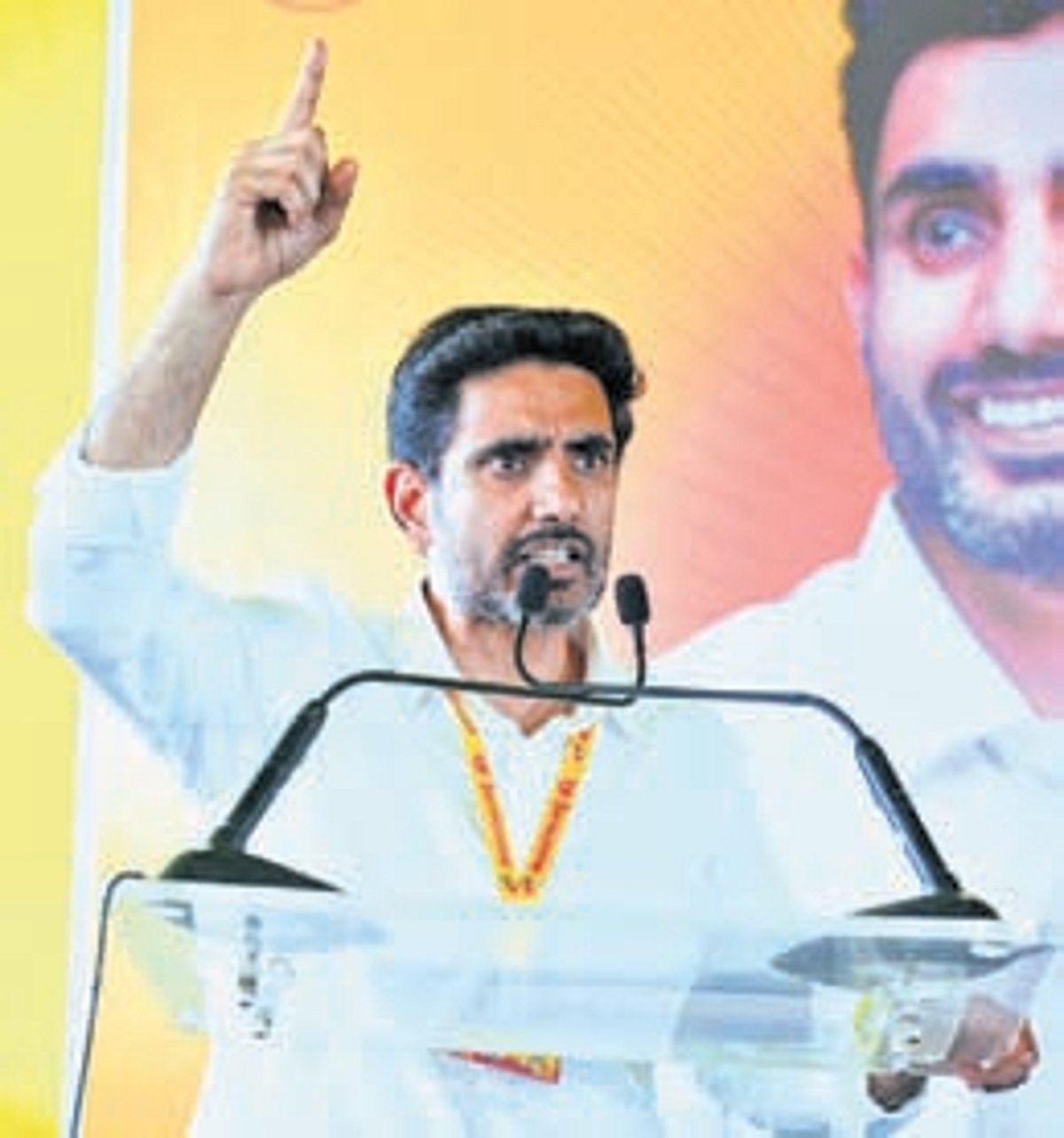
In a pointed critique of political tactics surrounding a high-profile murder case, TDP leader Nara Lokesh has accused the YSR Congress Party (YSRCP) of deliberately spreading misinformation about the death of Viveka, a political figure whose murder became a flashpoint in Andhra Pradesh politics.
“First, they claimed Viveka died of cardiac arrest. Later, despite clear wounds caused by an axe attack, the blame was put on then Chief Minister N Chandrababu Naidu,” Lokesh stated during a recent party meeting. He further alleged that former Chief Minister Jagan Mohan Reddy was aware of the actual circumstances of the murder, yet allowed his party to continue what Lokesh described as a “false campaign.”
The TDP leader expressed regret over his party’s delayed response to these allegations. “We failed to counter it at the right time and paid the price,” he admitted, suggesting that the misinformation had damaged the TDP’s political standing in the state.
The case refers to the murder of Y.S. Vivekananda Reddy, former MP and uncle of Jagan Mohan Reddy, who was found dead at his residence in Kadapa district in March 2019. The timing of the murder, just before the 2019 elections, made it politically significant, and the investigation has been contentious ever since.
During the same address, Lokesh urged party leaders to prioritize organizational strength, using a metaphorical comparison to distinguish between party and government roles. “Treat the party as your own house and the government as a rented one,” he advised, emphasizing that “strengthening the party was everyone’s responsibility.”
This perspective highlights the TDP’s renewed focus on party-building following their return to power in the recent Andhra Pradesh elections. After spending five years in opposition during the YSRCP government led by Jagan Mohan Reddy, the TDP, along with its allies, secured a significant victory in the 2024 elections.
Lokesh reinforced his point by highlighting the importance of party structure, noting that leaders gained “respect in society and government because of the party,” not the other way around.
To illustrate the value of strong grassroots organization, Lokesh cited two constituencies as success stories: Mangalagiri and Gajuwaka. He particularly focused on his personal experience in Mangalagiri, a constituency that had eluded the TDP since 1985.
“I took it as a challenge to win Mangalagiri, where the TDP had never won since 1985,” he recalled. After losing his first attempt by 5,300 votes, Lokesh said he “felt the pain but did not give up.” He described a four-year effort to rebuild and strengthen the party’s presence in the constituency, which eventually resulted in victory “with a huge margin” in the recent election.
The focus on party-building comes as the TDP-led coalition government, with Chandrababu Naidu as Chief Minister, approaches its first 100 days in office. Political analysts note that Lokesh, who serves as a minister in his father’s cabinet, appears to be taking an increasingly prominent role in addressing both governance and party affairs.
This dual emphasis on countering political narratives while strengthening organizational structure reflects the TDP’s strategy to maintain its political resurgence in Andhra Pradesh, a state known for its volatile electoral swings over the past decade.
The murder case mentioned by Lokesh remains under investigation by central agencies, with the CBI continuing to examine various angles of what has become one of the most politically charged criminal cases in recent Andhra Pradesh history.
Fact Checker
Verify the accuracy of this article using The Disinformation Commission analysis and real-time sources.

12 Comments
This is a complex and troubling situation that highlights the importance of having an independent and impartial justice system. I hope the truth can be established through rigorous, fact-based investigation, regardless of political affiliations.
Agreed. Maintaining the integrity of the political process is paramount. Unbiased reporting and a commitment to transparency from all sides will be key to resolving this issue.
This sounds like a complex situation with serious allegations on both sides. I hope a thorough, impartial investigation can uncover the true facts and bring justice, regardless of political affiliations.
Well said. In these divisive times, it’s important to set aside partisan agendas and focus on finding the truth. The public’s trust in the political process is at stake.
Allegations of misinformation and cover-ups are always concerning, especially when they involve high-profile political figures. I hope the facts come to light through a transparent and unbiased process.
Agreed. Maintaining public confidence in the integrity of the political system is critical. Rigorous, fact-based reporting is essential to hold all sides accountable.
This is a troubling situation that highlights the importance of having reliable, unbiased sources of information, especially around sensitive political issues. I hope the truth prevails, regardless of party affiliations.
Absolutely. Misinformation and political posturing can be very damaging to the democratic process. Transparency and accountability should be the top priorities here.
Interesting case involving political rivals and misinformation. It’s concerning to see accusations of false claims being used to undermine opponents. Transparency and factual reporting are crucial for a healthy democracy.
I agree. Spreading misinformation, even about tragic events, to score political points is deeply troubling. The public deserves the truth, not partisan narratives.
Accusations of false claims and cover-ups are always serious. I hope a thorough investigation can uncover the facts and provide clarity, rather than allow partisan narratives to dominate the discourse.
Well said. In these divisive times, it’s crucial that the public can trust that their leaders are being truthful and acting in the best interests of the country, not their own political agendas.