


Listen to the article
In a scathing critique that has intensified political tensions in Bangladesh, BNP Acting Chairman Tarique Rahman launched a direct attack against Bangladesh Jamaat-e-Islami on Sunday, accusing the Islamist party of spreading propaganda against his party while invoking painful historical memories from Bangladesh’s 1971 independence struggle.
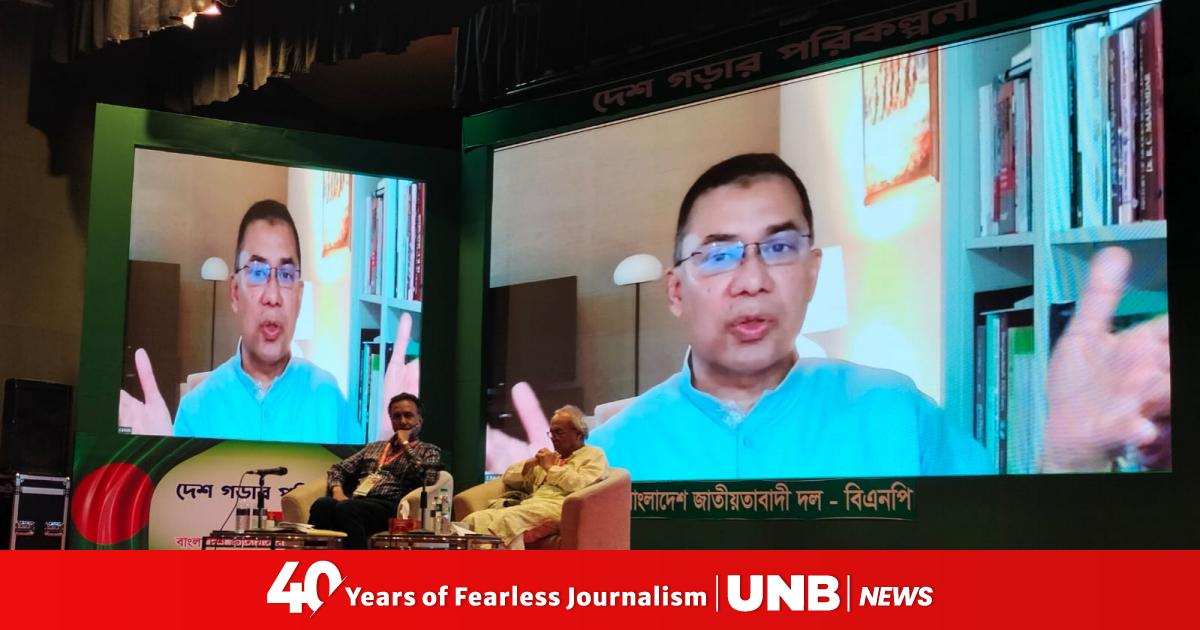
Speaking virtually during the concluding remarks at the inauguration of BNP’s six-day “Plan to Build the Country” program, Rahman drew sharp parallels between Jamaat’s current political messaging and their controversial role during Bangladesh’s liberation war from Pakistan.
“We hear some people or some groups nowadays—in different places or on social media—saying ‘We have seen this party and that party, so now give this party (Jamaat) a chance,'” Rahman said. “But the people of this country already saw this party in 1971.”
Rahman’s comments represent one of the most direct public confrontations between the two parties that have historically been political allies in Bangladesh’s complex political landscape. The BNP leader accused Jamaat of making false promises to voters, including claims they could “guarantee heaven in return for votes.”
In particularly pointed remarks, Rahman referenced Jamaat’s controversial role during Bangladesh’s independence war, stating, “They not only killed lakhs of people, but their collaborators also violated countless mothers and sisters. We must never forget this.” His characterization linked Jamaat’s historical actions to those of “the fallen dictator,” an apparent reference to former Awami League leadership.
The timing of Rahman’s criticism comes amid Bangladesh’s ongoing political realignment following the collapse of Sheikh Hasina’s government in August. The interim administration, led by Nobel laureate Muhammad Yunus, has been tasked with overseeing reforms and preparing the country for fresh elections after Hasina fled to India following mass protests.
During his address, Rahman also defended BNP’s governance record from 2001 to 2006 under Khaleda Zia, claiming his party had inherited a corruption-plagued administration from the Awami League but made significant progress in combating graft. “If any party in Bangladesh can stop corruption, it is BNP. We have done it before and, Insha’Allah, we will do it again for the people,” he asserted.
Rahman, who has been living in exile in London since 2008, indirectly addressed speculation about his potential return to Bangladesh. While not confirming specific plans, his statements suggested preparations for a more active political role. Senior BNP leader Amir Khosru has previously indicated Rahman might return “anytime,” though Bangladesh’s Foreign Adviser has stated there is no specific information regarding his return.
The BNP acting chairman warned of difficult days ahead for Bangladesh, claiming that “different conspiracies are being planned from different directions.” He emphasized that restoring democracy through free and fair elections would be essential to countering these alleged plots.
“If we can establish democracy and ensure the people’s mandate at any cost, we will be able to stop many conspiracies. Yet even then, tough days are still ahead,” Rahman cautioned.
The event at Krishibid Institution Bangladesh in Dhaka’s Farmgate was inaugurated by BNP Secretary General Mirza Fakhrul Islam Alamgir, with Senior Joint Secretary General Ruhul Kabir Rizvi chairing the proceedings. Members of Jatiyatabadi Chhatra Dal, the party’s student wing, attended from across the country.
Rahman’s sharp criticism of Jamaat signals growing tensions between the formerly allied opposition parties as Bangladesh navigates its post-Hasina political landscape, with both organizations likely positioning themselves for influence in any future electoral contest.
Fact Checker
Verify the accuracy of this article using The Disinformation Commission analysis and real-time sources.

7 Comments
The BNP leader’s direct confrontation with Jamaat is a bold move. It will be interesting to see how Jamaat responds and whether this leads to further escalation of political tensions.
This conflict highlights the complex and often contentious nature of Bangladesh’s political landscape. It will be worth following how this situation develops and what the broader implications may be.
The notion that Jamaat could “guarantee heaven in return for votes” is quite an extraordinary claim. It speaks to the depth of the political divisions in Bangladesh.
Yes, that line really jumps out. It suggests a level of religious rhetoric and promises that go beyond typical political campaigning.
The parallels the BNP leader draws between Jamaat’s current messaging and their role in the 1971 liberation war are quite striking. It’s a bold move to call out these perceived connections so directly.
I agree, this seems like a high-stakes political move by the BNP. Accusing Jamaat of making false promises to voters is a serious allegation.
This is a fascinating look at the political tensions in Bangladesh. It’s interesting to see the BNP leader directly criticizing Jamaat for their past actions and perceived propaganda tactics. It will be interesting to see how this plays out.