


Listen to the article
Taiwan Opposition Leader Visits China on “Peace Mission” Amid Rising Tensions
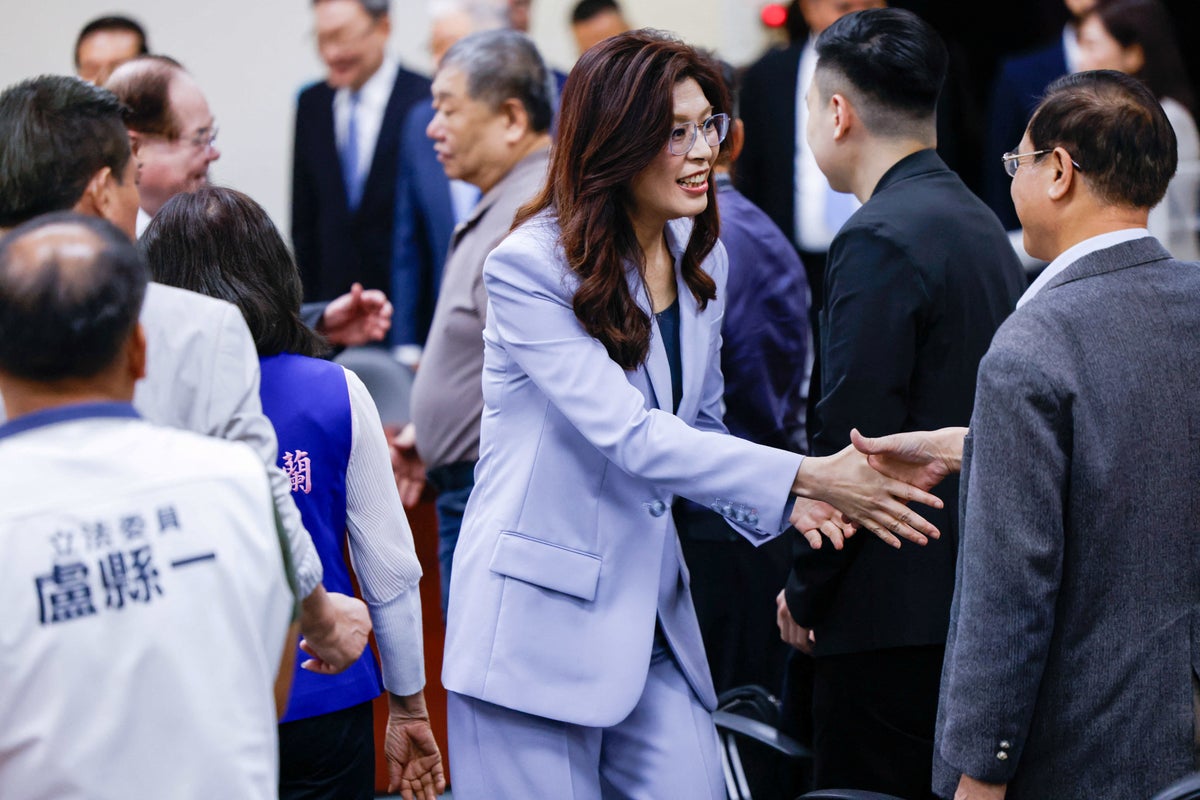
The leader of Taiwan’s largest opposition party arrived in China Tuesday on what she called a “historic journey for peace” at a time of heightened military tensions between the self-governed island and mainland China. Cheng Li-wun’s trip marks the first visit by a Kuomintang (KMT) leader to China in a decade.
“If you truly love Taiwan, you will seize even the slightest chance, every possible opportunity, to keep Taiwan from being ravaged by war,” Cheng stated at her party headquarters in Taipei before departure, acknowledging that some Taiwanese citizens feel uneasy about the visit.
The trip comes at a particularly sensitive time, just weeks ahead of U.S. President Donald Trump’s planned May visit to Beijing, and amid growing concerns among Taiwanese people about the possibility of a Chinese territorial conquest. Beijing considers Taiwan part of its territory and has repeatedly refused to rule out using force to achieve reunification.
Upon arrival in Shanghai, Cheng was greeted by Song Tao, Director of the Taiwan Work Office of China’s Communist Party. According to the KMT, the pair “chatted cordially like friends” during a train journey to Nanjing, with Cheng describing her trip as “especially rare and precious.” Nanjing holds significant historical importance as the site of the mausoleum of Chinese revolutionary leader Sun Yat-sen, who is revered in both China and Taiwan.
Taiwanese President Lai Ching-te’s administration has viewed the trip with skepticism. Lai, whom Beijing considers a separatist, has been advocating for strengthened defense capabilities and increased military spending for the island. The Cheng-led opposition, which holds a majority in parliament, stands accused of blocking a $40 billion special defense budget since November 2025 that Lai has been pushing to counter China’s People’s Liberation Army.
The timing of Cheng’s visit also coincides with escalating military pressure from China. Chinese warplanes and naval vessels have been conducting operations around Taiwan on a near-daily basis. The PLA staged major military exercises around the island in December, deploying air, naval, and missile units for joint live-fire drills after the U.S. announced arms sales to Taiwan.
Taiwan’s Ocean Affairs Council head Kuan Bi-ling recently posted images showing current Chinese warship deployments around the island, with vessels positioned off Taiwan’s east coast and to its north, northwest, and southwest. “When you depart, you are doing so from within what they see as the ‘Taiwan cage,'” Kuan told reporters, referencing China’s description of Taiwan’s planned T-Dome air defense system.
Critics within Taiwan have slammed the visit, suggesting Cheng is following a script written by Beijing. Fan Yun, a lawmaker from the ruling Democratic Progressive Party (DPP), noted that “from the fact that the accompanying journalists were chosen by China’s Taiwan Affairs Office, to the use of a Chinese aircraft, and even the uncertainty before departure over whether she would be able to meet President Xi, KMT chairwoman Cheng Li-wen’s visit to China was, from the moment she boarded the plane, locked into the ‘One China’ framework.”
Public opinion polls in Taiwan indicate that support for unification with China has fallen below 10 percent. “The mainstream view in Taiwan is that Taiwan (Republic of China) and China (People’s Republic of China) are not subordinate to each other,” Fan added, emphasizing that while peace is universally supported in Taiwan, “peace must be backed by strength.”
Regional analysts suggest the visit primarily benefits China rather than advancing Taiwan’s interests. William Yang, senior analyst at the International Crisis Group, noted, “Cheng’s visit won’t fundamentally change China’s calculation and preparation for a potential reunification with Taiwan. For Beijing, her trip primarily serves propaganda and diplomatic signaling purposes.”
Yang explained that Beijing will use Cheng’s peace-focused messaging to “try to exacerbate division within Taiwan” while simultaneously demonstrating to Washington that “there are still political leaders in Taiwan who are willing to conduct cross-strait exchange and pursue peace.”
Even within the KMT, concerns exist that Cheng’s rhetoric during the trip could damage the party’s prospects in local elections scheduled for November. Nevertheless, some in Taiwan view her initiative as a necessary step toward reducing cross-strait tensions.
Fact Checker
Verify the accuracy of this article using The Disinformation Commission analysis and real-time sources.

9 Comments
The optics of this trip will be crucial. While the intent may be to promote peace, the risk of it being used for propaganda purposes by China is significant. Careful diplomacy and transparency will be essential to navigate this sensitive situation.
It’s an interesting move by the KMT leader, but the timing does raise questions. With U.S.-China tensions high, this could be seen as playing into Beijing’s hands, even if the intent is to promote peace. Careful diplomacy will be essential.
This trip highlights the complexities of cross-strait relations. Pursuing dialogue is important, but the potential for it to be exploited for political gain is worrying. Taiwanese citizens will likely be watching this closely to ensure their interests are protected.
While the stated goal of this visit is to maintain peace, the geopolitical realities make it a delicate endeavor. The risk of it being leveraged for propaganda purposes by China is a valid concern that will need to be closely monitored.
It’s a bold move by the KMT leader, but the timing is tricky given the heightened tensions in the region. Maintaining open communication is valuable, but the challenge will be ensuring this visit doesn’t inadvertently serve Beijing’s agenda.
This visit is certainly a delicate balancing act. While promoting peace is admirable, the risk of it being used as propaganda by Beijing is concerning. It will be important to watch how the messaging and outcomes from this trip are framed.
Agreed. Maintaining Taiwan’s autonomy while pursuing dialogue is a fine line to walk. Transparency and clear communication will be crucial.
Visits like this underscore the complex geopolitical dynamics at play. I’m curious to see how the Taiwan public and international observers react, as perceptions of this trip could have significant implications.
That’s a good point. The optics and narratives surrounding this visit will be closely scrutinized. Finding a way to foster dialogue without compromising Taiwan’s position will be a challenge.