


Listen to the article
The Spanish Conquest and the Black Legend: Truth, Propaganda and Legacy
The Spanish conquest of the Americas irrevocably changed world history, marking the transition from medieval to modern times by bringing together two worlds that had developed separately for millennia. However, like virtually all imperial ventures, Spain’s colonization came with significant human costs including violence, exploitation, and oppression. The true nature of Spain’s role in this history remains contested, with some historians emphasizing atrocities while others defend against what they view as exaggerated accounts serving propagandistic purposes.
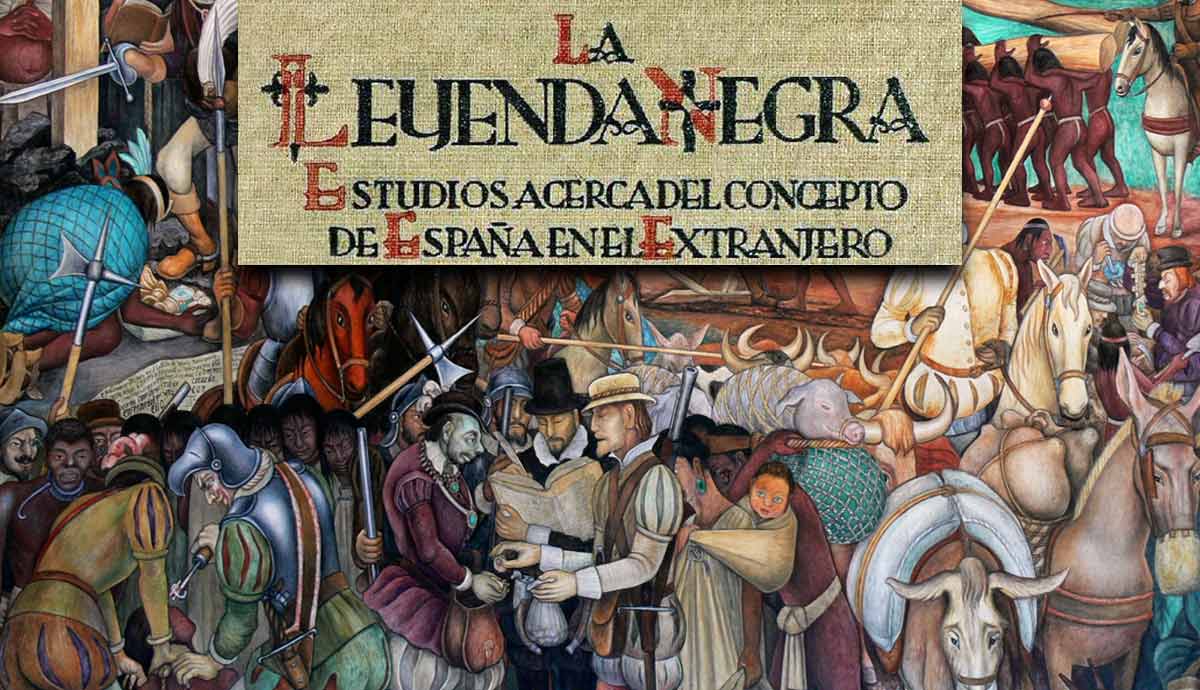
This contested narrative, known as the “Black Legend,” encompasses various accusations against the Spanish Empire regarding its colonial activities in the Americas. The term originated during Spain’s 16th and 17th-century conflicts with Protestant powers, particularly England and the Netherlands, when anti-Catholic propaganda highlighted alleged Spanish cruelties to demonize the empire.
The foundation for these accusations came from an unexpected source: Spanish Dominican friar Bartolomé de las Casas. In 1552, he published “A Brief Account of the Destruction of the Indies,” documenting violence against Indigenous peoples. De las Casas had firsthand experience, arriving in the Antilles in 1502 after his father participated in Columbus’s voyages. His account reached Emperor Charles V, who responded with the “New Laws of the Indies for the Good Treatment and Preservation of Indians” in 1542.
These new regulations prohibited outright enslavement, instituting instead the encomienda system where Indigenous peoples exchanged labor for supposed protection. While presented as reform, many Spanish colonists resisted these changes as threats to their economic interests. Juan Ginés de Sepúlveda, a Spanish jurist, even argued that Indigenous peoples were “servants by nature.”
By the 18th century, Spain had become Europe’s example of despotic imperialism. After Latin American independence movements in the 19th century, the colonial period was increasingly characterized as one of oppression. The term “Black Legend” itself gained prominence when Spain lost Cuba and the Philippines to the United States in 1898.
Spanish Crown historian Julián de Juderías popularized criticism of the Black Legend in his 1914 book “The Black Legend and Historical Truth.” He argued that foreign perceptions of Spain’s history, particularly regarding the Spanish Inquisition and conquest of America, were filtered through exaggeration and manipulation. This book sparked intense debate with Latin American academics, who saw this rhetoric as denying legitimate suffering during colonization.
In recent years, the issue has resurfaced as a diplomatic flashpoint. In 2019, Mexico’s then-president Andrés Manuel López Obrador requested a public apology from Spain for colonial abuses against Indigenous communities. This led to an ongoing diplomatic rift; when Mexico inaugurated President Claudia Sheinbaum in 2024, neither Spain’s King Felipe VI nor President Pedro Sánchez attended the ceremony.
Spain’s reluctance to apologize stands in contrast to other former colonial powers. Germany has apologized to Tanzania, Belgium to the Congo, the Netherlands to former colonies affected by slavery, Portugal for the transatlantic slave trade, and the UK to Kenya’s Mau Mau people. This raises questions about why Spain finds it so difficult to acknowledge the negative impacts of its colonial past.
The consequences of Spanish expansion were undeniably severe. Up to 90% of the Indigenous population disappeared, victims of both direct violence and introduced diseases such as smallpox, chickenpox, bubonic plague, malaria, and typhus. Franciscan missionary Bernardino de Sahagún documented this demographic collapse in his encyclopedic “Florentine Codex.”
While defenders argue that Spain showed more concern for Indigenous welfare than other empires, the Spanish crown’s primary goal remained territorial expansion. This was achieved through land dispossession, cultural suppression, and resource extraction—creating patterns that continue to shape Latin American societies today.
Spain’s colonial project systematically erased Indigenous beliefs and worldviews. Catholic churches were built on native sacred sites, and traditional religious practices were prohibited as barbarism or demonic worship. This undermined Indigenous communities’ cultural foundations, making them vulnerable to Spanish control.
The racial caste system Spain established created enduring social divisions. As Indigenous populations declined, approximately two million Spaniards settled in the Americas, alongside an estimated 1.5 million enslaved Africans imported as replacement labor. The resulting mixed ethnicities were classified in a hierarchical system placing white Spaniards at the top and Indigenous and Black communities at the bottom—a legacy that continues to influence racial discrimination in Latin America.
Economically, Spain’s relationship with its American territories was fundamentally exploitative. Through the encomienda system, Spain controlled Indigenous land and labor. Though technically distinct from slavery, the system functioned similarly, with Indigenous people performing the most demanding work and sometimes being traded between merchants. Meanwhile, Spanish traders extracted precious minerals and natural resources, often through dispossession of native lands.
When confronted with calls for apology, some Spanish academics offer counterarguments ranging from technicalities (Mexico didn’t exist as a state in the 16th century) to relativism (war and dispossession were common at that time). Some even suggest that Latin Americans should seek apologies from their own ancestors who participated in colonization.
Such arguments overlook how Spain’s uninvited presence fundamentally disrupted pre-Columbian societies and cultures. Modern inequality in Latin America can be traced directly to the racial and economic divisions established during colonial rule. As an act of historical accountability, and in alignment with other former colonial powers, an apology from Spain would be appropriate recognition of this complex legacy.
Fact Checker
Verify the accuracy of this article using The Disinformation Commission analysis and real-time sources.

16 Comments
This article raises important questions about truth, bias, and the lasting effects of colonialism. Unpacking the nuances of historical narratives like the Black Legend is crucial.
Fascinating look at how the Spanish conquest and its legacy have been framed over time. The contested nature of these narratives highlights the power of propaganda and the importance of critical historical analysis.
The role of figures like Las Casas in shaping the Black Legend discourse is quite intriguing. It speaks to the complexity of colonial histories and the diverse perspectives involved.
Absolutely. Understanding the motivations and biases of key historical actors is essential for building a more complete picture of this transformative era.
The Spanish conquest had profound global impacts, both positive and negative. Examining these through multiple lenses, including accusations of cruelty, is crucial for understanding our past.
Interesting how the Black Legend was weaponized by Spain’s rivals during conflicts. This highlights the political dimensions of historical narratives.
Indeed, the strategic use of propaganda is a key part of this story. It’s a reminder of how the past can be shaped by contemporary agendas.
Fascinating to see how the Black Legend emerged from internal Spanish sources like Las Casas. This speaks to the complex dynamics at play in the colonial era.
Absolutely. The interplay between different actors and agendas is crucial in understanding the evolution of this contested historical narrative.
This article highlights the power of propaganda in shaping historical narratives. The Black Legend raises important questions about truth, bias, and the lasting effects of colonialism.
This article does a great job of unpacking the nuances and complexities surrounding the Black Legend. It’s a important reminder that history is often shaped by competing agendas and perspectives.
Agreed. Examining these dynamics is crucial for developing a more comprehensive understanding of the past and its lasting impacts.
Fascinating look at the contested historical narratives around Spain’s colonial legacy. The Black Legend raises important questions about propaganda, truth, and the legacy of imperialism.
Indeed, it’s a complex history with many perspectives to consider. The role of figures like Las Casas in shaping the discourse is quite intriguing.
The Spanish conquest had profound global impacts, both positive and negative. Examining these through multiple lenses, including accusations of cruelty, is crucial for understanding our past.
Agreed. Unpacking the nuances and biases in historical accounts is key to building a more complete picture of this transformative period.