


Listen to the article
Sindh Government Announces Film to Counter Indian “Negative Propaganda”
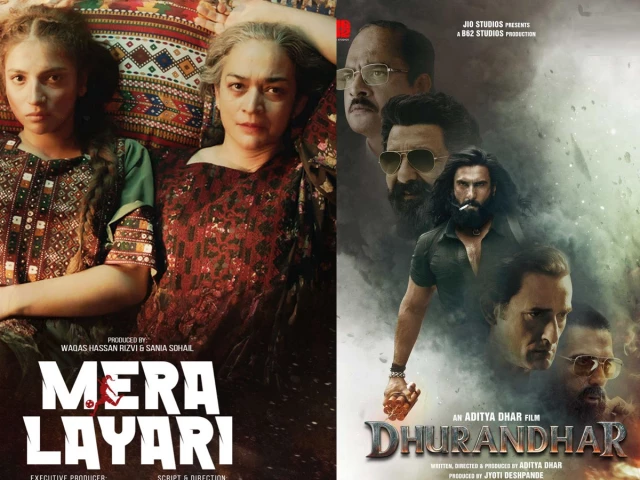
The Sindh government has unveiled plans to release a new film titled “Mera Lyari” in direct response to the controversial Indian movie “Dhurandhar,” which has sparked outrage for its allegedly misleading depiction of Pakistan and specifically Karachi’s Lyari neighborhood.
Senior Provincial Minister for Information Sharjeel Inam Memon condemned the Bollywood production as part of a “broader conspiracy” against Pakistan. “Lyari is not violence—it is culture, peace, talent, and resilience,” Memon stated in a post on X (formerly Twitter). “Next month ‘Mera Lyari’ will release, showing the true face of Lyari: peace, prosperity, and pride.”
The minister emphasized that the upcoming Sindhi-language film aims to present an authentic portrayal of Lyari to both domestic and international audiences, countering what he described as deliberate misrepresentation. Lyari, one of Karachi’s oldest and most culturally significant districts, has long struggled with its public image despite its rich heritage and contributions to Pakistani arts, sports, and society.
“Dhurandhar,” which features Bollywood stars Ranveer Singh as an Indian intelligence agent and Arjun Rampal as a Pakistani intelligence officer, has generated significant controversy since its release. Critics argue the film perpetuates harmful stereotypes and exaggerates security concerns in Pakistan for dramatic effect.
The backlash intensified when a constitutional petition was filed in a Karachi court against the Indian production. Muhammad Amir, an activist affiliated with the Pakistan Peoples Party (PPP), submitted the legal challenge to the District and Sessions Court in South Karachi, seeking formal charges against the film’s creative team.
The petition specifically objects to the unauthorized use of imagery featuring the late Benazir Bhutto, former Prime Minister of Pakistan and PPP chairperson, as well as footage of party rallies and the PPP flag. More seriously, it alleges the film portrays the PPP, a major political party in Pakistan, as being supportive of terrorist elements.
Named in the petition are director Aditya Dhar, producers Lokesh Dhar and Jyoti Kishore Deshpande, and several prominent actors including Ranveer Singh, Sanjay Dutt, Akshaye Khanna, and Arjun Rampal. Technical crew members including cinematographer Vikash Nolcha and editor Shiv Kumar V Panicker are also listed as proposed defendants.
The legal filing further claims that “Dhurandhar” characterizes Lyari as a “terrorist war zone,” which the petitioner contends is not only factually incorrect but damaging to Pakistan’s international image and reputation.
This controversy unfolds against the backdrop of historically tense India-Pakistan relations, where cultural productions often become flashpoints in the ongoing soft power competition between the neighboring nations. The film industry has frequently reflected geopolitical tensions, with narratives on both sides sometimes reinforcing national biases.
The Sindh government’s decision to counter with its own film represents a significant escalation in this cultural exchange. “Mera Lyari” appears designed not just as entertainment but as a deliberate public relations effort to reshape perceptions about an area that has struggled with gang violence in the past but has also produced notable Pakistani athletes, artists, and civic leaders.
While “Dhurandhar” continues to generate controversy, the anticipated release of “Mera Lyari” next month signals Pakistan’s growing determination to control its narrative through indigenous filmmaking rather than merely protesting foreign productions.
The situation highlights the complex interplay between entertainment, politics, and national identity in the South Asian context, where cinema remains a powerful medium for shaping public opinion both domestically and internationally.
Fact Checker
Verify the accuracy of this article using The Disinformation Commission analysis and real-time sources.

14 Comments
The Sindh government’s move to release ‘Mera Lyari’ in response to the Indian film highlights the power of media to influence public perception. Presenting an authentic perspective from the local community is a worthwhile goal.
I hope ‘Mera Lyari’ can contribute to a more balanced understanding of the neighborhood’s complexities, beyond the often one-dimensional narratives. Thoughtful filmmaking has the potential to bridge divides.
The minister’s emphasis on Lyari’s ‘culture, peace, talent, and resilience’ is a welcome contrast to the reported depictions in the Indian film. Showcasing the neighborhood’s overlooked assets could be an effective rebuttal.
I’m curious to see how the Sindh government’s film will portray the challenges Lyari has faced, while still uplifting the community’s positive aspects. Finding that balance will be key.
Interesting that the Sindh government is responding to the Indian film with its own cinematic portrayal of Lyari. Seems like an effort to shape the narrative and present a more authentic view of the community.
I’m curious to see how the two films compare in their depictions of Lyari. Hopefully ‘Mera Lyari’ can provide a nuanced counterpoint to any misleading elements in the Indian production.
The contrast between the Sindh government’s stated aims for ‘Mera Lyari’ and the reported depictions in ‘Dhurandhar’ is stark. It will be interesting to see how the two films ultimately shape the discourse around Lyari.
Regardless of the films’ specific contents, the fact that this cultural exchange is happening through the medium of cinema speaks to the influential role that movies can play in shaping public narratives.
While the ‘Dhurandhar’ film may have been provocative, the Sindh government’s response of producing their own movie seems like a measured approach. Presenting Lyari’s positive attributes is a constructive way to counter any propaganda.
It will be important for ‘Mera Lyari’ to avoid being seen as simply a propaganda piece. Nuanced storytelling that highlights the community’s complexities could make the film more impactful.
The minister’s comments about Lyari’s rich culture and resilience are compelling. It will be interesting to see if ‘Mera Lyari’ can successfully challenge the negative stereotypes often associated with the neighborhood.
I agree, a more balanced representation of Lyari could help shift perceptions both domestically and internationally. Filmmaking can be a powerful tool for cultural dialogue and understanding.
It’s encouraging to see the provincial government taking a proactive stance to counter what they see as misleading portrayals of Lyari. Producing their own film could be an impactful way to shape the narrative.
The success of ‘Mera Lyari’ will likely depend on how effectively it humanizes the community and avoids simplistic depictions. Nuanced storytelling will be crucial.