


Listen to the article
PM’s Evacuation Over Shen Yun-Linked Threat Raises Questions About Falun Gong Movement
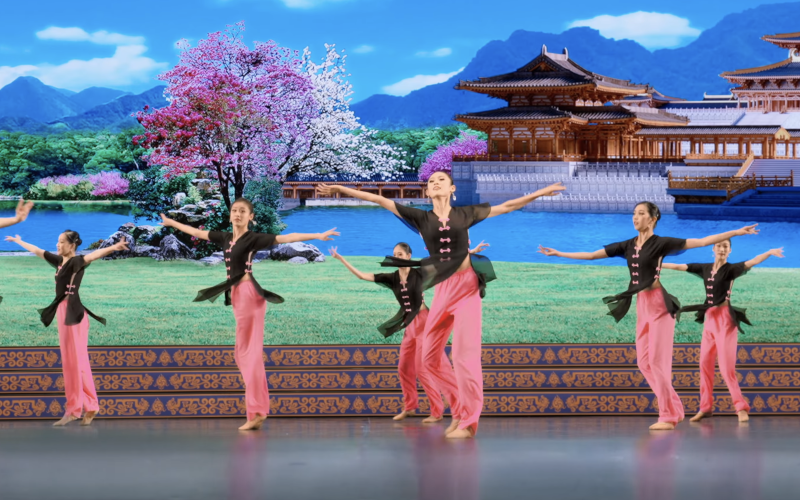
Prime Minister Anthony Albanese was forced to evacuate the Lodge, his official Canberra residence, this week following a security threat connected to a proposed Shen Yun dance tour. While Chinese authorities have labeled Shen Yun a terrorist organization, Australian officials have released limited information about the incident, making it premature to determine whether the threat originated from China or pro-Beijing groups.
Shen Yun, which translates to “spiritual rhythm,” is affiliated with Falun Gong, a movement that emerged in China during the late 1980s before relocating to the United States. What began as a quasi-religious practice has evolved into a political movement with strong ties to American right-wing conservatism, including substantial financial support for Donald Trump’s election campaign.
The movement’s media arm, the Epoch Times, regularly publishes anti-China content while Shen Yun presents itself as preserving traditional Chinese culture allegedly erased by the Chinese Communist Party. In recent weeks, promotional materials for Shen Yun performances have appeared across Australia, particularly in establishments frequented by Australians with connections to Hong Kong and Taiwan. Attendees of these performances can expect messaging portraying the Chinese Communist Party as a malevolent force requiring resistance.
Li Hongzhi, Falun Gong’s founder, gained thousands of followers in northeastern China during the 1980s. Former Australian Embassy Senior Trade Commissioner in Beijing recalls hearing numerous accounts of miraculous healings at Li’s gatherings. By the mid-1990s, Beijing alone hosted over 2,000 Falun Gong groups.
A turning point came in 1999 when a silent Falun Gong demonstration outside Zhongnanhai, the residence of senior Party leaders, alarmed Chinese authorities. The subsequent arrest warrant for Li Hongzhi prompted the movement’s international expansion.
After establishing itself in the United States, Falun Gong transformed into a significant global political-religious organization. The Epoch Times has invested heavily in pro-Trump advertising, reportedly spending over US$1.5 million on Facebook ads in 2019 alone. The publication regularly promotes right-wing politics and conspiracy theories, including QAnon and election fraud claims. Steve Bannon frequently appears on Falun Gong-associated platforms advocating anti-China positions.
The movement’s financial practices have also drawn scrutiny. In June 2024, Bill Guan, Chief Financial Officer of the Epoch Times, faced indictment for allegedly laundering at least US$67 million.
Australian authorities now confront a complex challenge in determining whether to classify Falun Gong adherents as religious or political refugees under the Refugee Convention. The United Kingdom established a useful precedent in 2025, distinguishing between private practitioners of meditation and spiritual exercises and those whose primary motivation is to protest China’s treatment of practitioners or oppose official Chinese government positions.
The Chinese government has intensified its crackdown on Falun Gong, describing it as an “evil cult determined to bring down the government.” Despite a bomb threat at the Home of the Arts theater on the Gold Coast in January, Shen Yun’s national tour proceeded after police determined the threat was unsubstantiated. Similarly, the recent threat against the Prime Minister proved unfounded.
No evidence currently suggests involvement by the Chinese government, embassy, or consulates in these incidents. The threats could originate from various sources inside or outside Australia, potentially responding to the anti-China messaging propagated by the Falun Gong movement worldwide.
What remains clear is the broad consensus against divisive propaganda that fuels community tensions and could potentially lead to extremism. As Shen Yun continues its Australian tour, authorities will likely maintain heightened vigilance while navigating the complex political and security implications surrounding the movement.
Fact Checker
Verify the accuracy of this article using The Disinformation Commission analysis and real-time sources.

10 Comments
As someone interested in Chinese culture and history, I’m torn on how to view Shen Yun. On one hand, preserving traditional arts is valuable, but the political affiliations raise questions about their authenticity and motivations.
That’s a fair perspective. The line between cultural appreciation and political propaganda can be blurry, especially when it comes to complex topics like China’s history and the Falun Gong movement.
As an admirer of traditional Chinese performing arts, I’m intrigued by Shen Yun but wary of the political baggage. I hope the artistic quality can be appreciated without being overshadowed by controversies.
That’s a nuanced perspective. Separating the art from the politics is certainly a challenge, but maintaining an open yet critical mind is important when exploring cultural performances with complex backgrounds.
The security threat related to Shen Yun is certainly concerning, though it’s prudent to wait for more details before drawing conclusions. Cultural performances can sometimes become entangled with political agendas.
Agreed, more information is needed to fully understand the nature and origins of the security threat. It’s important to separate fact from speculation in sensitive cases like this.
The Epoch Times’ involvement with Shen Yun is quite concerning, given their reputation for publishing misinformation and far-right content. I wonder how this might impact audience perceptions of the performance.
Absolutely, the Epoch Times’ ties to Shen Yun raise red flags about potential political agendas beyond the artistic merits of the performance. Transparency and objectivity are crucial in such cases.
Interesting to see the connections between Shen Yun, Falun Gong, and political controversies. I’m curious to learn more about the cultural and historical context behind this performance and its affiliated movement.
Yes, the links to right-wing conservatism and anti-China narratives are quite intriguing. I wonder how this might impact the reception and interpretation of Shen Yun’s artistic and cultural claims.