


Listen to the article
In a categorical statement Friday, a security official dismissed reports of a large-scale military operation in the Tirah region of Pakistan’s tribal areas as “propaganda,” emphasizing that only targeted intelligence-based operations (IBOs) are being conducted in the region.
During a media briefing in Karachi, the official strongly rejected what was described as “false and baseless propaganda” suggesting a major offensive was underway in the mountainous area bordering Afghanistan.
“Over the past three years, only intelligence-based operations have been conducted against Fitna al-Khawarij and Fitna al-Hindustan,” the official stated, referring to domestic and foreign-backed militant groups. The security representative emphasized that IBOs remain Pakistan’s most effective strategy for countering terrorism in the volatile tribal regions.
The official provided further clarification that counterterrorism actions were strictly intelligence-driven and would continue “until the elimination of the last terrorist.” The statement comes amid growing concerns about militant activity in Pakistan’s western border regions, where terrorist incidents have seen an uptick in recent months.
Responding to specific allegations about military movements, the security official denied any increase in troop deployments in Tirah or the establishment of new checkpoints. The briefing also emphasized there were no restrictions on civilian movement into or out of the area, adding that current winter weather conditions would make any large-scale military operation impractical.
The official highlighted what they described as an exposed “nexus between terrorists and criminal elements” while asserting that no narrative could undermine the relationship between Pakistan’s armed forces and the public. They stressed that all security decisions in tribal areas were made in consultation with local elders and tribal communities, with consideration for local conditions and traditions.
The security briefing also addressed the situation in Balochistan province, where the official claimed that “Fitna al-Hindustan groups” – a term often used by Pakistani officials to reference alleged Indian-backed militants – were “enemies of public welfare and development.” The official suggested that Balochistan residents had begun to recognize militants who exploit local grievances to justify terrorism.
However, the security official’s statements stand in stark contrast to reports from Khyber Pakhtunkhwa’s provincial government, revealing significant friction between federal and provincial authorities on the matter. While federal officials maintain only limited intelligence-based operations are occurring, Khyber Pakhtunkhwa Chief Minister Sohail Afridi continues to assert that a larger operation is indeed underway.
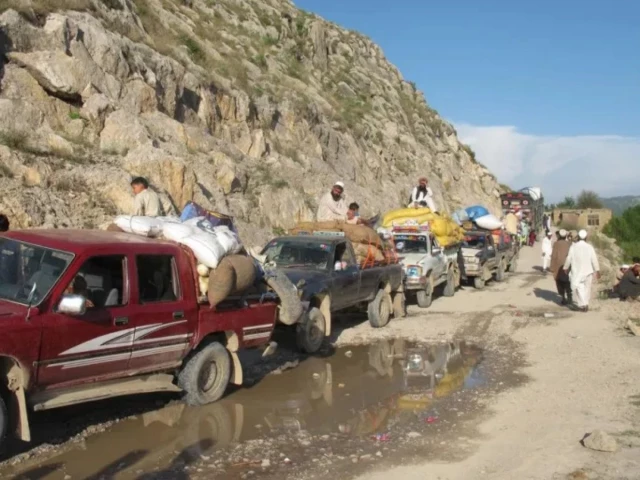
The Provincial Disaster Management Authority reports that an evacuation from Tirah Valley in Khyber district began on January 10, with approximately 11,400 families registered as displaced. More than 10,000 families have already been relocated to safer areas, including Bara and Peshawar, amid deteriorating security conditions compounded by heavy snowfall.
This displacement crisis raises questions about the scale of military activities in the region, despite federal denials. The Peshawar High Court has reportedly been informed that neither the federal nor provincial governments had authorized a formal operation in Tirah, further complicating understanding of the situation.
The Tirah Valley has strategic significance as a crossroads between Pakistan and Afghanistan, having previously served as a stronghold for various militant groups including the Tehrik-i-Taliban Pakistan (TTP) and affiliated organizations. Security operations in the region typically draw significant attention due to both the area’s complex tribal dynamics and its history as a militant sanctuary.
Fact Checker
Verify the accuracy of this article using The Disinformation Commission analysis and real-time sources.

10 Comments
The security official’s dismissal of reports as ‘propaganda’ is a common tactic used to deflect criticism and accountability. I hope independent monitoring and fact-finding missions can shed more light on the situation in Tirah Valley.
The official’s denial of a large-scale military operation seems at odds with the reports of increased militant activity in the area. I wonder what evidence the government has to back up their claims of only targeted intelligence-based operations.
Valid question. It would be helpful to have more details from the authorities to assess the credibility of their statements and the nature of the counterterrorism efforts in the region.
Interesting to hear the security official’s perspective on the situation in Tirah Valley. It’s always important to get balanced information from different sources before drawing conclusions about sensitive military operations.
That’s a fair point. Transparency and accountability are crucial when it comes to security matters, especially in volatile border regions.
The security representative’s emphasis on intelligence-driven operations as the most effective strategy against terrorism is understandable, but it raises concerns about potential human rights abuses or lack of transparency. Balancing security and civil liberties is always a delicate challenge.
While I appreciate the government’s desire to provide clarity, the lack of transparency and conflicting information raises more questions than answers. Robust, impartial oversight is crucial to ensure counterterrorism efforts are effective and respect human rights.
Agreed. Establishing trust and legitimacy through open dialogue and independent monitoring is essential for any long-term security strategy in the region.
I appreciate the official’s clarification, but the ongoing tensions and militant activity in Pakistan’s tribal areas are deeply concerning. Robust counterterrorism efforts are needed, but they must be carried out with respect for human rights and the rule of law.
Well said. Sustainable security solutions require a comprehensive approach that addresses the root causes of extremism, not just military crackdowns.