


Listen to the article
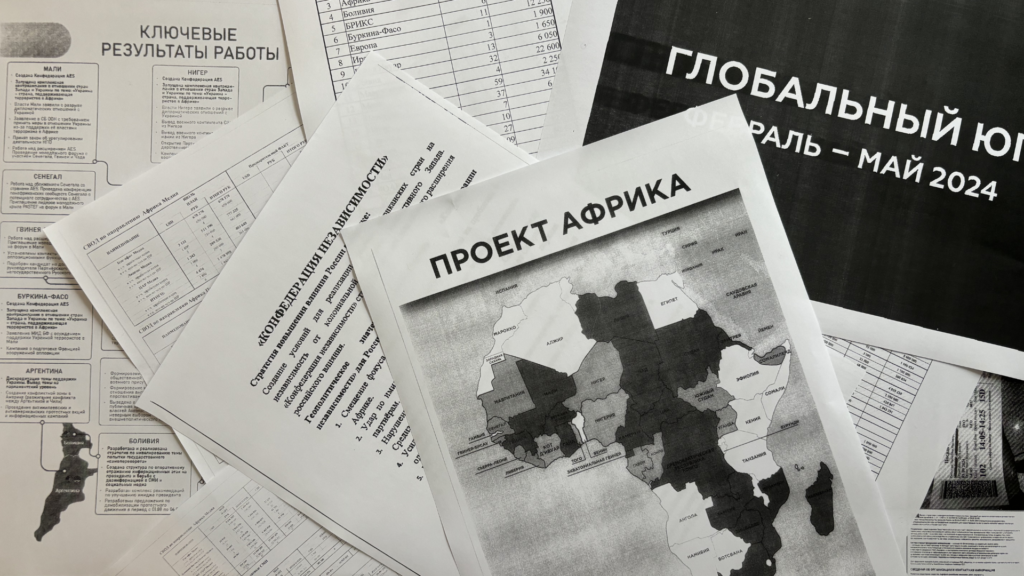
Russian state-backed propaganda efforts have reached alarming new levels, according to confidential documents obtained through an international investigation. The documents reveal a sophisticated and far-reaching strategy designed to amplify Russian influence across Europe, Africa, and South America, often operating through seemingly independent media outlets.
The investigation, led by Forbidden Stories and involving dozens of journalists worldwide, has uncovered how Russia’s international propaganda machine functions in practice, with meticulous planning and substantial financial backing from the Kremlin.
At the heart of this operation is the “International Department,” a shadowy division within Russian state-controlled media that coordinates influence campaigns targeting specific regions. The documents show how Russian state actors carefully craft narratives that undermine Western democracies while promoting Russian foreign policy objectives.
“What we’re seeing is an unprecedented level of coordination,” said a security analyst who reviewed the documents. “This isn’t just about spreading disinformation—it’s about creating alternative information ecosystems that gradually shift public opinion in targeted countries.”
In Europe, the strategy has focused on exploiting existing social tensions, particularly around immigration, energy prices, and NATO’s expansion. Russian operatives have established networks of local journalists and commentators who receive editorial direction and funding from Moscow while maintaining the appearance of independence.
The documents reveal specific targeting of countries like Germany, France, and the Baltic states, where Russian-backed narratives aim to deepen political polarization and erode trust in democratic institutions. In some cases, seemingly local news websites were entirely controlled by Russian media agencies.
Africa represents a different front in this information war. The investigation found that Russia has invested heavily in media partnerships across the continent, particularly in former French colonies like Mali, Burkina Faso, and the Central African Republic. These efforts coincide with the increasing presence of Russian military contractors like the Wagner Group in these regions.
“Russia is filling a vacuum left by Western nations,” explained an African media expert familiar with the operations. “They’re offering media training, equipment, and content-sharing agreements that create dependency relationships with local outlets.”
In South America, the approach has been more nuanced, leveraging existing anti-American sentiment and economic grievances. Russian state media has established Spanish-language platforms that blend legitimate reporting with carefully crafted narratives supporting Russia-friendly governments and criticizing Western-aligned administrations.
The documents detail budget allocations reaching into the hundreds of millions of dollars for these global influence operations. They reveal how Russia measures success not merely in audience reach but in the ability to inject specific narratives into mainstream discourse.
What makes these operations particularly effective is their adaptability to local contexts. Rather than pushing overtly pro-Russian messaging, the campaigns often amplify existing grievances and conspiracy theories that serve Russian interests indirectly.
Media analysts note that this approach creates plausible deniability. “When confronted, Russian officials can simply claim they’re providing an alternative viewpoint in a diverse media landscape,” said one researcher who has studied Russian influence operations.
The investigation has identified several key tactics employed across regions: establishing seemingly independent local outlets, cultivating relationships with sympathetic journalists, exploiting social media platforms to amplify content, and creating cross-platform narrative consistency.
International responses to these revelations have been mixed. Some countries have strengthened media literacy programs and regulatory frameworks to counter foreign influence operations. Others, particularly in regions where Russian economic and security partnerships are growing, have been more hesitant to address the issue.
Media experts warn that traditional countermeasures may be insufficient against such sophisticated operations. “Simply labeling something as ‘Russian propaganda’ doesn’t work when the content is being delivered by trusted local voices,” noted one digital media specialist.
The documents suggest that Russia’s strategy continues to evolve, with increasing focus on video content, encrypted messaging platforms, and targeting younger audiences through social media influencers.
As democratic nations grapple with appropriate responses to these influence operations, the investigation serves as a stark reminder of how information warfare has become a central feature of modern geopolitical competition. The full scope of Russia’s global media strategy, now partially exposed, reveals a long-term commitment to reshaping international narratives in service of Kremlin objectives.
Fact Checker
Verify the accuracy of this article using The Disinformation Commission analysis and real-time sources.

12 Comments
I’m curious to learn more about the specific tactics and channels Russia is using to amplify its narratives internationally. Do the documents reveal any insights on their targeting or messaging strategies?
According to the article, the documents show Russia is leveraging seemingly independent media outlets to spread its influence. It will be important to closely scrutinize these channels for potential Kremlin ties.
The article highlights the need for stronger international cooperation to combat these coordinated propaganda efforts. Do you think organizations like the OECD or UN could play a role in developing strategies to counter state-backed disinformation campaigns?
Absolutely, multilateral bodies like the OECD and UN could be instrumental in establishing norms, sharing best practices, and coordinating responses to these transnational influence operations. A unified global approach will be key.
This investigation highlights the need for greater transparency and accountability when it comes to state-backed propaganda efforts. What can be done to counter these influence operations and protect democratic institutions?
Strengthening media literacy, fact-checking initiatives, and international cooperation will be crucial to exposing and pushing back against these sophisticated disinformation campaigns.
While I’m not surprised to see Russia engaging in these kinds of influence operations, the level of coordination and financial backing is quite concerning. What implications could this have for geopolitics and global security?
The potential ramifications are quite serious, as these propaganda efforts could further erode trust in democratic institutions and sow division across regions. Vigilance and a unified response will be key.
Fascinating to see the level of coordination and planning behind Russia’s global propaganda efforts. It’s concerning how they are trying to shift public opinion and undermine Western democracies.
Yes, the scale and sophistication of this operation is quite alarming. We need to be vigilant in identifying and countering these influence campaigns.
As someone who follows the mining and commodities industry, I’m curious to see if any of these Russian influence campaigns have targeted that sector. Disinformation around critical minerals and energy resources could have significant economic and security impacts.
That’s a great point. Given the geopolitical importance of many mining and energy commodities, it would not be surprising if Russia is trying to shape narratives in those areas as well. Monitoring for potential manipulation will be crucial.