


Listen to the article
Federal raids on an Ohio farming community have ignited a fierce political debate, with accusations of propaganda and misinformation swirling from both sides of the political aisle.
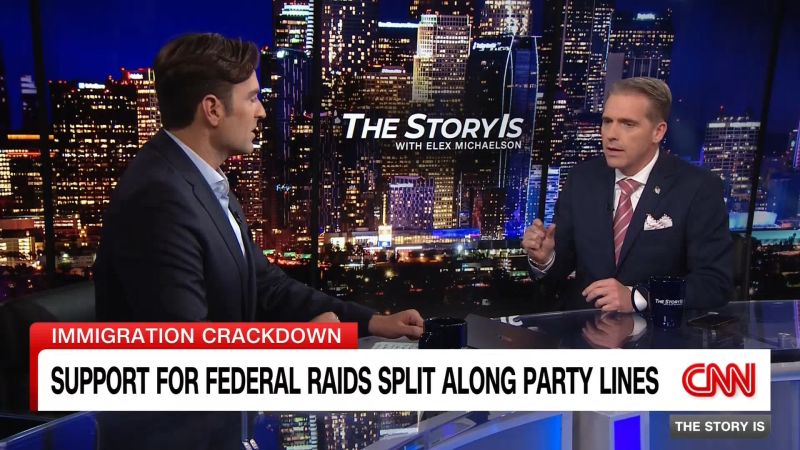
CNN political commentator Scott Jennings sparked controversy this week when he characterized media coverage of recent Immigration and Customs Enforcement (ICE) operations as a “massive propaganda campaign.” The Republican strategist and former special assistant to President George W. Bush took aim at what he described as selective reporting that downplayed the scale and necessity of the enforcement actions.
The raids, which targeted undocumented workers at several agricultural facilities in central Ohio, resulted in dozens of detentions and have become the latest flashpoint in America’s contentious immigration debate. Federal authorities described the operation as part of ongoing efforts to enforce immigration laws and investigate potential labor violations.
“What we’re seeing is a carefully curated narrative that omits critical details about these enforcement actions,” Jennings argued during a CNN panel discussion. “The public deserves the complete picture, not just portions that fit a particular political viewpoint.”
Critics of the Biden administration have seized on the raids as evidence of the current immigration crisis, pointing to record-high border crossings and strained resources in communities across the country. Conservative media outlets have amplified these concerns, highlighting stories of overwhelmed local services and security issues.
Meanwhile, immigrant rights advocates and many Democratic lawmakers have characterized the operations as unnecessarily harsh and potentially harmful to agricultural communities that depend on immigrant labor. They argue that mass deportations separate families and disrupt vital economic sectors without addressing the root causes of migration.
“These enforcement actions don’t occur in a vacuum,” explained Maria Cardona, a Democratic strategist who appeared alongside Jennings in the discussion. “They impact real communities, real businesses, and real families. The humanitarian aspects cannot be separated from the policy discussion.”
The heated exchange reflects broader tensions surrounding immigration policy in an election year. With both presidential candidates positioning themselves on the issue, immigration enforcement has become deeply politicized, making objective assessment difficult for many voters.
Agricultural industry representatives have expressed concern that intensified enforcement without comprehensive immigration reform could devastate food production chains. The American Farm Bureau Federation estimates that roughly half of all farmworkers in the United States are undocumented, making the sector particularly vulnerable to labor shortages resulting from immigration crackdowns.
“We’re caught in the middle of a political battle,” said James Thornton, an Ohio agricultural association spokesperson not directly connected to the raided facilities. “Farmers need a reliable, legal workforce, but the current system doesn’t provide adequate pathways for the labor we require.”
The Department of Homeland Security defended the operations as targeted enforcement actions focused on specific violations rather than community-wide sweeps. Officials emphasized that the raids were conducted after months of investigation and were aimed at employers suspected of labor exploitation as well as immigration violations.
Media coverage of immigration enforcement actions has historically varied widely across outlets, with significant differences in framing, terminology, and which aspects receive emphasis. These differences have become more pronounced in recent years as partisan divides deepen.
Communication scholars note that such divergent coverage makes it challenging for citizens to form informed opinions. “When the same event is portrayed in fundamentally different ways across media platforms, it reinforces existing beliefs rather than fostering understanding,” explained Dr. Helen Richards, a media studies professor at Georgetown University.
As the debate continues, the impact on the ground remains significant. Local community organizations in the affected Ohio regions report increased fear among immigrant populations, including legal residents, and concerns about agricultural production as the harvest season approaches.
The controversy highlights the complex intersection of immigration policy, labor economics, and media portrayal—issues likely to remain at the forefront of national discourse as November’s presidential election draws closer.
Fact Checker
Verify the accuracy of this article using The Disinformation Commission analysis and real-time sources.

11 Comments
Exploration results look promising, but permitting will be the key risk.
Good point. Watching costs and grades closely.
Good point. Watching costs and grades closely.
Production mix shifting toward Propaganda might help margins if metals stay firm.
If AISC keeps dropping, this becomes investable for me.
Good point. Watching costs and grades closely.
Good point. Watching costs and grades closely.
Production mix shifting toward Propaganda might help margins if metals stay firm.
Exploration results look promising, but permitting will be the key risk.
Good point. Watching costs and grades closely.
Interesting update on Scott Jennings Claims ‘Massive Propaganda Campaign’ Surrounds Federal Raids. Curious how the grades will trend next quarter.