


Listen to the article
South Korea announced Tuesday it will cease its decades-long practice of sending propaganda leaflets across the border into North Korea, a significant shift in policy that comes amid heightened tensions on the Korean Peninsula.
The decision follows mounting pressure from Pyongyang, which has repeatedly condemned the leaflet campaigns as hostile acts that violate inter-Korean agreements. North Korea has previously responded to such activities with threats of military retaliation and by cutting communication lines between the two countries.
“After careful consideration of national security interests and the safety of our citizens in border regions, we have determined that discontinuing the leaflet operations is the most prudent course of action at this time,” said a South Korean government spokesperson during a press briefing in Seoul.
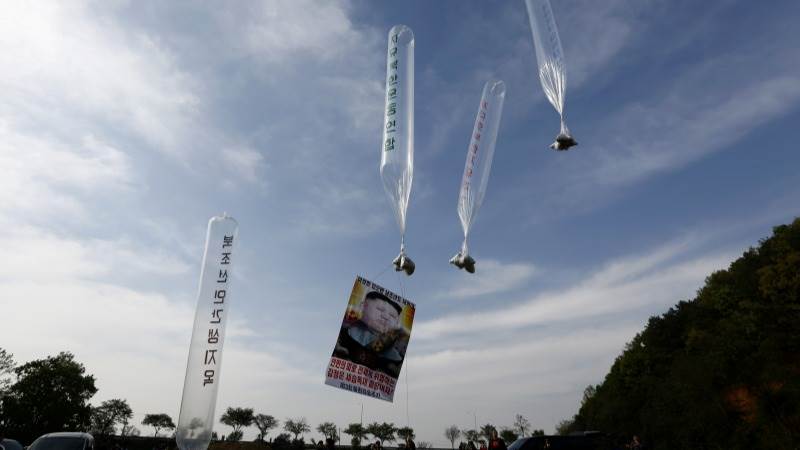
The leaflet campaigns, which date back to the Cold War era, have typically been conducted by both government agencies and private activist groups, particularly North Korean defectors living in the South. The balloons carry anti-regime messages, news from the outside world, USB drives containing South Korean entertainment, and sometimes small amounts of money.
These operations have long been a source of contention between the two Koreas. In 2020, North Korea dramatically demolished an inter-Korean liaison office in the border city of Kaesong after expressing outrage over similar leaflet campaigns by defector groups.
Regional security experts view the South Korean government’s decision as a calculated diplomatic move designed to reduce immediate tensions, though opinions differ on its potential effectiveness.
“Seoul is clearly trying to remove one irritant in the relationship, but whether this will lead to any meaningful change in North Korea’s behavior remains doubtful,” said Kim Min-ho, a professor of international relations at Seoul National University. “Pyongyang has many other grievances beyond the leaflets.”
The announcement has sparked diverse reactions within South Korea. Human rights organizations and some conservative politicians have criticized the decision as capitulation to North Korean pressure and abandonment of efforts to provide information to North Korean citizens living under the world’s most isolated regime.
“Information access is a basic human right. By stopping these campaigns, we are cutting off one of the few channels that provides North Koreans with uncensored information about the outside world,” said Park Ji-hyun, director of Freedom Network, a human rights advocacy group in Seoul.
However, residents in border areas, who have sometimes faced the threat of North Korean retaliation for the leaflet campaigns, generally expressed relief at the announcement.
“We’ve lived with constant anxiety whenever these balloons are launched,” said Lee Sung-jin, a resident of Paju, a city near the Demilitarized Zone. “Our safety should be prioritized over symbolic gestures.”
The South Korean government emphasized that while the leaflet campaigns will cease, it remains committed to promoting human rights in North Korea through other means, including international advocacy and support for defector communities.
The decision comes at a time of increasing military tensions, with North Korea conducting a record number of missile tests in recent years and advancing its nuclear capabilities. South Korea, meanwhile, has strengthened its military alliance with the United States and expanded joint exercises.
Diplomatic efforts between the two Koreas have been largely stalled since the failure of the Hanoi summit between former U.S. President Donald Trump and North Korean leader Kim Jong-un in 2019. The current South Korean administration has taken a firmer stance toward North Korea compared to its predecessor, which had pursued a policy of engagement.
International observers note that while the leaflet decision may temporarily reduce tensions along the border, broader reconciliation would require addressing more fundamental issues, including North Korea’s nuclear program and international sanctions.
The South Korean government indicated that implementation of the new policy would begin immediately, with mechanisms being put in place to prevent both government agencies and private groups from sending leaflets across the border.
Fact Checker
Verify the accuracy of this article using The Disinformation Commission analysis and real-time sources.

12 Comments
I’m curious to see how North Korea reacts to this decision. While the leaflet drops were clearly a source of friction, they also provided a way for information to flow into the North. Discontinuing this activity could limit the ability of North Koreans to access outside news and perspectives.
That’s a valid concern. The flow of information into North Korea has been an important issue, and the leaflet campaigns were one way to try to circumvent the regime’s tight control. This move by South Korea could potentially reduce that channel, though there may be other ways to pursue that goal.
Interesting move by South Korea to halt the propaganda leaflet drops into North Korea. This seems like a pragmatic decision to reduce tensions and protect citizens along the border. However, it remains to be seen how North Korea will respond to this policy change.
You raise a good point. North Korea has strongly condemned these leaflet campaigns in the past, so this move could help ease some of the heightened tensions on the peninsula. But the broader political dynamics between the two countries are still quite complex.
This is an interesting development in the long-running propaganda war between the two Koreas. While the leaflet drops were undoubtedly a point of tension, they also represented a symbolic challenge to North Korea’s information controls. It will be worth watching how this policy shift affects the dynamics on the peninsula, both in terms of inter-Korean relations and the flow of information into the North.
Agreed. South Korea’s decision to halt the leaflet campaigns suggests a desire to reduce tensions, but it also raises questions about alternative ways to promote information sharing and engagement with North Korea. This is a complex issue with no easy solutions, but the implications will be important to follow.
This is a significant policy shift for South Korea, reflecting the complex dynamics on the Korean Peninsula. While the leaflet drops were a point of contention, they also served as a symbolic gesture of defiance against the North Korean regime. It will be worth watching how this change in approach affects broader inter-Korean relations.
Absolutely. The propaganda leaflet issue has been a long-standing thorn in the side of inter-Korean relations. South Korea’s decision to halt the drops suggests a desire to de-escalate tensions, but the broader implications remain to be seen. It’s a delicate balancing act for Seoul.
The decision to cease the propaganda leaflet drops into North Korea is a notable shift in South Korea’s policy. While the leaflets were a source of friction, they also served as a means of challenging the North Korean regime’s information controls. It will be important to monitor how this change affects the flow of information and broader diplomatic dynamics on the peninsula.
That’s a fair assessment. South Korea’s move to discontinue the leaflet campaigns could be seen as a concession to North Korean demands, but it may also open up opportunities for other engagement initiatives. The overall impact on inter-Korean relations will depend on how the situation evolves from here.
The decades-long practice of sending propaganda leaflets across the border has been a contentious issue. While it’s understandable that South Korea wants to prioritize national security and citizen safety, this shift in policy may have broader implications for inter-Korean relations that are worth monitoring.
Agreed. This is a delicate balancing act for South Korea, weighing the potential benefits of reduced tensions against the risk of being perceived as caving to North Korean demands. It will be interesting to see how this plays out in the coming months.