


Listen to the article
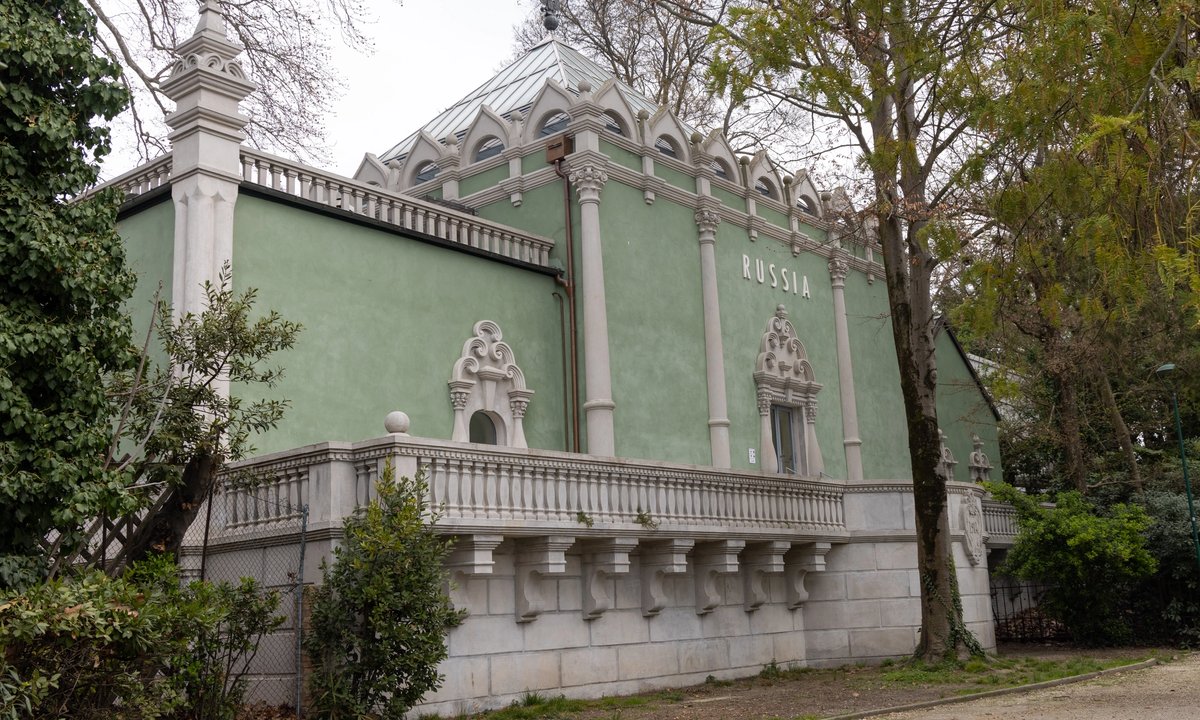
Russian officials have announced their return to the Venice Biennale after a two-year absence, prompting a firm warning from the city’s mayor that any propaganda efforts would lead to immediate closure of their pavilion.
“If the Russian government were to carry out propaganda, we would be the first to close the pavilion,” Venice Mayor Luigi Brugnaro stated on Thursday during a presentation at the Biennale’s newly renovated Central Pavilion. The €31 million renovation project took 16 months to complete.
Russia’s participation marks its first appearance at the prestigious international art exhibition since its full-scale invasion of Ukraine in February 2022. The announcement came on March 3 when Vladimir Putin’s international cultural envoy, Mikhail Shvydkoy, revealed plans for a musical program featuring folklore and world music.
Brugnaro emphasized Venice’s diplomatic tradition while acknowledging the complexities of the situation. “In Venice, we practice diplomacy and openness,” he said, according to Italian newspaper Il Sole 24 Ore. “Russia, as a state that invaded Ukraine, is a problem, but the Russian people are not. I’m pro-Ukrainian, everyone knows that, I’ve twinned Venice with Odessa. But we must work to ensure that culture isn’t censorship.”
The Russian pavilion has become a flashpoint in a larger conflict between Biennale president Pietrangelo Buttafuoco and Italy’s culture minister Alessandro Giuli. After the European Union threatened to withdraw funding from the Biennale if Russia participates, Giuli demanded the resignation of Tamara Gregoretti, the culture ministry’s representative to the event. He also requested comprehensive documentation regarding plans for the Russian pavilion and potential violations of sanctions against Russia.
The Biennale organizers defended their position on Tuesday, stating: “No regulations have been violated and sanctions against the Russian Federation have been fully complied with, as is our duty.”
In an attempt to address criticisms, Buttafuoco outlined plans in a letter published in Italian newspaper Il Foglio for a space commemorating the 50th anniversary of the “Biennale del Dissenso” (Biennale of Dissent), which originally showcased work from dissident artists in Soviet bloc countries. The 2026 space will feature “five current figures who are highly unpopular with their governments: the US, Israel, China, Russia and even the EU,” according to Buttafuoco.
The Biennale will also present a program titled “The Pillar and Ground of Truth,” consisting of five evenings dedicated to Pavel Florensky, an Orthodox priest and philosopher executed during Joseph Stalin’s Great Terror in 1937. Ironically, President Putin has promoted Florensky as a foundational thinker behind the “Russkiy mir” (Russian World) concept that underpins current Kremlin ideology.
The feminist punk collective Pussy Riot responded to the announcement of the dissident pavilion with skepticism. In an Instagram statement posted on March 19, the group challenged the Biennale’s approach: “Accommodating official state representation while curating ‘dissent’ risks turning the latter into a performative gesture and virtue-signaling rather than a position.”
The group, which has faced severe repression in Russia, offered to participate: “If you would like to support dissent, we will be there. You claim to care about censorship: Pussy Riot is so censored in Russia that we were deemed ‘an extremist organisation’. Simply visiting our website or liking images of our art is criminalised.”
The controversy highlights ongoing tensions between cultural engagement and political sanctions as international institutions navigate relationships with Russia during its ongoing war against Ukraine. The Venice Biennale, one of the world’s most prestigious cultural events, now finds itself at the center of debates about artistic freedom, political responsibility, and the boundaries of cultural diplomacy during wartime.
Fact Checker
Verify the accuracy of this article using The Disinformation Commission analysis and real-time sources.

9 Comments
The mayor’s stance on closing the pavilion if propaganda is displayed seems prudent. Art should be a platform for expression, not political manipulation. I hope Russia can find a way to participate respectfully and avoid further escalation.
Interesting that Russia is returning to the Venice Biennale after a two-year absence. The mayor’s warning against propaganda is understandable, given the complexities of Russia’s invasion of Ukraine. I wonder how Russia will navigate this diplomatic situation.
The €31 million renovation project for the Biennale’s Central Pavilion is an impressive investment. I’m curious to see how Russia’s participation will be received, given the mayor’s strong stance against any propaganda efforts.
The mayor’s stance highlights the tension between art and politics. While the Biennale should be a platform for artistic expression, the mayor is right to be vigilant against any attempts at political manipulation. It will be interesting to see how this situation unfolds.
It’s admirable that Venice is trying to maintain diplomatic openness, even in the face of Russia’s invasion of Ukraine. The mayor’s warning sends a clear message that propaganda will not be tolerated. Let’s see how Russia responds to this delicate situation.
The mayor’s emphasis on diplomacy and openness in Venice is commendable, but the situation with Russia’s invasion of Ukraine adds a layer of complexity. I hope all parties can find a way to participate in the Biennale respectfully.
The mayor’s warning against propaganda is a clear message to Russia. I wonder how they will respond, given the importance of the Venice Biennale as a cultural event. Maintaining diplomatic ties while upholding principles is a challenging task.
Russia’s return to the Venice Biennale is sure to be closely watched. The mayor’s warning highlights the challenges of maintaining diplomatic relations in the face of ongoing conflicts. It will be interesting to see how this plays out.
It’s a tricky balance the mayor is trying to strike – maintaining diplomatic ties while also standing firm against propaganda. I’m curious to see how Russia navigates this delicate situation and whether they can avoid any further escalation.