


Listen to the article
Donbas Isn’t Just Territory—It’s Ukraine’s Frontline
As Russia’s war in Ukraine grinds into its third year, one region continues to dominate headlines: Donbas. From diplomatic pressure to front-line fighting, this eastern territory remains central to both Moscow’s ambitions and Ukraine’s resistance.
According to the Financial Times, Russian President Vladimir Putin is once again attempting to secure control over Donbas—not by military force alone, but through backchannel political pressure reportedly involving former U.S. President Donald Trump.
The Strategic and Economic Value of Donbas
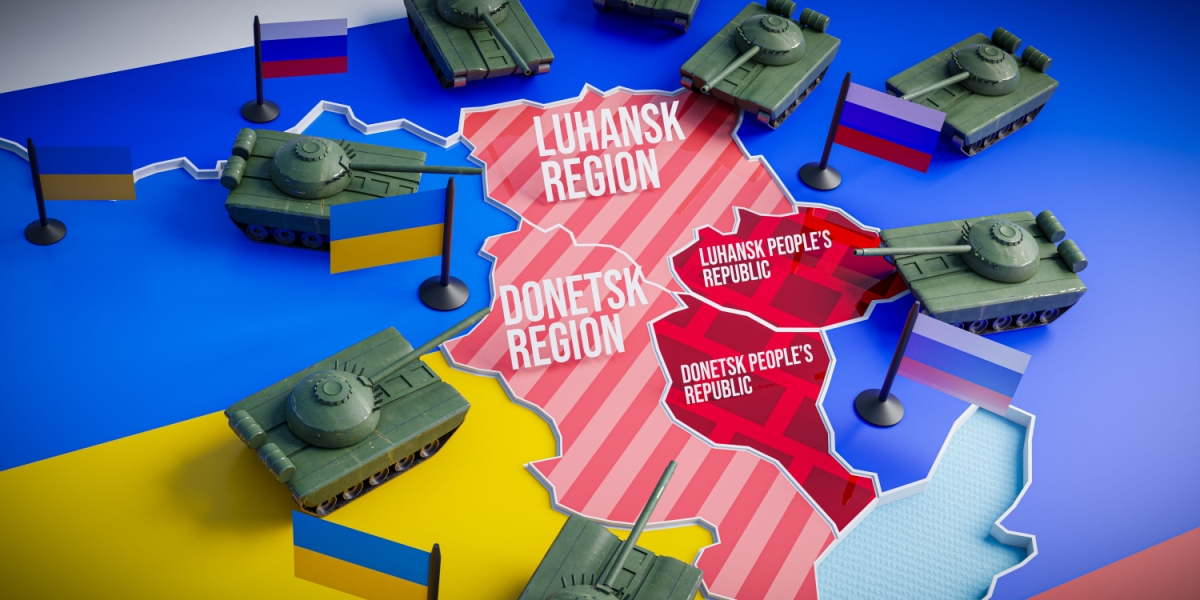
Donbas, short for the Donets Coal Basin, lies in eastern Ukraine and includes Donetsk and Luhansk oblasts. The region has long been an economic powerhouse, home to major coal, steel, and chemical industries that formed the industrial backbone of Ukraine’s economy.
Before Russia’s 2014 invasion, Donbas accounted for around 15.7% of Ukraine’s GDP and nearly 15% of its population, according to data from the Center for Economics and Business Research in London. Moscow’s assault has since devastated its infrastructure, causing Ukraine an estimated $102 billion in economic losses between 2014 and 2021 alone.
These economic figures tell only part of the story. The region also holds significant strategic value, creating a buffer zone between Russia and central Ukraine. Its network of industrial cities has been transformed into a battlefield where both armies have poured resources into fortifications and defense lines.
A War That Began in 2014, Not 2022
While much of the world focuses on the 2022 full-scale invasion, Ukrainian officials consistently emphasize that the war started in 2014—with Russia’s annexation of Crimea and its covert military operations in Donbas.
As the Kyiv Independent notes, Russia falsely claimed the fighting was led by local separatists when in reality, the so-called “people’s republics” were Kremlin-backed projects—armed, funded, and coordinated from Moscow to destabilize Ukraine from within. Russian military personnel, equipment, and financing flowed into the region, while Moscow consistently denied direct involvement despite mounting evidence.
This historical context matters because it frames the current conflict not as a new war but as an escalation of Russia’s long-term strategy to control Ukrainian territory and limit its sovereignty.
The Human Toll in Donbas
The cost in human lives has been staggering. Since 2014, the war in Donbas has killed at least 3,400 civilians and 4,400 Ukrainian soldiers, according to UN data cited by the Kyiv Independent. Around 20,000 more have been injured.
In cities like Mariupol—once home to 500,000 people—estimates suggest up to 75,000 civilians may have died since Russia’s full-scale invasion in 2022. The city, once a thriving industrial center, now lies in ruins after a brutal siege that became emblematic of the war’s devastating impact on civilian populations.
Beyond the immediate casualties, the conflict has displaced millions. Many Donbas residents fled westward to other parts of Ukraine or abroad, creating one of Europe’s largest refugee crises since World War II. Those who remained face collapsing infrastructure, including severe water shortages reported in Russian-controlled areas during the summer of 2025.
The Language Question
Moscow has consistently justified its actions by claiming to protect Russian-speaking populations in Donbas. However, this narrative fails to withstand scrutiny.
According to polling by Ukraine’s Razumkov Center, 82% of Russian-speaking Ukrainians now hold a negative view of Russia. As the Kyiv Independent emphasizes, speaking Russian has never equated to loyalty to Moscow—and certainly not support for occupation.
Before 2014, Donbas was linguistically diverse, with many residents speaking Russian in daily life while identifying as Ukrainian citizens. The notion that language determines national loyalty has been thoroughly undermined by the reality on the ground, where many Russian speakers have been among the most determined resisters of Russian occupation.
The Military Situation
By August 2025, Russia controlled approximately 19% of Ukraine’s territory, including almost all of Luhansk oblast, according to Reuters. However, Ukraine continues to defend significant parts of Donetsk oblast—particularly the “fortress belt,” a 50-kilometer stretch of heavily fortified cities including Sloviansk and Kramatorsk.
As The Economist and The Kyiv Independent report, Ukraine has invested heavily in these defenses, creating strongholds that have continued to resist Russian advances even after the fall of Bakhmut in 2023. These fortifications have proven critical in preventing Russia from capturing the entirety of Donbas despite repeated offensive operations.
The Geopolitical Dimension
The battle for Donbas extends beyond military confrontation into the realm of international diplomacy. According to Financial Times reporting, Putin is attempting to use political channels via Trump to achieve what Russian forces haven’t fully secured on the battlefield.
During a recent meeting, Trump reportedly told Ukrainian President Volodymyr Zelensky that Ukraine should surrender Donbas to Russia—contradicting his own earlier statements. While Trump later backpedaled from this position, the incident highlights how Donbas remains not just a military battleground but a geopolitical fault line where international influences converge.
The Road Ahead
Donbas isn’t just a name on a map. It represents an economic lifeline, a military stronghold, and home to millions of Ukrainians. Russia’s claim to the region relies on contested justifications involving language, history, and proxy governance, while Ukraine continues to fight for its sovereignty and people.
As diplomatic pressure mounts and global politics shift, the fate of Donbas remains a defining issue in the war. For Ukraine, ceding the region is viewed as unthinkable—not just because of its economic and strategic value, but because of the precedent it would set for territorial concessions under duress.
The battle for Donbas thus continues on multiple fronts: military, diplomatic, economic, and psychological. Its outcome may well determine the future shape of Ukraine and the broader security architecture of Eastern Europe.
Fact Checker
Verify the accuracy of this article using The Disinformation Commission analysis and real-time sources.

12 Comments
The article provides a useful overview of the complexities surrounding the Donbas region. The interplay of economic, strategic, and political factors makes this a challenging situation to navigate.
This is a complex issue with significant economic and strategic implications for both Russia and Ukraine. The control over Donbas remains a key point of contention, as the region holds valuable resources and industries.
It’s interesting to see the political maneuvering behind the scenes, with reports of Trump’s alleged involvement. This highlights the broader geopolitical dynamics at play.
Indeed, the political dynamics around Donbas add an additional layer of complexity to the conflict. Untangling the various interests and influences will be crucial for reaching a resolution.
It will be interesting to see how the diplomatic pressure and political maneuvering unfold in the coming months. The strategic importance of Donbas makes it a key battleground in this ongoing conflict.
The economic significance of Donbas is clear, as it has been a major contributor to Ukraine’s GDP. Russia’s unwillingness to withdraw likely stems from the strategic importance of controlling this industrial heartland.
You raise a good point. The economic and industrial value of Donbas makes it a crucial asset, which could explain Russia’s determination to maintain its grip on the region.
The reported involvement of former President Trump in the backchannel negotiations adds an intriguing political dimension to the conflict. It will be important to understand the full extent of these alleged interactions.
You’re right, the political dynamics surrounding this conflict are multi-layered and warrant close scrutiny. Transparency and accountability will be essential in navigating these sensitive diplomatic channels.
Russia’s refusal to withdraw from Donbas suggests that the region holds significant strategic value for Moscow. Understanding these underlying motivations will be crucial for finding a path forward.
The devastation caused to Donbas’ infrastructure and Ukraine’s economy is a stark reminder of the human and economic toll of this ongoing conflict. Restoring the region’s prosperity should be a key priority in any resolution.
This conflict has already taken a heavy toll on Ukraine’s economy. The estimated $102 billion in losses due to the 2014 invasion highlights the significant economic impact of the ongoing struggle for Donbas.