


Listen to the article
Russian state media’s influence on public opinion will be the subject of an upcoming online lecture that aims to dissect the mechanisms of propaganda under President Vladimir Putin’s leadership.
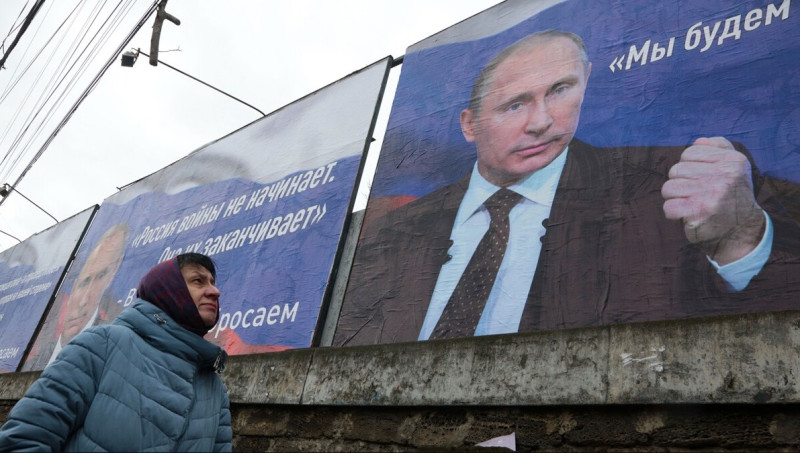
The virtual event, “Propaganda in Putin’s Russia,” will take place on Thursday, December 4, 2025, at 10:00 am via Zoom. The discussion will examine a propaganda apparatus that experts say was methodically established during Putin’s first year in office and has since evolved into a sophisticated system shaping Russian public discourse and opinion.
The lecture promises to analyze the inner workings of Russia’s state information ecosystem, identifying key instruments the Kremlin employs to manage public perception. Participants will explore how these propaganda techniques effectively influence citizens and why they have proven remarkably successful in maintaining support for government policies despite international criticism and economic challenges.
Russia’s approach to information control has intensified since 2000 when Putin first assumed the presidency. Media analysts have documented the systematic consolidation of major television networks, newspapers, and digital platforms under state control or ownership by Kremlin-aligned oligarchs. This transformation has created an information environment where alternative viewpoints are increasingly marginalized.
The timing of this educational offering comes amid growing concern about disinformation worldwide. Russia’s propaganda techniques have gained international attention, particularly following documented interference in electoral processes across Western democracies and the information warfare surrounding Russia’s military activities in Ukraine.
According to media monitoring organizations, the Russian government has invested billions in expanding its information infrastructure, including international broadcasting networks like RT (formerly Russia Today) and Sputnik, which operate in multiple languages and target global audiences.
The lecture will also address a question increasingly relevant to American audiences: whether similar propaganda techniques exist within the United States media landscape. Participants will receive guidance on developing critical media literacy skills to identify and resist manipulative information tactics regardless of their source.
This comparative approach reflects growing academic interest in understanding how information manipulation transcends national boundaries in the digital age. Media scholars have noted that while the systems differ significantly in structure and control mechanisms, understanding Russia’s approach provides valuable insights into recognizing propaganda techniques universally.
The event is being organized as part of the Fifty and Better (FAB) program, an educational initiative designed specifically for adults aged 50 and older. FAB offers university-level courses in a pressure-free environment, emphasizing intellectual engagement and social connection without the stress of formal grading systems.
Registration for the event remains open until 3 p.m. on Wednesday, December 3, 2025, the day before the lecture. Interested participants must register in advance to receive access to the Zoom session.
The exploration of propaganda mechanisms has taken on renewed importance as digital technologies amplify the reach and impact of information campaigns. Understanding how governments shape public opinion through controlled media has become an essential component of civic literacy in the 21st century.
The presentation aims to provide attendees not only with analysis of Russia’s specific propaganda apparatus but also with broader tools for navigating an increasingly complex global information environment where the boundaries between news, opinion, and propaganda continue to blur.
Fact Checker
Verify the accuracy of this article using The Disinformation Commission analysis and real-time sources.

10 Comments
This is a concerning look at the Kremlin’s sophisticated propaganda machine under Putin’s leadership. It’s alarming how effectively they’ve been able to control the narrative and maintain public support despite economic challenges and international criticism.
Yes, the level of state control over media and information is quite troubling. It’s crucial to understand these techniques in order to counter disinformation and empower citizens.
I’m curious to learn more about how Russia’s propaganda techniques have evolved over time, particularly in the digital age. The systematic consolidation of media under state control is a worrying trend with broader implications.
Yes, the digitalization of propaganda is a critical area to explore. The ability to rapidly disseminate disinformation on social media presents new challenges for democratic societies.
The systematic consolidation of media under state control is a concerning trend. I wonder how this compares to information control tactics in other authoritarian regimes, and what lessons can be learned to combat such propaganda.
That’s a great point. Examining Russia’s approach in the broader context of global authoritarian information management strategies could yield important insights and strategies for democratic resilience.
I’m interested to learn more about the specific instruments and mechanisms the Kremlin uses to shape public discourse and opinion. Understanding the inner workings of this propaganda apparatus could provide valuable insights.
Absolutely, unpacking the propaganda techniques and how they’ve evolved over time will be crucial. Transparency around these issues is essential for a well-informed public.
This is a timely and important topic, given the global rise of authoritarian-leaning populism. Understanding the inner workings of Russia’s propaganda machine could offer lessons for strengthening democratic institutions and norms worldwide.
It’s remarkable how effective the Kremlin has been at maintaining public support despite economic challenges and international criticism. This lecture will likely provide valuable analysis on the psychological and social mechanisms underlying that success.