


Listen to the article
Russia’s Express-AT1 communications satellite has suffered a catastrophic failure, delivering a significant blow to Moscow’s propaganda efforts in occupied Ukrainian territories, officials confirmed this week.
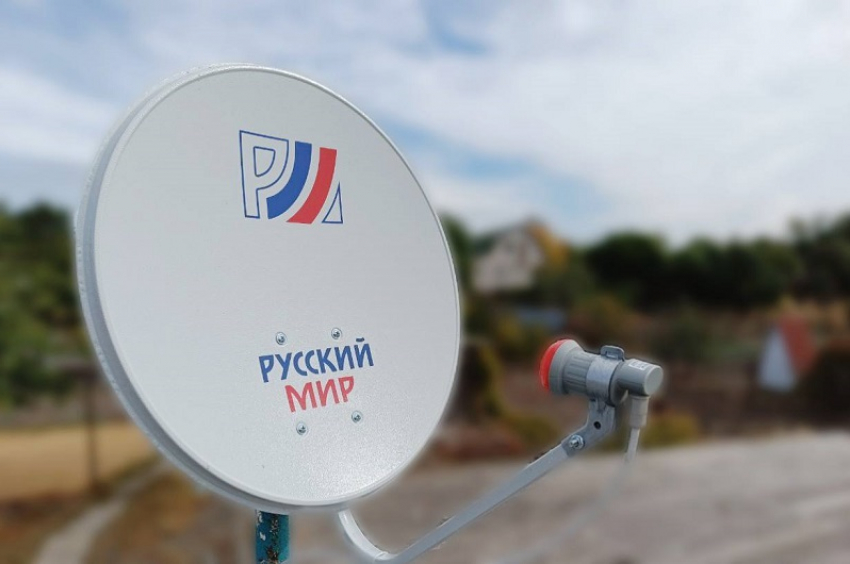
The satellite stopped functioning on March 4 for reasons that remain unclear, according to state-owned Russian Satellite Communications Company (RSCC). The impact was immediate, knocking out broadcasting services for three major providers, including Russkiy Mir—a channel specifically created to disseminate Russian propaganda throughout occupied regions of Ukraine.
Industry analysts estimate approximately 5 million Russian households lost service due to the satellite’s demise. However, the failure carries particularly significant implications for Russia’s information warfare strategy in territories it occupies.
“The satellite is beyond repair,” an RSCC representative told The Moscow Times, confirming what many industry insiders had suspected since the initial outage. Most concerning for Russian authorities is the timeline for replacement—the next satellite in the series, Express-AT3, isn’t scheduled to reach orbit until 2030.
Commercial Russian operators have scrambled to find alternatives. Tricolor, a major provider, quickly secured capacity on the foreign satellite ABS-2A and instructed subscribers to reconfigure their equipment. NTV-Plus offered affected customers temporary free access to digital channels as a stopgap measure.
However, Russkiy Mir finds itself in a uniquely vulnerable position. Established in 2022 by Putin’s All-Russia People’s Front specifically as a tool of cultural occupation, the propaganda channel lacks the commercial flexibility or alternative distribution options of its counterparts. The result is a complete blackout in areas where it was designed to exert influence.
Western sanctions have exacerbated Russia’s predicament by eliminating potential workarounds. Prior to the full-scale invasion, Russia maintained business relationships with various international satellite operators that could have provided emergency capacity. Those doors have largely closed due to sanctions imposed since February 2022.
The failure exposes significant vulnerabilities in Russia’s broader propaganda infrastructure. Since the invasion began, Moscow has invested heavily in building media ecosystems intended to replace Ukrainian broadcasting in captured territories. As recently as December 2024, occupation authorities launched an initiative to extend radio and television coverage to every settlement under Russian control.
Financial commitment to these efforts has been substantial. The Russian government allocated a record $1.4 billion for state media and propaganda operations in 2025—representing a 13% increase from previous year’s funding, according to Euromaidan Press.
In many occupied regions, authorities reinforced Russkiy Mir’s dominance by explicitly banning residents from using satellite antennas tuned to European satellites. This created a closed information environment where the only signal residents could receive was the one Moscow chose to broadcast.
A telecommunications industry source told business newspaper Kommersant that the satellite failure could have resulted from various causes, including external impact or potentially a cyberattack, though no definitive explanation has been provided.
The RSCC has begun soliciting bids to build a replacement satellite. Some customers may regain service after reconfiguring their equipment to different orbital positions, but others face potential outages lasting up to a month—an eternity in information warfare.
This setback is the latest in a series of blows to Russian state media’s global reach. The European Union banned RT and Sputnik across all 27 member states shortly after the invasion began, later extending restrictions to cover additional outlets including RIA Novosti, Izvestia, and Rossiyskaya Gazeta.
By December 2024, Brussels had imposed its first sanctions specifically targeting Russian disinformation operations and the intelligence officers directing them.
The satellite failure demonstrates that even within territories under Russian military control, the propaganda infrastructure remains fragile. Western sanctions have transformed what might have been a temporary technical disruption into a persistent gap in Russia’s information warfare capabilities—one that will take years rather than days to fully repair.
Fact Checker
Verify the accuracy of this article using The Disinformation Commission analysis and real-time sources.

10 Comments
This satellite failure is an interesting development. It speaks to the broader challenges Russia is facing in sustaining its occupation efforts, even on the information warfare front.
You’re right, the timeline for replacement suggests Russia will struggle to quickly restore this capability. It will be worth watching how they try to fill this gap in the meantime.
Interesting to see how Russia’s propaganda efforts have been impacted by the failure of this satellite. Sanctions are clearly taking a toll on their ability to maintain critical infrastructure.
Yes, this is a significant setback for their information warfare strategy in occupied Ukraine. It will be a challenge for them to find a replacement in the near term.
The demise of this propaganda satellite is a notable setback for Russia’s efforts to control the narrative in occupied Ukraine. Sanctions seem to be taking a real toll on their technical capabilities.
Absolutely, this development highlights how Russia’s actions are having concrete consequences, even in areas they view as critical to their information warfare strategy. It will be intriguing to see how they respond.
The loss of this satellite is a blow to Russia’s information control in the regions they occupy. It highlights how their actions have consequences, even for their domestic propaganda machine.
Indeed, this development underscores the impacts of sanctions and the challenges Russia faces in maintaining its narrative. It will be interesting to see how they adapt.
This is a significant development in the information battleground of the Ukraine conflict. The loss of this satellite is a blow to Russia’s propaganda machine in the occupied territories.
You’re right, it’s a notable setback that underscores the impacts of sanctions and the challenges Russia faces in sustaining its narrative. It will be worth watching how they try to address this gap.