


Listen to the article
In an alarming evolution of international propaganda, Iran has deployed sophisticated digital content to shape narratives around geopolitical tensions with the United States, marking a significant shift in how nations conduct information warfare.
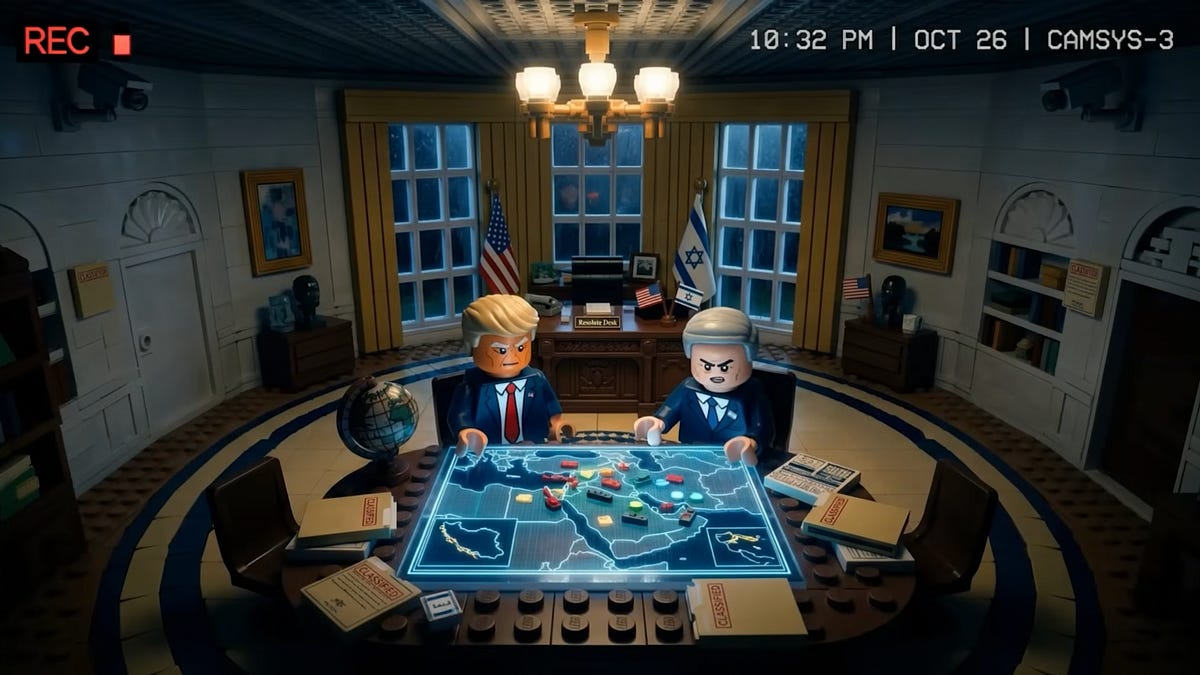
The transformation is starkly visible in a series of AI-generated videos circulating on social media platforms connected to Iranian networks. At first glance, they appear almost childish—yellow Lego-style figures, blocky missiles, and cartoonish explosions. One video features a Lego-fied Donald Trump with exaggerated hair, pacing anxiously before scenes shift to explosions and Iranian victory graphics.
These videos, many produced by a channel called Explosive News, represent a calculated approach to modern propaganda. They’re deliberately crafted for maximum virality: short enough to maintain viewer attention, provocative enough to encourage sharing, and styled in a familiar aesthetic that blends seamlessly into Western social media feeds.
The strategic use of rap music as soundtrack further reveals Iran’s sophisticated understanding of cultural messaging. This choice isn’t arbitrary—rap’s associations with defiance and resistance align perfectly with Iran’s desired self-image in the conflict, while simultaneously speaking directly to American audiences in their own cultural language.
Perhaps most striking is the departure from traditional diplomatic communication by Iranian officials. In a particularly notable example, Ebrahim Zolfaghari, a Revolutionary Guard spokesman, delivered a message directly borrowing from American popular culture: “Trump, you are fired,” he stated, appropriating the famous tagline from “The Apprentice,” before closing with “Thank you for your attention to this matter,” echoing one of the former president’s preferred sign-offs.
This new approach was further demonstrated when Trump posted a profanity-laced threat about the Strait of Hormuz on Easter, warning Iran of “hell” if it interfered with passage through the critical waterway. Rather than responding with traditional diplomatic language, official Iranian accounts countered with mockery, with one embassy account posting simply: “Take it easy, tiger.”
Security analysts note this represents a fundamental shift in international information operations. Rather than simply broadcasting propaganda outward, Iran is now operating within the same information ecosystem as its adversaries, adopting the formats, cultural references, and communication rhythms that shape political discourse in the United States.
“What we’re seeing is next-generation information warfare,” explains Dr. Melissa Conley Tyler, an international relations expert at the University of Melbourne. “Instead of creating content that feels foreign or overtly propagandistic, adversaries are creating media that mimics the style and tone of content that already circulates among target audiences.”
The strategy appears designed to blur the lines between foreign influence operations and domestic political discourse, making it increasingly difficult for audiences to distinguish between the two.
This evolution coincides with growing concerns about the role of artificial intelligence in creating convincing but misleading content. The Lego-style animations, while obviously artificial, demonstrate how even relatively simple AI tools can produce engaging content that spreads widely across platforms.
For social media companies and intelligence agencies, these developments present new challenges in identifying and countering foreign influence operations. Traditional approaches focused on content moderation struggle when foreign propaganda adopts the same style, tone, and cultural references as domestic content.
As tensions between Iran and the United States continue to fluctuate, the battle for narrative control increasingly takes place not through formal diplomatic channels but through memes, videos, and social media exchanges that deliberately blur the boundaries between entertainment, mockery, and geopolitical threat.
This new landscape of digital diplomacy represents a fundamental shift from traditional propaganda toward something more adaptive, participatory, and ultimately more difficult to contain—a transformation with profound implications for international relations in the digital age.
Fact Checker
Verify the accuracy of this article using The Disinformation Commission analysis and real-time sources.

7 Comments
While the Lego-style graphics may seem childish, the underlying strategy is anything but. Iran is clearly investing significant resources into refining its disinformation campaigns for maximum impact. We must remain alert to these evolving threats.
Absolutely. Dismissing these tactics as amateurish would be a dangerous mistake. The sophistication of modern propaganda requires an equally sophisticated response.
Interesting insight into Iran’s use of digital propaganda and viral videos. It’s a concerning tactic to shape narratives and influence public opinion, especially with the growing sophistication of AI-generated content.
This article highlights the need for greater media literacy and fact-checking, as these AI-generated videos could easily be mistaken for legitimate content. Responsible reporting is crucial to expose these kinds of manipulation attempts.
The use of familiar aesthetics and rap music to make the propaganda more relatable and shareable is a clever strategy, though still deeply troubling. Disinformation remains a major threat to informed discourse.
I agree, the blending of propaganda into social media feeds is particularly insidious. Vigilance and critical thinking are key to countering these tactics.
The use of rap music as a soundtrack is a fascinating insight into Iran’s cultural understanding. It speaks to the level of research and analysis going into these campaigns to make them as impactful as possible. We cannot underestimate the threat of state-sponsored disinformation.