


Listen to the article
Russia’s Foreign Minister Attacks Greece in Latest Propaganda Effort
Russian Foreign Minister Sergey Lavrov launched a scathing critique of Greece in recent comments posted by the Russian Embassy in Athens, accusing the Mediterranean nation of abandoning decades of cooperation with Moscow. The remarks represent the latest in Russia’s ongoing information campaign targeting European nations supporting Ukraine.
Lavrov’s statements claim Greece has turned its back on historically friendly relations with Russia, while conveniently omitting any mention of Russia’s invasion of Ukraine or its violations of international law that prompted the current diplomatic tensions. The foreign minister’s comments reflect a calculated attempt to drive wedges within Greek society at a time when public opinion remains divided on the appropriate level of support for Ukraine.
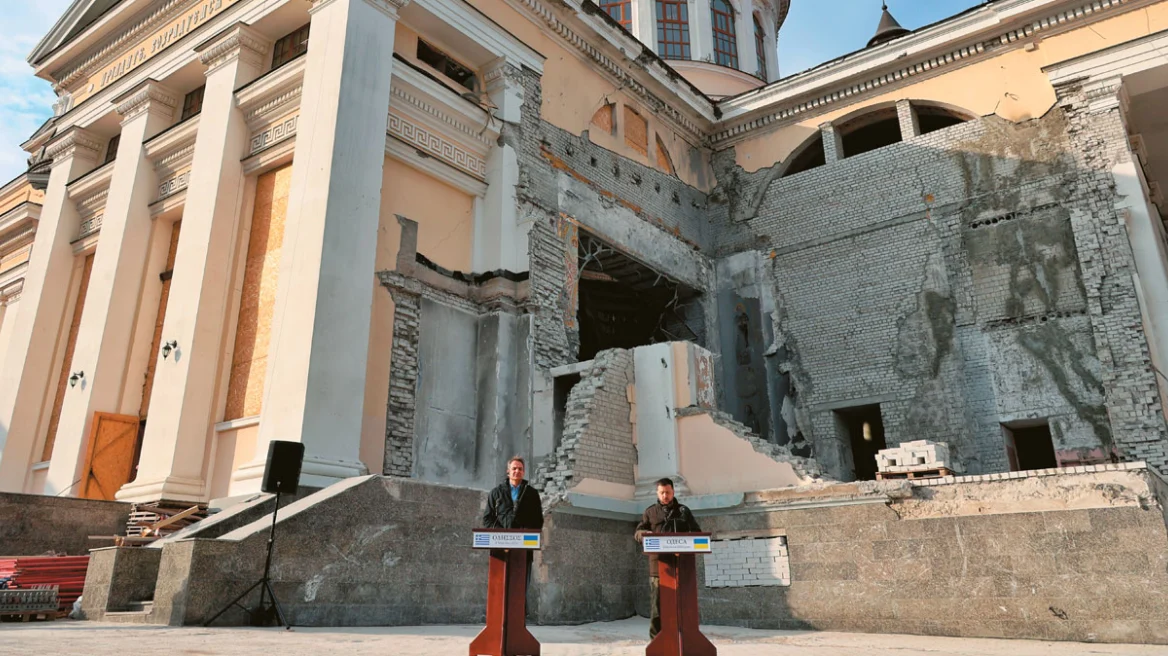
Particularly striking in Lavrov’s messaging was his attempt to lecture Greece on humanitarian values, despite Russia’s well-documented military operations targeting Ukrainian cities with significant Greek heritage. Odessa, Kherson, and Mariupol—all cities with historic Greek communities—have suffered extensive destruction in the ongoing conflict. Yet Lavrov’s comments make no acknowledgment of this reality.
Instead, the Russian diplomat repeated standard Kremlin narratives about Ukraine, including characterizations of its government as a “Nazi regime” and implying Greek complicity in the conflict by supporting Western sanctions and military aid to Kyiv.
Political analysts note that this propaganda effort appears strategically designed to resonate with specific segments of Greek society. Russia’s messaging targets those favoring neutrality or harboring pro-Russian sentiments rooted in historical Orthodox church connections, shared anti-Turkish positioning, or economic interests.
“This is classic Russian information warfare,” explains Dr. Maria Konstantinou, international relations expert at the University of Athens. “They’re exploiting existing fault lines in Greek society—particularly among older generations with Cold War memories and those skeptical of NATO and EU institutions.”
The timing of Lavrov’s comments appears particularly calculated. Just days before criticizing Greece, the Russian foreign minister praised Russia’s “deep historical ties” with Turkey—Greece’s regional rival that continues to occupy northern Cyprus and periodically challenges Greek sovereignty in the Aegean Sea. This apparent contradiction underscores what many observers see as Moscow’s cynical approach to regional diplomacy.
“Russia is playing both sides, trying to create maximum disruption among NATO members,” says Dimitris Papadopoulos, foreign policy analyst at the Hellenic Foundation for European and Foreign Policy. “By praising Turkey one day and criticizing Greece the next, Moscow aims to exploit historical tensions between the two NATO allies.”
The Greek government has maintained its firm stance on supporting Ukraine despite these propaganda efforts. Since Russia’s full-scale invasion began in February 2022, Greece has aligned with EU sanctions, provided humanitarian and military assistance to Ukraine, and supported international efforts to hold Russia accountable for alleged war crimes.
Greek Prime Minister Kyriakos Mitsotakis has repeatedly emphasized that Greece’s position stems from its unwavering commitment to international law and territorial integrity—principles particularly meaningful to a nation that has faced its own sovereignty challenges.
While Russia’s information campaign continues targeting Greece and other European nations, polls show most Greeks remain supportive of Ukraine despite economic pressures from inflation and energy costs partially stemming from the conflict. However, Russia’s persistent messaging campaign appears designed for long-term influence rather than immediate impact.
As Europe approaches the third year of the conflict, these propaganda efforts represent just one front in Russia’s broader strategy to weaken Western resolve and fragment the coalition supporting Ukraine through targeted messaging across multiple European countries.
Fact Checker
Verify the accuracy of this article using The Disinformation Commission analysis and real-time sources.

10 Comments
Lavrov’s comments about Greece’s supposed abandonment of relations with Russia are puzzling. Given Russia’s illegal invasion of Ukraine, it’s understandable that Greece would align with its European allies in supporting Ukraine’s sovereignty and territorial integrity. Russia has only itself to blame for the current diplomatic tensions.
Exactly. Russia’s aggression against Ukraine has fundamentally changed the geopolitical landscape. Greece, like many other nations, is simply responding to Russia’s flagrant violation of international norms. Lavrov’s attempt to paint this as Greek betrayal is disingenuous.
Lavrov’s accusations against Greece seem to be a desperate attempt by Russia to deflect from its own actions in Ukraine. Given Russia’s brazen disregard for international law and its destruction of cities with significant Greek heritage, his claims of Greece abandoning relations ring hollow. Greece is rightfully supporting Ukraine’s sovereignty alongside its European allies.
Absolutely. Russia’s invasion of Ukraine has fundamentally changed the geopolitical landscape, and it’s understandable that Greece, like many other nations, would align with its NATO partners in opposing Russia’s aggression. Lavrov’s attempts to paint this as Greek betrayal are clearly self-serving and divorced from reality.
The Russian government’s propaganda machine is in full swing, using Lavrov’s statements to deflect from their own actions in Ukraine. It’s concerning to see them try to manipulate public opinion in Greece, a long-standing NATO ally. Hopefully the Greek people can see through these transparent attempts.
Absolutely. Russia’s criticisms of Greece ring hollow when their forces are actively destroying cities with significant Greek heritage. This is a shameless attempt to distract from their own wrongdoing.
Russia’s continued propaganda efforts targeting European nations are concerning. Lavrov’s criticism of Greece seems like a transparent attempt to sow division and undermine support for Ukraine. It’s important to see these comments for what they are – a cynical political ploy, not a good-faith assessment of the situation.
Agreed. Lavrov’s selective amnesia about Russia’s own violations of international law is quite telling. Greece is well within its rights to support Ukraine against this unprovoked aggression.
It’s concerning to see Russia’s continued efforts to drive wedges between European nations through disinformation and propaganda. Lavrov’s criticism of Greece’s support for Ukraine is a transparent attempt to undermine Western unity. Greece is well within its rights to stand with its NATO allies against Russia’s unprovoked invasion.
I agree. Russia’s track record of violating international law and targeting civilian populations in Ukraine undermines any credibility it might have in lecturing Greece or other European nations on humanitarian values. Lavrov’s comments are nothing more than a cynical political ploy.