


Listen to the article
Russia’s Demands for Security Guarantees Seen as Propaganda Tactic, Expert Says
Russia’s insistence on security guarantees for itself in any Ukraine peace deal is merely an attempt to reinforce false propaganda narratives and push maximalist demands, according to a German security expert.
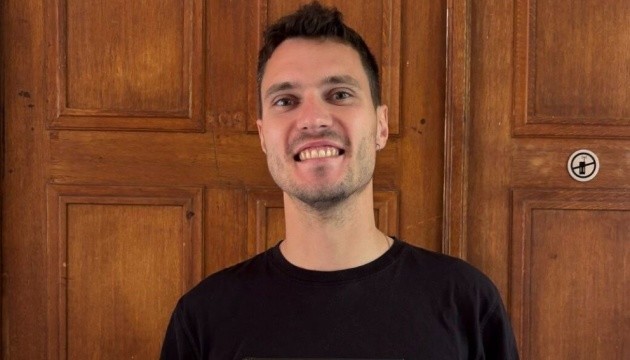
Mario Baumann, project manager and research fellow at the German Council on Foreign Relations (DGAP), told Ukrinform that the Kremlin’s positioning serves a deliberate strategic purpose in the ongoing conflict.
“By demanding its own security guarantees, the Kremlin reinforces the regime’s false propaganda narrative that Russia’s war of aggression against Ukraine is a defensive reaction to a non-existent threat from Ukraine or from the West/NATO,” Baumann explained.
This rhetoric, according to the expert, deliberately obscures Ukraine’s status as the victim in the conflict while suggesting Russia also needs protection. Such framing helps Moscow shift blame away from its aggression, a narrative that has found receptive audiences in some Western circles.
Baumann specifically pointed out that former U.S. President Donald Trump has echoed similar accusations against Ukraine, demonstrating how effectively Russia’s blame-shifting tactics can penetrate international discourse.
The expert’s comments come in response to recent statements by Russian Deputy Foreign Minister Alexander Grushko, who declared that any peace agreement must include “security guarantees for Russia” and not solely focus on Ukrainian interests. Grushko went further, suggesting that without such guarantees for Moscow, a peaceful resolution would be impossible.
Baumann interpreted Grushko’s opposition to providing Ukraine with reliable security guarantees from Western allies as evidence that “Russia has no genuine interest in ending the violence.” Such guarantees would typically be considered a prerequisite for any meaningful ceasefire.
The DGAP analyst sees Moscow’s victim portrayal as serving a broader geopolitical agenda. “Russia is attempting to use this self-portrayal as a victim to advance its maximalist demands, including a revision of the European security order in line with Russia’s own vision,” he said.
This approach appears particularly targeted toward the United States, which has recently increased pressure on Ukraine regarding potential peace negotiations. Baumann noted that Washington has largely excluded European partners from its discussions with Moscow, creating additional complications in the diplomatic landscape.
The timing of Russia’s security guarantee demands comes amid growing international debate about the war’s trajectory and possible resolution scenarios. As military and financial support for Ukraine faces increasing scrutiny in Western capitals, Moscow appears to be positioning itself to exploit any fractures in the alliance supporting Kyiv.
Security experts have long warned that Russia’s concept of its own security often extends to controlling neighboring states’ foreign policy decisions, particularly regarding NATO membership. Ukraine’s pursuit of Western integration has been a central point of contention throughout the conflict.
The German Council on Foreign Relations, where Baumann serves as a research fellow, is one of Germany’s leading foreign policy think tanks, providing analysis on international security issues with particular expertise on Eastern Europe and Russia.
As peace talks continue to be discussed in various formats, the fundamental question of security guarantees—who receives them and what they entail—remains a critical point of contention that will likely determine whether any diplomatic solution can be reached in the near term.
Fact Checker
Verify the accuracy of this article using The Disinformation Commission analysis and real-time sources.

8 Comments
Shifting the blame away from Russia’s blatant aggression is a concerning trend. The expert’s analysis highlights how effective this messaging can be, even among some Western political figures. Fact-based reporting is crucial here.
The expert’s analysis highlights the Kremlin’s calculated efforts to portray Russia as the victim in this conflict. Demanding security guarantees while invading a sovereign nation is a flagrant attempt to obscure the reality of Russia’s aggression.
The expert’s insights are concerning but not surprising. Russia’s propaganda machine is working overtime to reframe the narrative around its invasion of Ukraine. We must remain vigilant against such disinformation campaigns.
This is a disturbing example of how Russia is attempting to manipulate the narrative around its unprovoked aggression. Demanding security guarantees while being the clear aggressor is a cynical tactic that must be forcefully challenged.
This seems like a classic Kremlin propaganda tactic – try to portray Russia as the victim rather than the aggressor. Demanding security guarantees while invading a sovereign neighbor is quite audacious.
Russia’s demand for security guarantees is a blatant attempt to portray itself as the victim, when in reality it is the aggressor. This kind of propaganda tactic is deeply concerning and must be vigorously challenged with objective reporting.
This is a classic gaslighting tactic by the Kremlin. Trying to portray the aggressor as the victim is a cynical move to sow confusion and justify their illegal actions. Fact-checking and objective reporting are essential to combat this.
It’s worrying to see this false narrative gaining traction. Russia’s demand for security guarantees is a transparent attempt to distort the reality of its unprovoked invasion of Ukraine. Clear-eyed analysis is needed to counter such propaganda.